Drosera aliciae Raym.-Hamet
Species sheet, updated on 29/10/2026. Short sheet: sources on this species are still scarce.
At a glance
| Scientific name | Drosera aliciae Raymond-Hamet, 1905 |
| Common name | “Alice sundew” (in French droséra d'Alice) |
| Family | Droseraceae |
| Distribution | Cape Provinces (South Africa) |
| Status | Not given |
Photos in the wild
Etymology
- Drosera: see the genus sheet.
- aliciae: dedicated to a woman named Alice (probably Alice Pegler, a South African collector, not confirmed).
Description (how to recognise it)
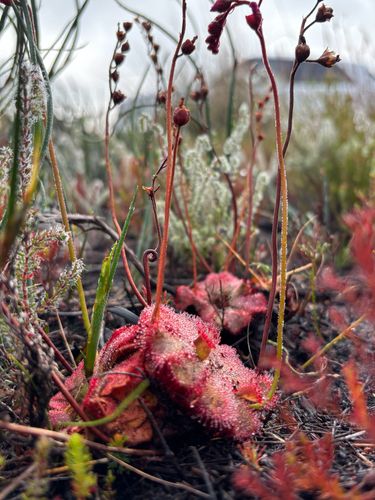
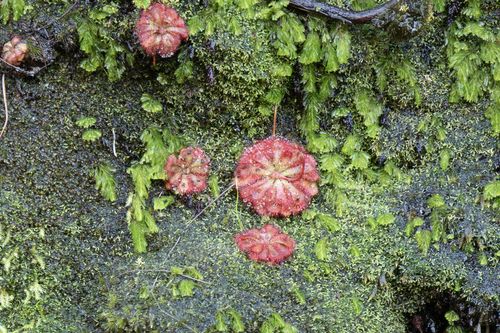
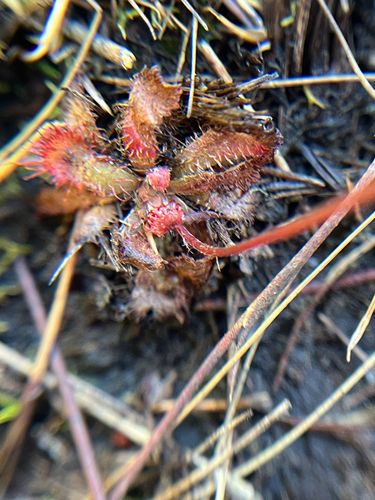
- Small, tight rosettes of wedge-shaped leaves, up to 5 cm across.
- In good light, the tentacles take on deep colours thanks to anthocyanins, which may attract prey.
- Pink flowers on scapes about 30 cm tall, well above the traps, which avoids catching pollinators.
- It looks like D. slackii, which is larger (about 8 cm), and like D. natalensis.
Distribution
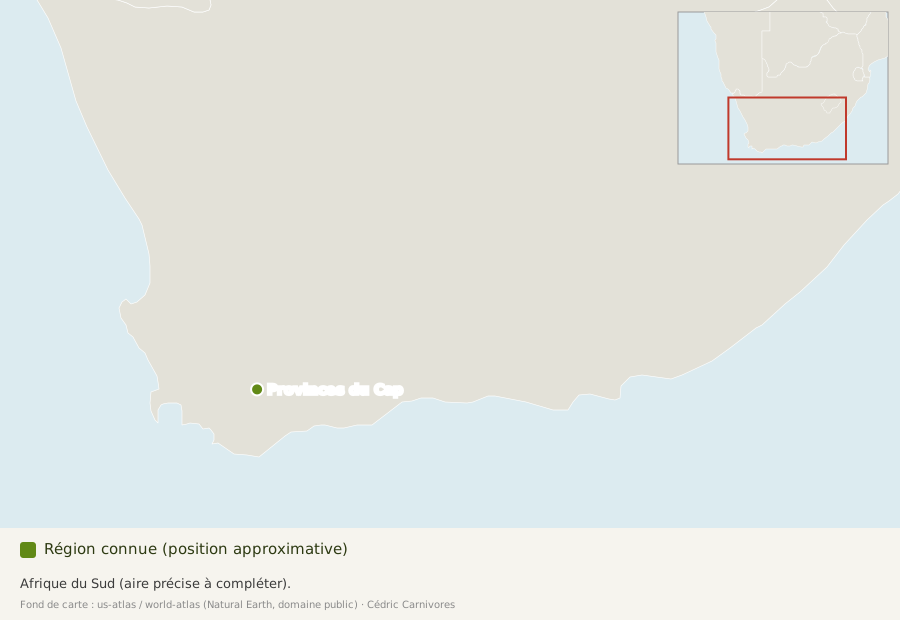
Cape Provinces, in South Africa. The herbarium specimens and observations published in GBIF come mainly from this region: Western Cape (1369 records).
Did you know?
- It is one of the most widely grown sundews. It has received the Award of Garden Merit from the Royal Horticultural Society.
Sources
- Wikipedia (English), Drosera aliciae: author, range, description, anthocyanins, flowers, related species, horticultural award.
- Genus list: year 1905.
- GBIF, Drosera aliciae: author, original publication, countries and localities of herbarium specimens and observations.