Drosera anglica Huds.
Species sheet, updated on 29/10/2026.
At a glance
| Scientific name | Drosera anglica William Hudson, 1778 |
| Common names | English sundew; in Hawaii, mikinalo; in French droséra à longues feuilles, grand rossolis |
| Family | Droseraceae |
| Distribution | Circumboreal, plus Japan, southern Europe, California and Kauaʻi (Hawaii) |
| Habitat | Open bogs and fens, often rich in calcium, from 5 m to over 2,000 m |
| Status | “Secure” worldwide (NatureServe) |
Photos in the wild
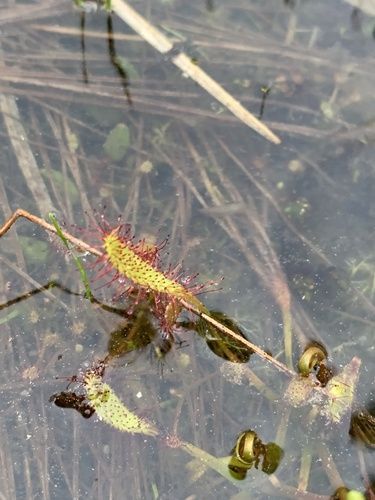
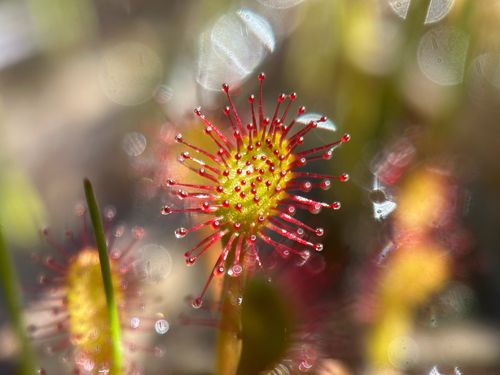
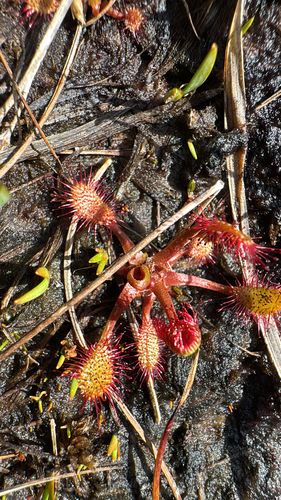
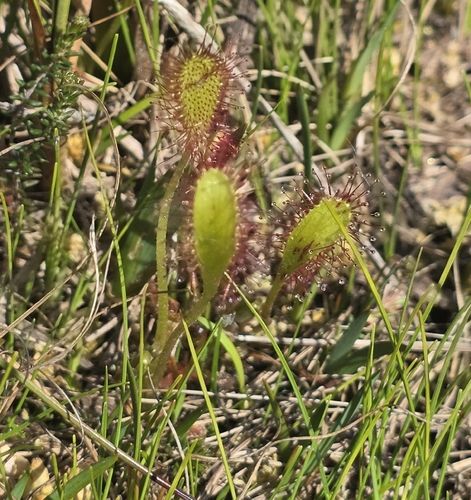
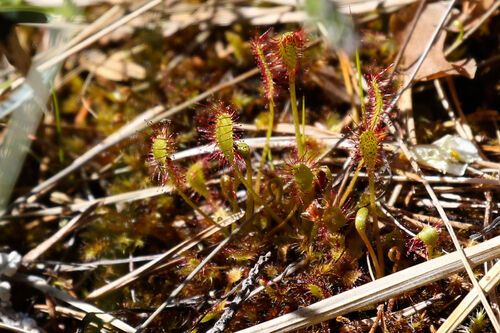
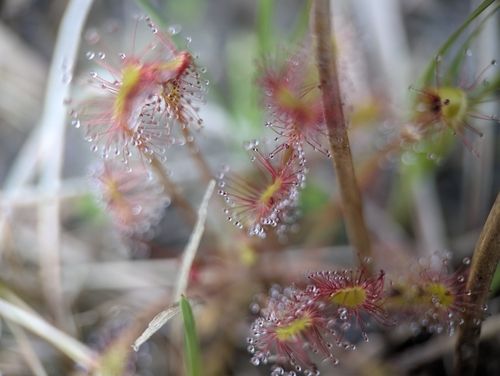
Etymology
- Drosera: see the genus sheet.
- anglica: from the Latin, “of England”, where Hudson described it.
History of the description
William Hudson describes it in 1778. The name D. longifolia, sometimes used, was rejected in 1999, because it had been confused with D. intermedia.
A species born from a cross
It is probably a hybrid that became fertile between D. rotundifolia and D. linearis: its chromosomes were doubled (2n = 40, against 20 in the other North American sundews), which allowed it to become a species in its own right.
Description (how to recognise it)
- A rosette of elongated leaves 3 to 9.5 cm long, covered with red glands.
- White flowers in summer, mostly self-pollinated.
- Hibernaculum in winter, except on Kauaʻi.
- Its tentacles bend towards the prey and the leaf can curl around it.
Distribution
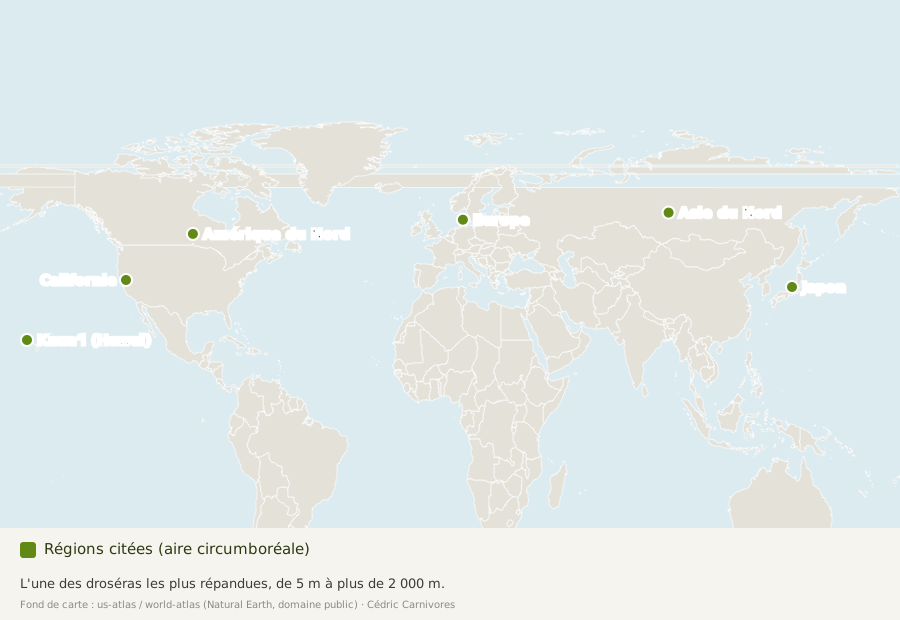
One of the most widespread sundews: the whole north of the hemisphere, and further south Japan, southern Europe, California and the island of Kauaʻi in Hawaii, where it is smaller and never goes dormant in winter. From 5 m to at least 2,000 m.
Habitat
Open, damp places, often rich in calcium: bogs, fens, quaking bogs, often among sphagnum moss.
Natural hybrids
With D. capillaris, D. filiformis, D. intermedia, D. linearis and D. rotundifolia (D. × obovata): all sterile.
Threats and protection
“Secure” worldwide; threatened in Minnesota.
Sources
- Wikipedia (English), Drosera anglica: Hudson 1778, hybrid origin, chromosomes, description, Kauaʻi, range, altitude, habitat, hybrids, status, the name longifolia.
- (French names and D. × obovata: general knowledge; not confirmed)