Drosera binata Labill.
Species sheet, updated on 29/10/2026.
At a glance
| Scientific name | Drosera binata Jacques-Julien Houtou de Labillardière, Novae Hollandiae plantarum specimen, 1804-1805 |
| Family | Droseraceae; only species in section Phycopsis |
| Common names | Forked sundew, fork-leaved sundew; in French droséra fourchue |
| Distribution | Coasts of eastern and south-eastern Australia, Tasmania, and New Zealand |
| Habitat | Moist coastal areas; in New Zealand, up to 1,000 m |
Photos in the wild
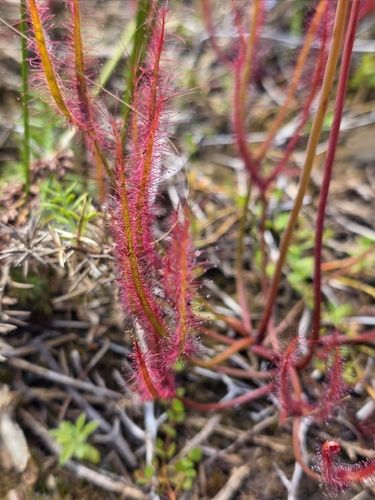
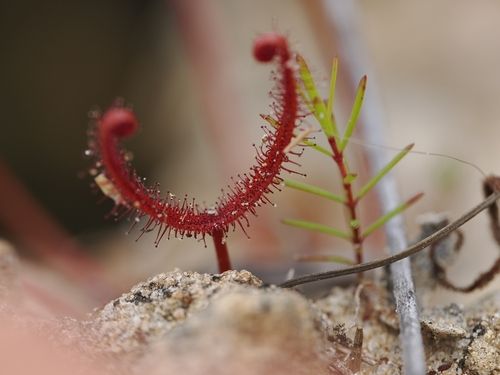
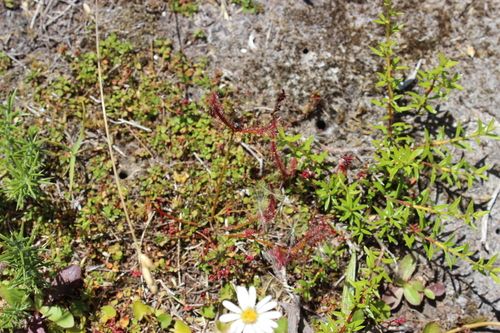
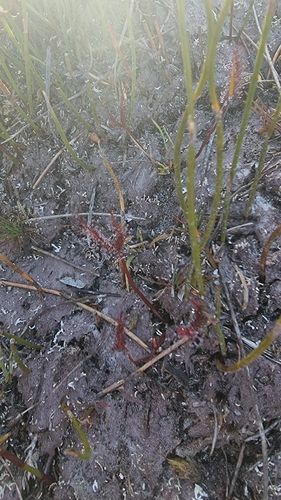
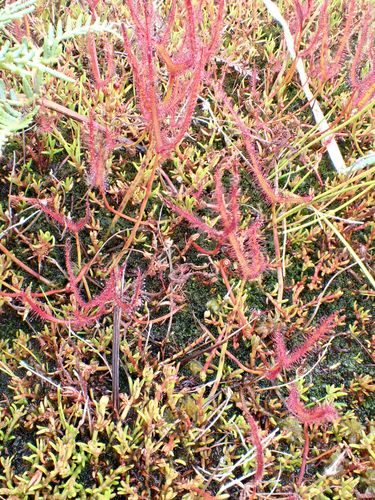
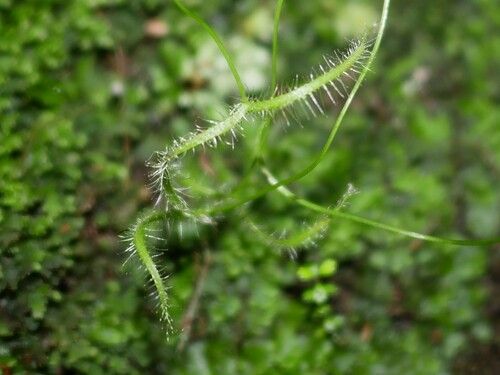
Etymology
- Drosera: from the Greek droserós, “covered in dew”.
- binata: a Latin word meaning “in pairs”. It refers to its forked leaves, divided into two branches.
History of the description
The French botanist Labillardière described it in his Novae Hollandiae plantarum specimen, published in 1804-1805, the result of the d'Entrecasteaux expedition in search of La Pérouse. Charles Darwin studied it for his book Insectivorous Plants (1875).
Description (how to recognise it)
- A large perennial sundew, with narrow, branched leaves that divide into successive forks, up to 60 cm long.
- It is so distinctive that it forms a section of the genus on its own.
The forms
The names of these forms are not valid in botany, but they are widely used in cultivation:
| Form | Number of tips per leaf | Features |
|---|---|---|
| “T” form | 2 | Sturdy, up to 30 cm, green foliage turning red with age; genetically stable |
| var. dichotoma | Usually 4, up to 8 | More yellowish foliage |
| f. multifida | 8 to 16, even 30 | |
| f. extrema | Up to 40 | Leaves divided five times; from Stradbroke Island (Queensland) |
Registered cultivars: 'Giant' (a large dichotoma form) and 'Marston Dragon'.
Distribution
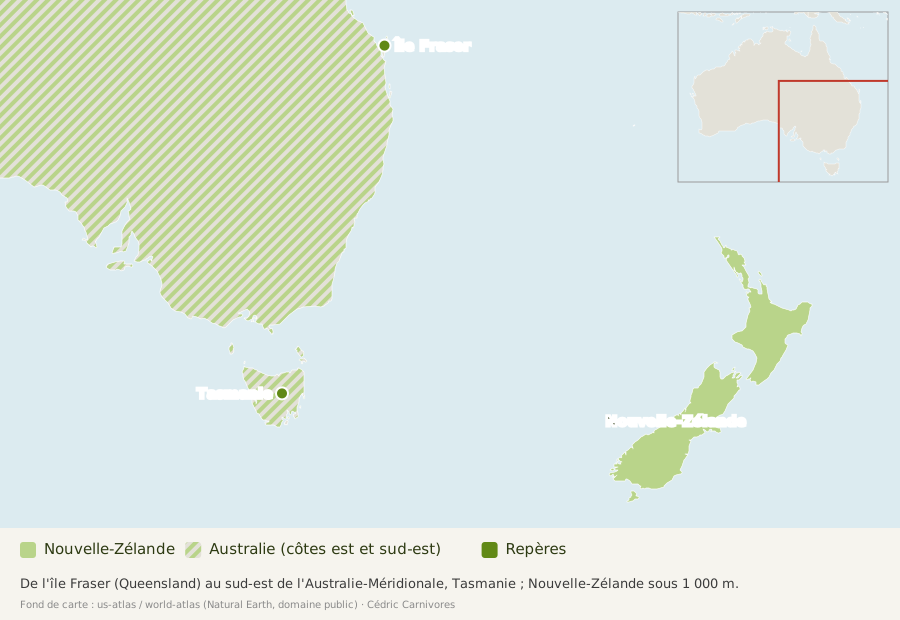
- Australia: coastal areas, from Fraser Island (Queensland) southwards, through New South Wales, Victoria and Tasmania, to the far south-east of South Australia.
- New Zealand: common below 1,000 m on the two main islands, Stewart Island (Rakiura) and the Chatham Islands.
Habitat
- Moist, nutrient-poor coastal areas.
- Some populations go dormant in winter, while others, further north, grow all year round like tropical plants.
Did you know?
- Some forms have leaves divided into as many as 40 tips, like small sticky deer antlers.
Sources
- Wikipedia (English), Drosera binata: Labillardière 1804-1805, etymology, names, description, section Phycopsis, forms, cultivars, range in Australia and New Zealand, dormancy, Darwin 1875.