Drosera burmanni Vahl
Species sheet, updated on 29/10/2026.
At a glance
| Scientific name | Drosera burmanni Martin Vahl, 1794 (often spelled burmannii) |
| Common name | Tropical sundew; in French droséra tropicale |
| Synonym | D. dietrichiana Rchb. (1871) |
| Family | Droseraceae |
| Distribution | Tropical and subtropical Asia (India, Taiwan, South-East Asia, southern China) and Australia |
| Status | Least concern (IUCN) |
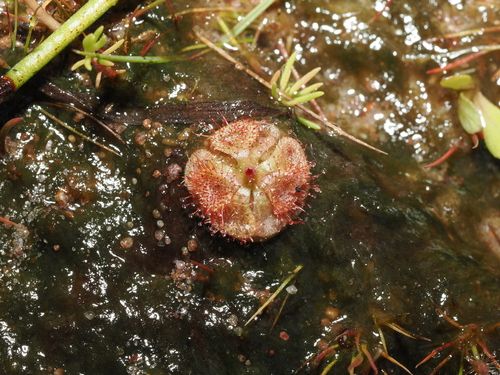
Photos in the wild
Etymology
- Drosera: see the genus sheet.
- burmanni: in honour of the Dutch botanist Johannes Burman. The original spelling, burmanni, comes from the Latin form Burmannus and remains the correct one, even though burmannii is common.
History
- Before Linnaeus, it had already been described by Paul Hermann (published after his death by William Sherard) and by Johannes Burman (1737).
- 1794: Martin Vahl gives it its name.
- 1871: Reichenbach describes D. dietrichiana, in honour of the collector Amalie Dietrich; it is now a synonym.
Description (how to recognise it)
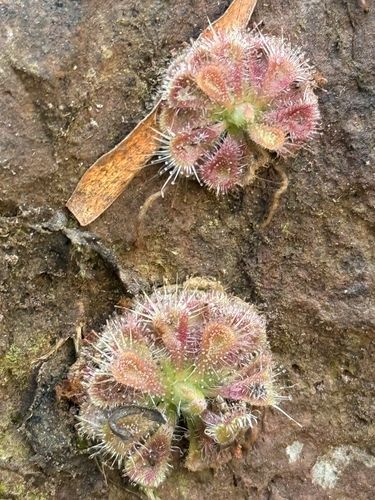
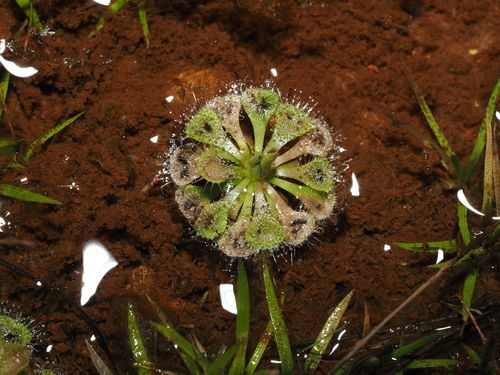
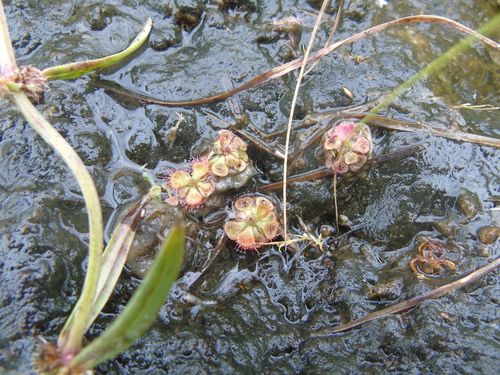
- A small rosette about 2 cm across, with red or green leaves 6 to 10 mm long.
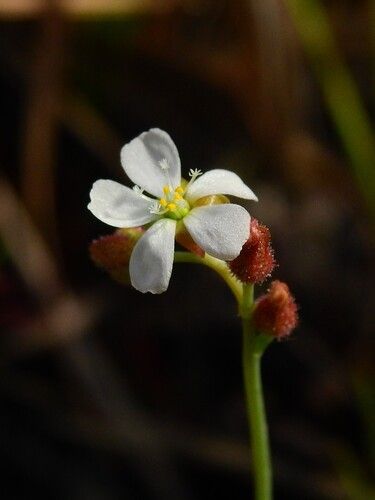
- White flowers, 3 to 10 together, on scapes 6 to 15 cm.
- Annual in the wild, with an enormous production of seeds.
Ecology: one of the fastest
It is one of the fastest sundews: its leaves can curl around an insect in a few seconds, while others take minutes or hours.
Distribution
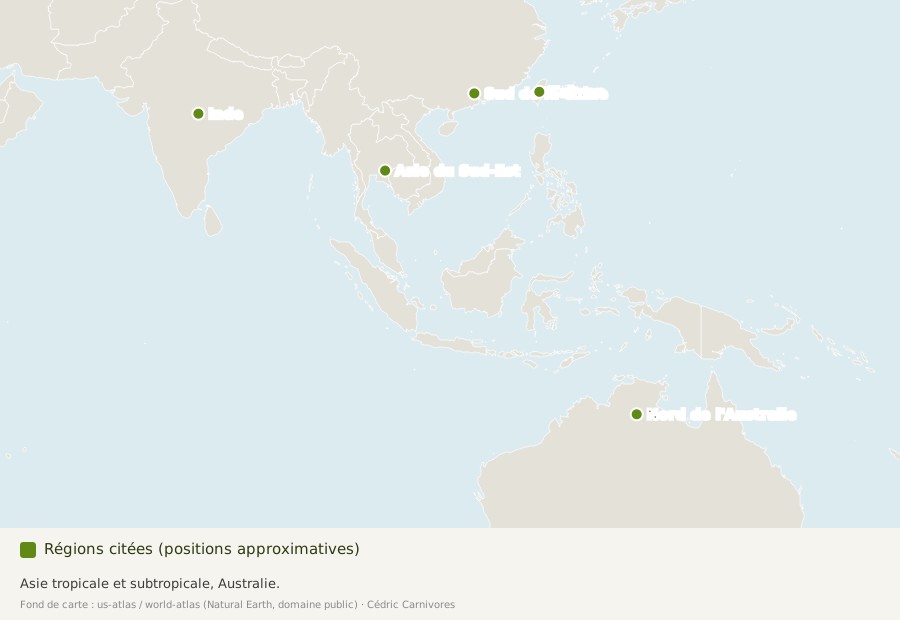
Tropical and subtropical Asia (India, Taiwan, South-East Asia, southern China) and Australia.
Uses
In Ayurvedic medicine, it is considered a powerful rubefacient, which makes the skin turn red.
Sources
- Wikipedia (English), Drosera burmanni: Vahl 1794, Hermann, Burman 1737, spelling, synonym, description, speed, range, life cycle, use, status.