Drosera cistiflora L.
Species sheet, updated on 29/10/2026.
At a glance
| Scientific name | Drosera cistiflora Linnaeus |
| Common name | Poppy-flowered sundew; in French droséra à fleurs de pavot |
| Family | Droseraceae |
| Distribution | Winter-rainfall regions of the Cape provinces (South Africa) |
| Status | Least concern (SANBI Red List) |
Photos in the wild
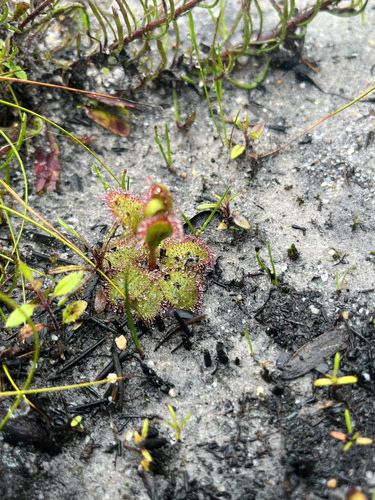
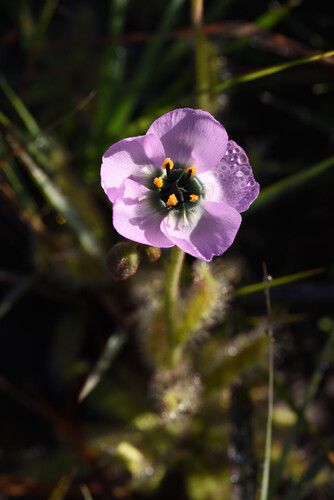
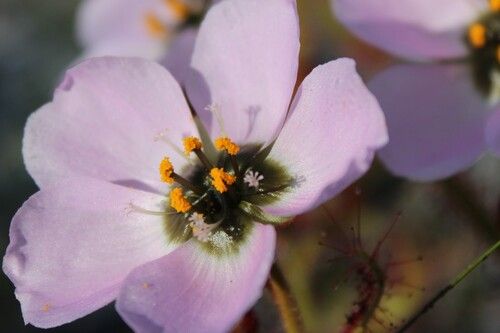
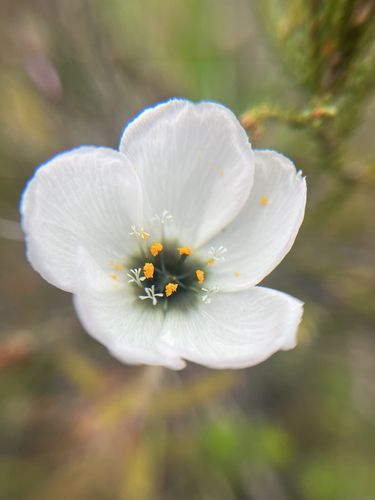
Etymology
- Drosera: see the genus sheet.
- cistiflora: “with rock-rose flowers” (probable meaning, from the genus Cistus, not confirmed).
Description (how to recognise it)
It is famous for its exceptionally large flowers for a sundew, in varied colours: red and pink forms in particular are known.
- According to Diels (1906): very short underground stem, with thickened, somewhat fleshy roots; aerial stem 5 to 40 cm, scattered with glandular hairs.
- Basal leaves spoon-shaped, 1.5 to 2 cm; stem leaves much longer, spreading, lanceolate, 2 to 6 cm.
- Usually 1 or 2 flowers (rarely up to 6), on pedicels 2 to 4 cm long; very broad petals, 15 to 30 mm, white (often purple on the back), pale sulphur yellow, pink or purple; blackish-violet stamens.
- Diels stresses that the species is very variable in size, leaves, number of flowers and petal colour.
Distribution
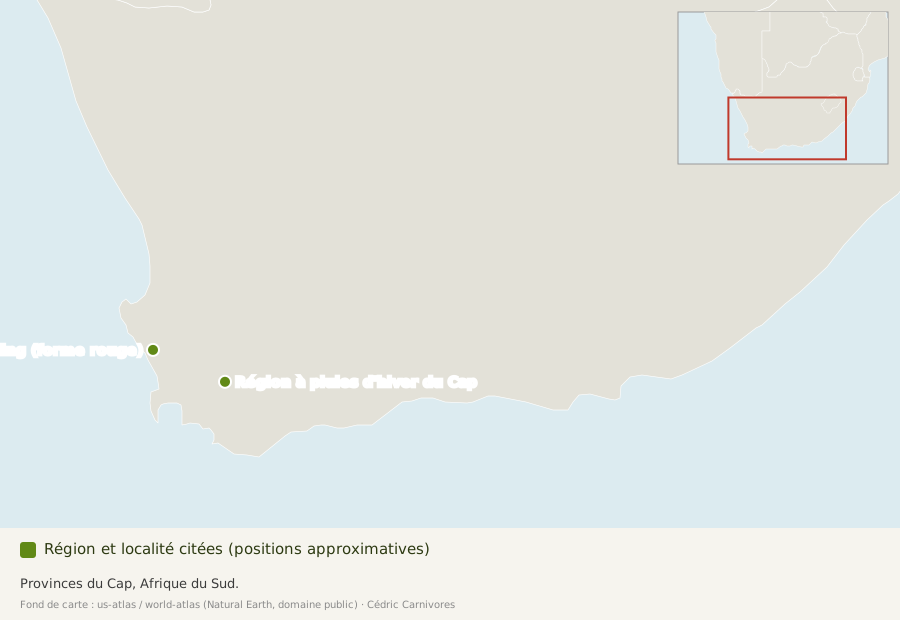
Winter-rainfall regions of the Cape provinces (South Africa). A red form grows in the Darling area. The herbarium specimens and observations published in GBIF come mainly from this region: Western Cape (3020 records).
Habitat
Diels (1906) describes it as fairly common on the Cape Peninsula, in flower from August to October, and frequent around Cape Town; he also cites the Zwartland (Darling).
Did you know?
- It was illustrated in 1890 in Curtis's Botanical Magazine.
Sources
- Wikipedia (English), Drosera cistiflora: Linnaeus, common name, flowers, range, red form from Darling, status, 1890 illustration.
- GBIF, Drosera cistiflora: author, original publication, countries and localities of herbarium specimens and observations.
- Diels, Das Pflanzenreich IV.112: Droseraceae, 1906 (archive.org): description, localities and habitats of the specimens (translated from Latin and German).