Drosera erythrorhiza Lindl.
Species sheet, updated on 29/10/2026.
At a glance
| Scientific name | Drosera erythrorhiza John Lindley, 1839 |
| Common name | Red ink sundew; in French droséra à encre rouge |
| Family | Droseraceae |
| Distribution | Western Australia |
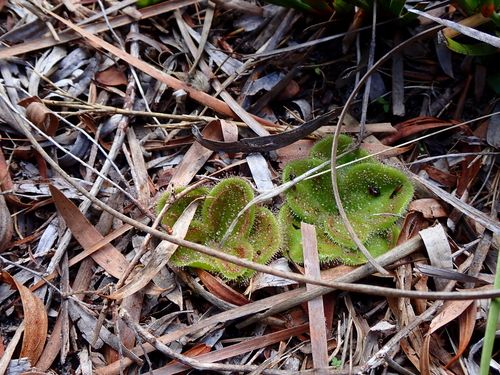
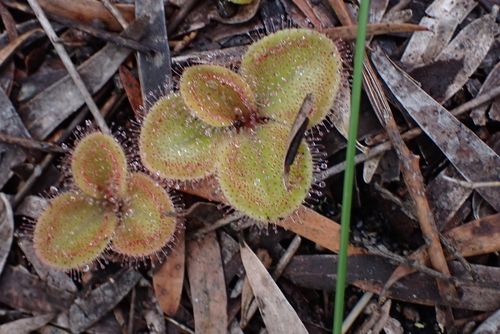
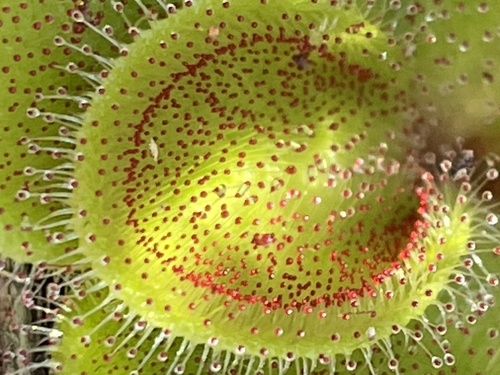
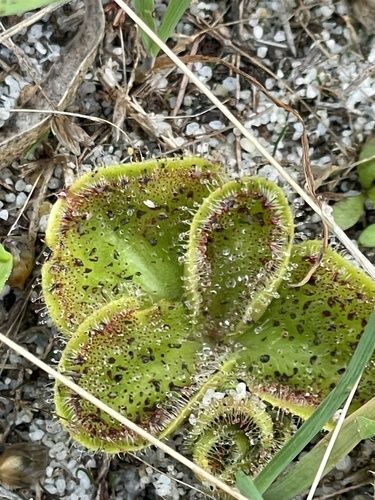
Photos in the wild
Etymology
- Drosera: see the genus sheet.
- erythrorhiza: from the Greek erythros, “red”, and rhiza, “root”: “with a red root” (for its red tuber, not confirmed).
History of the description
Lindley described it in 1839, in his work on the Swan River colony. In 1999, Chrtek and Slavíková proposed placing it in a separate genus, Sondera, which has not been followed.
Description (how to recognise it)
- A tuberous rosette sundew, pressed flat to the ground.
- Very full inflorescences, up to 50 flowers, which sets it apart within its section.
Subspecies (Marchant & Lowrie, 1992)
| Subspecies | Distinctive feature |
|---|---|
| subsp. erythrorhiza | fewer and broader leaves than magna |
| subsp. magna | larger, broader, often more numerous leaves |
| subsp. collina | from the hills; varied leaf shapes within the same rosette |
| subsp. squamosa | red leaf margins due to closely packed tentacles; described as a species by Bentham in 1864 |
Distribution
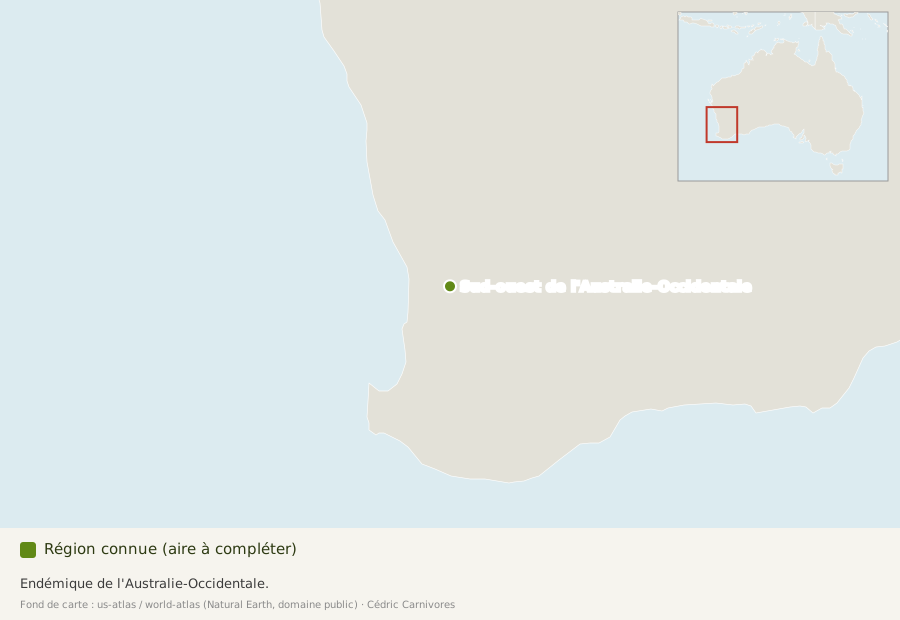
Endemic to Western Australia.
Sources
- Wikipedia (English), Drosera erythrorhiza: Lindley 1839, common name, description, inflorescence, subspecies, genus Sondera, range.