Drosera gigantea Lindl.
Species sheet, updated on 29/10/2026.
At a glance
| Scientific name | Drosera gigantea John Lindley, 1839 |
| Common name | Giant sundew; in French “droséra géante” |
| Family | Droseraceae |
| Distribution | Coast of Western Australia, from Albany to a little south of Geraldton |
| Habitat | Sandy soils at the edge of swamps and near granite outcrops |
Photos in the wild
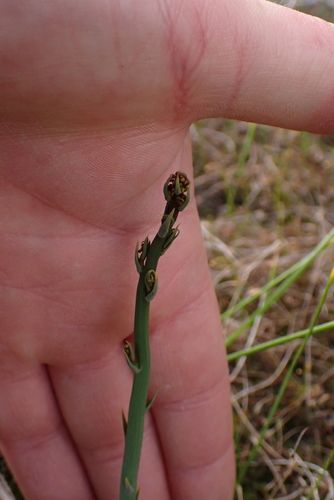
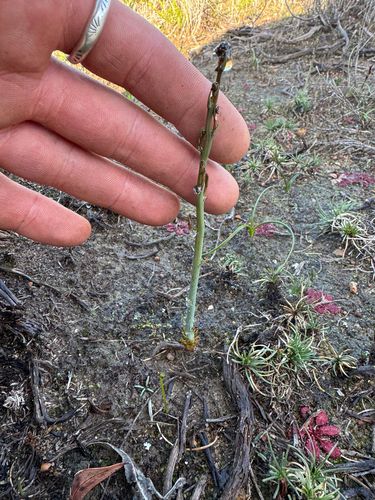
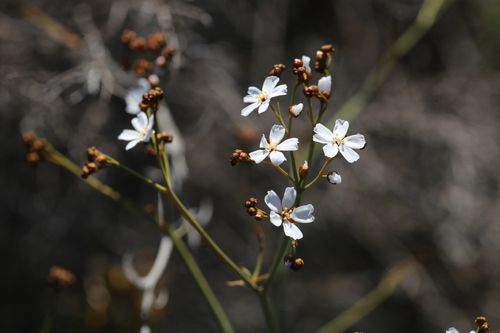
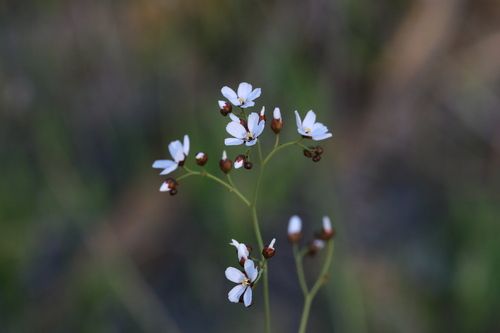
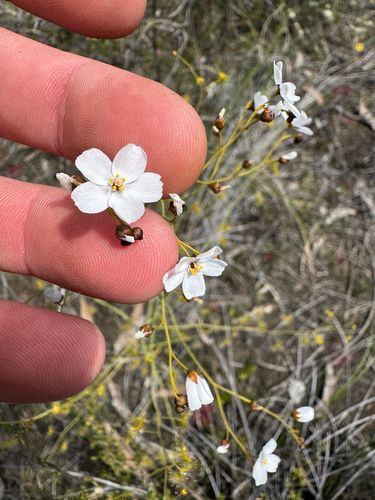
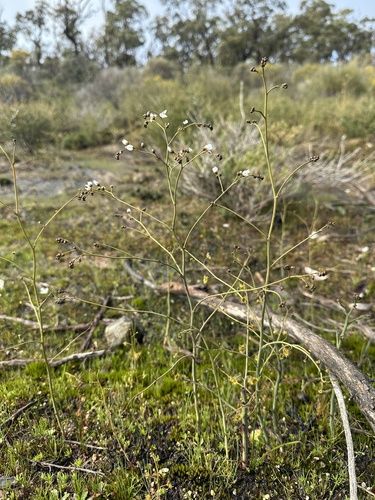
Etymology
- Drosera: see the genus sheet.
- gigantea: from the Latin, “giant”: it is one of the largest sundews.
History of the description
John Lindley described it in 1839 in his A Sketch of the Vegetation of the Swan River Colony, the same work as D. erythrorhiza and Byblis gigantea.
Description (how to recognise it)
- An erect tuberous sundew, from 20 cm to 1 m, with many branches bearing small shield-shaped leaves: it looks like a small tree.
- White flowers, from August to November.
- A red tuber up to 3.8 cm, which can be buried nearly a metre deep.
- Its brown colour is said to come from glucosides.
Subspecies
| Subspecies | Feature |
|---|---|
| subsp. gigantea | type form |
| subsp. geniculata (Marchant & Lowrie, 1992) | smaller (up to 45 cm), on black sands near Perth; FloraBase treats it as a synonym |
Distribution
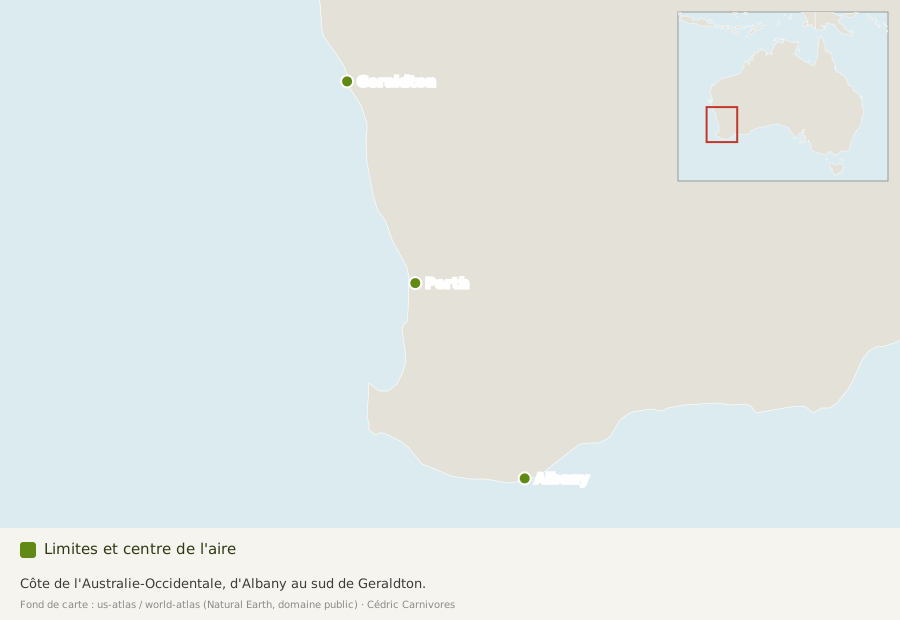
Endemic to Western Australia, along the coast, from Albany to a little south of Geraldton.
Habitat
Sandy soils at the edge of swamps and near granite outcrops.
Chemistry
Its shoots contain rare substances: naphthoquinones, droserone, plumbagin and glucosides.
Sources
- Wikipedia (English), Drosera gigantea: Lindley 1839, name, description, tuber, subspecies, range, habitat, chemistry.