Drosera indica L.
Species sheet, updated on 29/10/2026.
At a glance
| Scientific name | Drosera indica Linné, Species Plantarum, 1753 |
| Common name | Indian sundew; in French “droséra indienne” |
| Family | Droseraceae (section Arachnopus) |
| Distribution | Tropical and southern Africa, Madagascar, tropical and subtropical Asia |
| Status | Least concern (IUCN); vulnerable in Andhra Pradesh (India) |
Photos in the wild
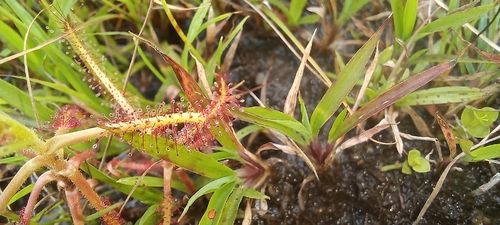
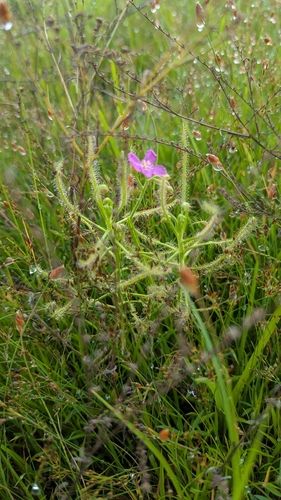
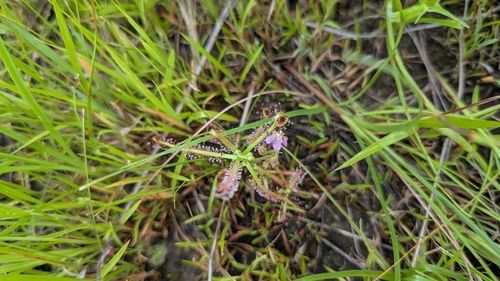
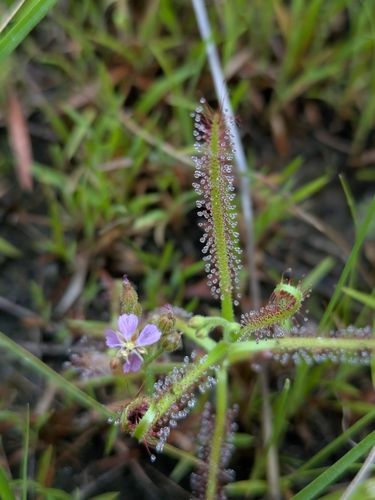
Etymology
- Drosera: see the genus sheet.
- indica: “from India”.
Description (how to recognise it)
- An unbranched annual, 5 to 50 cm tall, with narrow leaves up to 10 cm long, which does not form a rosette.
- Colour from yellowish-green to burgundy; petals white, pink, orange or purple.
A species split apart
It was considered a very variable species, found as far as Australia. Since 2000, several species have been separated from it, and it is now thought that it does not occur in Australia.
Distribution
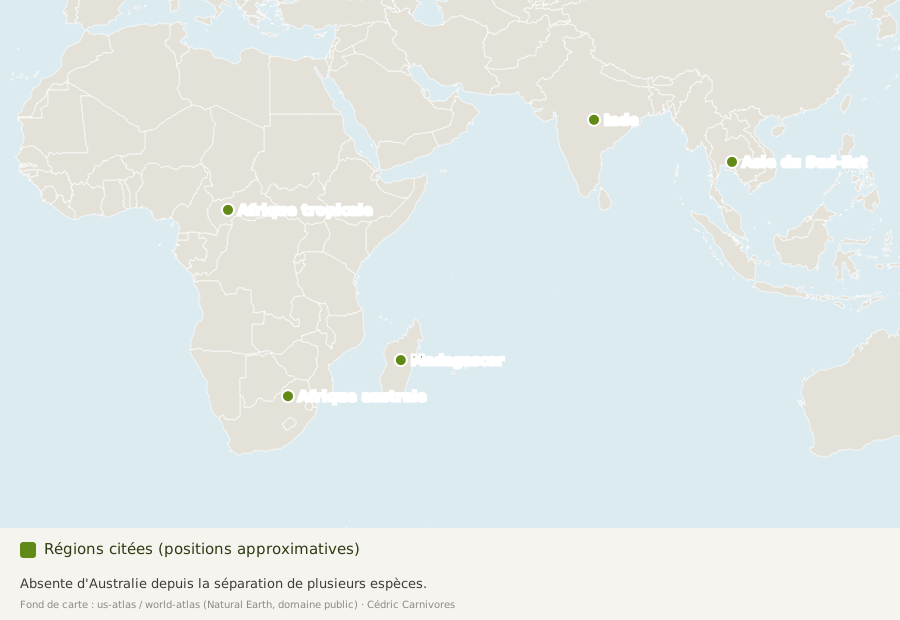
Tropical and southern Africa, Madagascar, tropical and subtropical Asia.
Ecology
It copes poorly with shade from neighbouring plants, which reduces its growth and seed production. In Thailand, a dwarf form with red tentacles withstands drought better than the large form with white tentacles.
Uses
It contains plumbagin and flavonoids. Europe imports it from Asia for an Ayurvedic product, “Herba Drosera”.
Threats and protection
“Least concern” for the IUCN, but vulnerable in Andhra Pradesh, where collecting for trade threatens it.
Sources
- Wikipedia (English), Drosera indica: Linné 1753, name, section, description, splitting, range, ecology, Thai form, uses, statuses.