Drosera latifolia (Eichler) Gonella & Rivadavia
Species sheet, updated on 29/10/2026.
At a glance
| Scientific name | Drosera latifolia (Eichler) Paulo Gonella & Fernando Rivadavia, 2014 |
| Original name | Drosera villosa var. latifolia Eichler, 1872 |
| Family | Droseraceae |
| Distribution | Endemic to Brazil: south-east (Espírito Santo, Minas Gerais, Rio de Janeiro, São Paulo) and south (Paraná, Santa Catarina) |
| Habitat | High-altitude grasslands, campos rupestres, granite inselbergs, riverbanks, from 700 to 2 550 m |
| Status | Least concern: widespread and common |
Photos in the wild
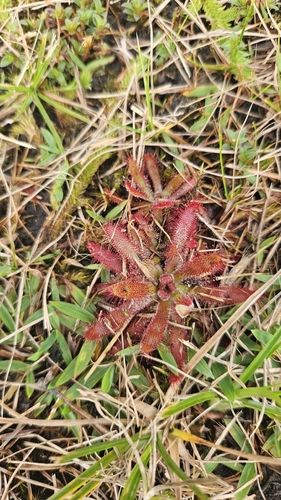
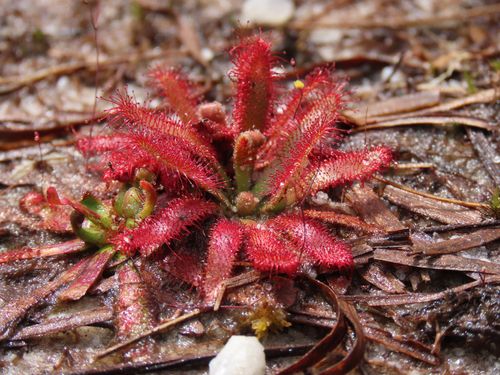
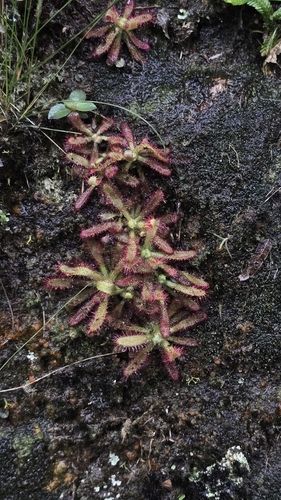
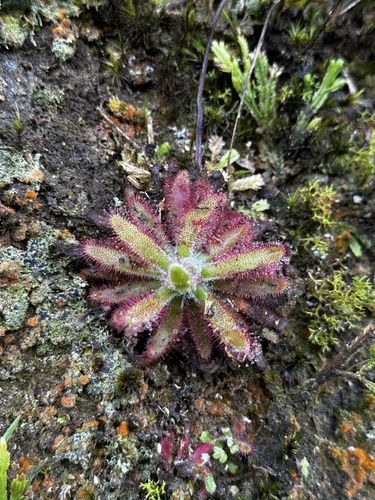
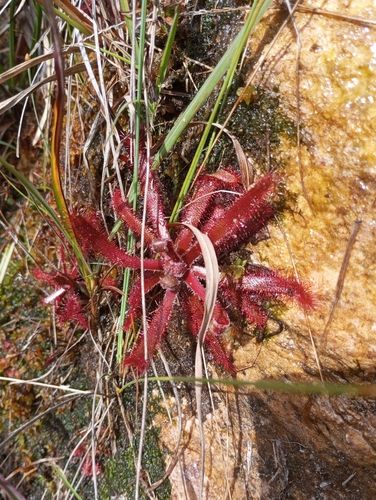
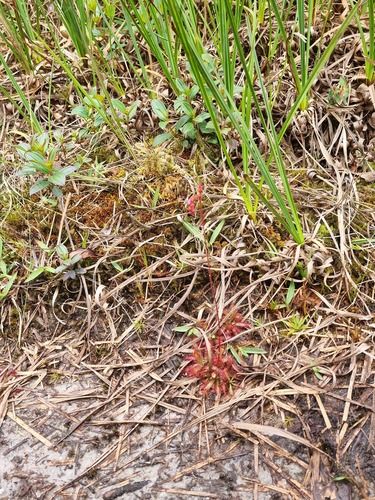
Etymology
- Drosera: from the Greek droserós, “covered in dew”.
- latifolia: from the Latin latus, “broad”, and folium, “leaf”: “broad-leaved”.
History of the description
- 1872: the German botanist August Wilhelm Eichler describes it as a variety of Drosera villosa.
- The reference specimen comes from the Serra dos Órgãos, near Rio de Janeiro, and was collected by the French botanist Auguste Glaziou.
- 2014: the Brazilian botanists Paulo Gonella and Fernando Rivadavia raise it to species rank.
Description (how to recognise it)
- A perennial rosette without a stem, rarely on a short upright column up to 10 cm tall.
- Leaves: very variable in shape. It differs from D. villosa in having a petiole usually much shorter than the blade.
- Flowers: pink.
- Seeds: spindle-shaped, 0.8 to 1 mm, with a net-patterned surface.
Distribution
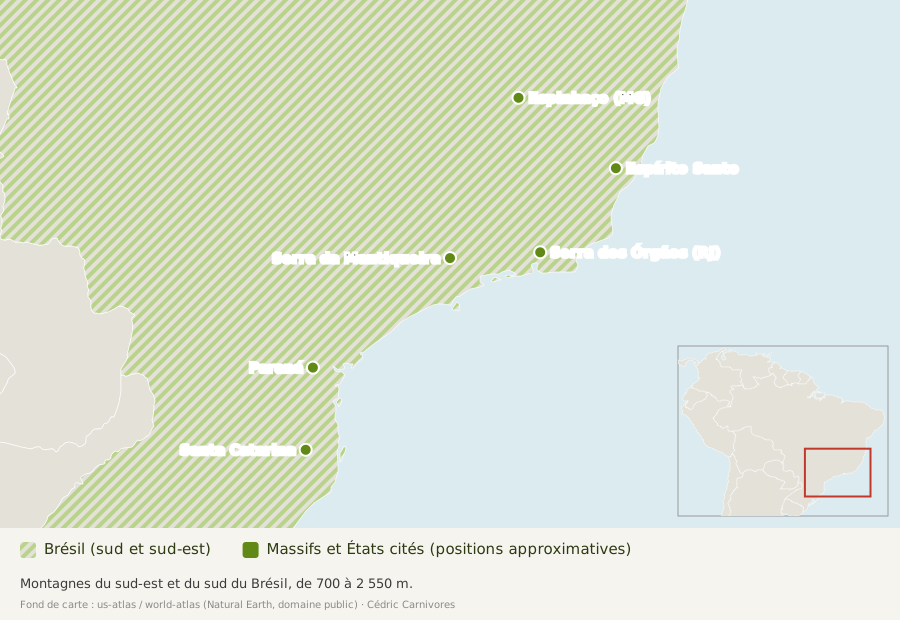
Endemic to Brazil, in the large mountain ranges:
- the Serra do Mar and the Serra da Mantiqueira;
- the Espinhaço range.
States: Espírito Santo, Minas Gerais, Rio de Janeiro, São Paulo, Paraná and Santa Catarina.
Habitat
- High-altitude grasslands and open areas of the high plateaus (Serra do Mar, Serra da Mantiqueira);
- campos rupestres (rocky mountain grasslands) in the Espinhaço;
- granite inselbergs (“island mountains” rising out of the forest), in the montane Atlantic Forest;
- it is one of the few Brazilian sundews that also grows in partial shade, along rivers, in riverside forests.
Altitude: from 700 to 2 550 m.
Threats and protection
“Least concern”: the species is widespread and common.
Did you know?
- It climbs as high as 2 550 m in the mountains of Brazil.
Sources
- Plazi, treatment of Drosera latifolia, based on the review of the Drosera of Brazil (Phytotaxa, 2022): history of the name, description, range, habitats, altitude, status.
- Plants of the World Online (Kew): range (south and south-east Brazil).
- Flora of Espírito Santo, Droseraceae (Rodriguésia): high-altitude grasslands, inselbergs.