Drosera madagascariensis DC.
Species sheet, updated on 29/10/2026.
At a glance
| Scientific name | Drosera madagascariensis Augustin Pyramus de Candolle, 1824 |
| Family | Droseraceae |
| Distribution | Tropical Africa, from Guinea and Nigeria to South Africa, and Madagascar |
| Habitat | Marshes and sphagnum bogs |
| Status | Endangered in Madagascar according to the genus sheet |
Photos in the wild
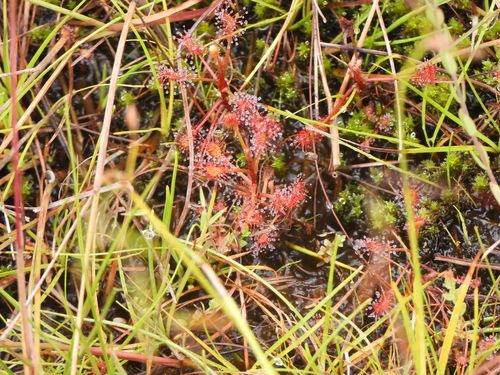
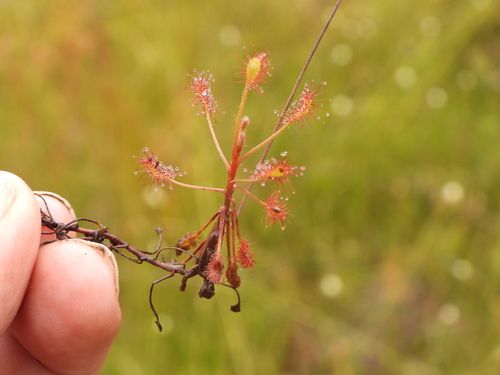
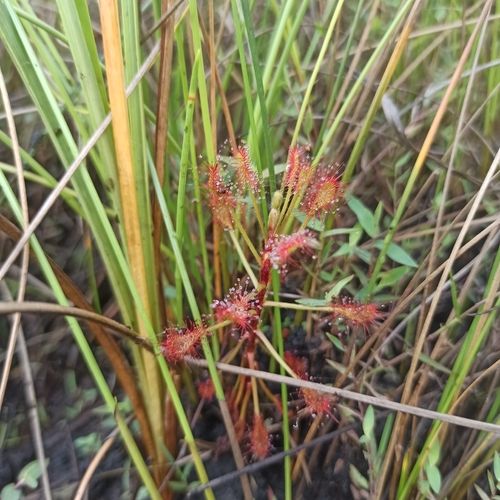
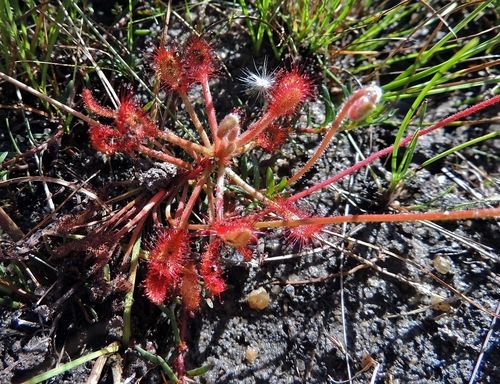
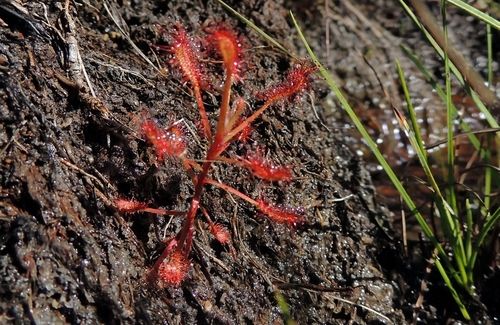
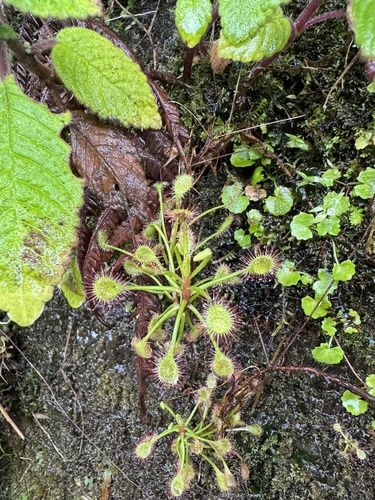
Etymology
- Drosera: see the genus sheet.
- madagascariensis: “from Madagascar”.
Description (how to recognise it)
- A stem-forming sundew, sturdy, up to 25 cm tall. When young it stands upright; older plants cling to the surrounding vegetation with their leaves or lie down as a creeping stem.
- Alternate leaves, with the traps at the top and the dried remains of old leaves below.
- Weak roots, which anchor the plant and take up water; nutrients come from its prey.
- Pink flowers, 4 to 12 together, on one or two scapes 20 to 40 cm tall.
Distribution
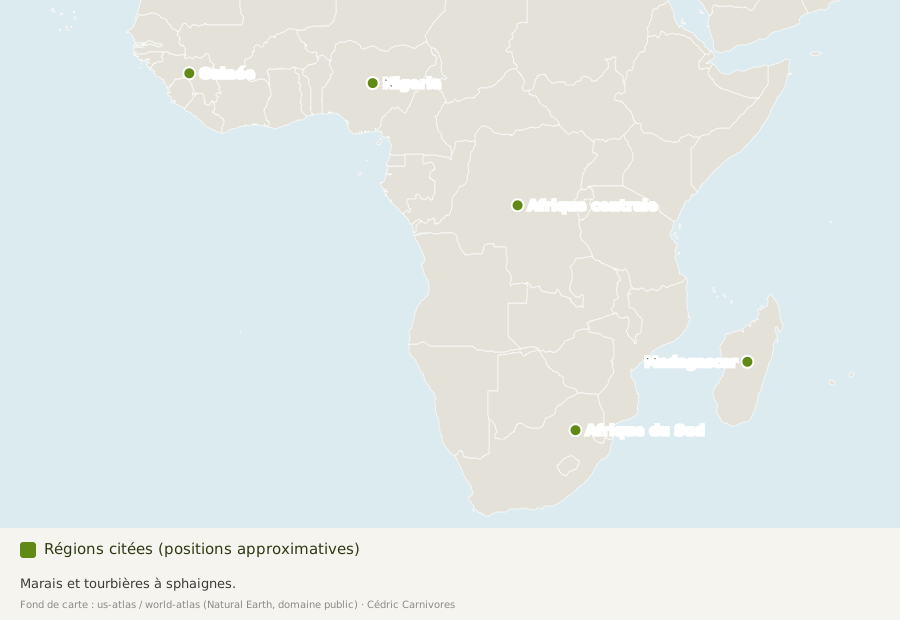
Tropical Africa, from Guinea and Nigeria across central and southern Africa to South Africa, and in the east Madagascar.
Habitat
Marshes and sphagnum bogs.
Uses and threats
- The Zafimaniry people of Madagascar use it against dysentery and fever.
- Millions of plants are harvested every year in Madagascar for the pharmaceutical industry; the species is considered endangered there.
Sources
- Wikipedia (English), Drosera madagascariensis: Candolle 1824, description, flowers, range, habitat.
- Wikipedia (English), Drosera: Zafimaniry use, harvesting, status in Madagascar.