Drosera roraimae (Klotzsch ex Diels) Maguire & Laundon
Species sheet, updated on 29/10/2026.
At a glance
| Scientific name | Drosera roraimae (Klotzsch ex Diels) Maguire & Laundon, 1957 |
| Original name | D. montana var. roraimae (Diels, 1906) |
| Family | Droseraceae |
| Distribution | Tepuis of Brazil, Guyana and Venezuela, including Roraima |
| Status | Not yet assessed by the IUCN |
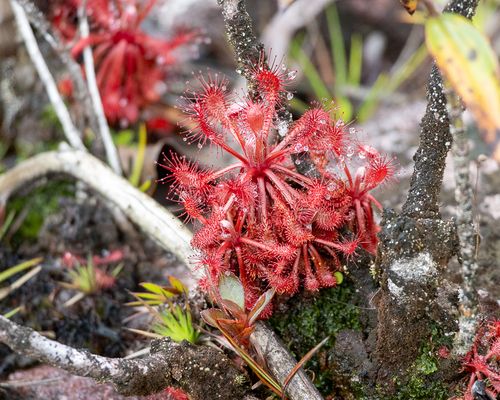
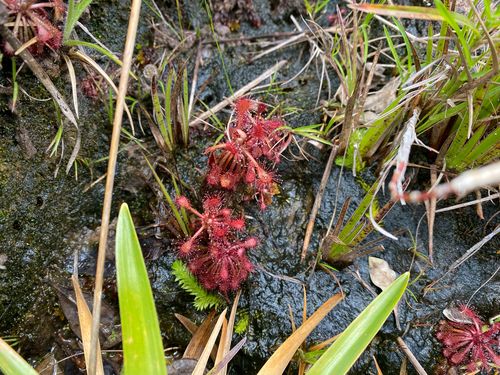
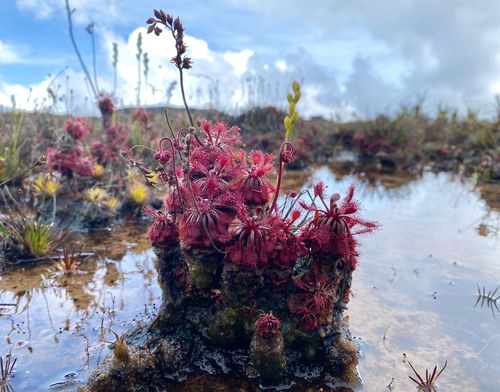
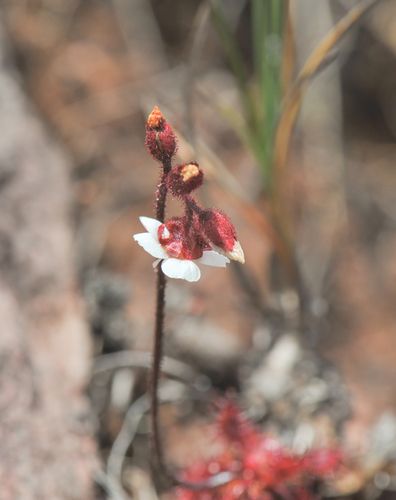
Photos in the wild
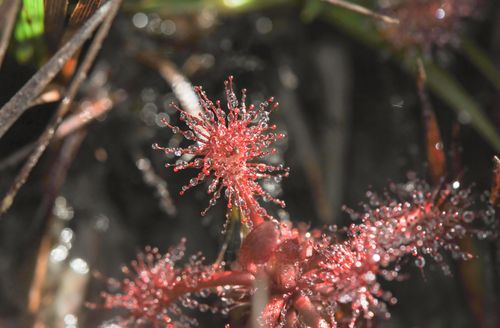
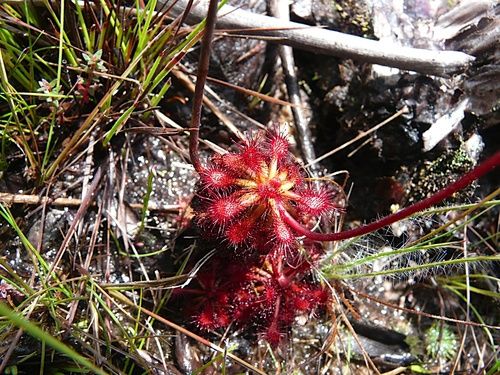
Etymology
- Drosera: see the genus sheet.
- roraimae: from Mount Roraima, the tepui where the reference specimen was collected.
History of the description
Described in 1906 by Diels as a variety of D. montana, after Klotzsch; raised to species rank in 1957 by Maguire and Laundon.
Description (how to recognise it)
- According to Diels (1906), who described it as a variety of D. montana: stipules up to 5 mm; petiole longer than in D. montana, up to 8 to 9 mm; blade about 5 mm by 2 mm; after flowering, the sepals often have their tips bent backwards.
Distribution
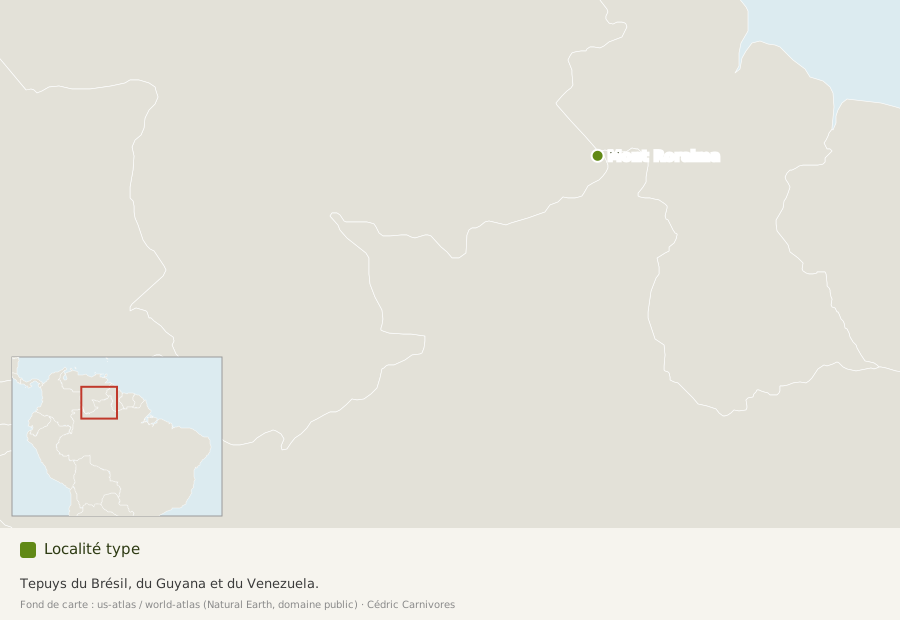
Brazil, Guyana and Venezuela, on the tepuis, including Roraima. Regions where most of the herbarium specimens and observations published in GBIF come from (number of records): Bolívar (209), Amazonas (95), Roraima (26), Cuyuni-Mazaruni (18). According to Kew's world checklist of plants (WCVP), it is native to the following regions: northern Brazil, Guyana and Venezuela. According to the Flora do Brasil (the official list of Brazilian plants), in Brazil it grows in these states: Amazonas and Roraima. Major biomes: Amazon.
Habitat
According to the collections and observations published in GBIF, it grows mostly from 750 to 2,630 m altitude. According to the Flora do Brasil: terrestrial plant or growing on rocks, in campinarana (white-sand savanna of the Amazon), Amazonian savanna and vegetation of rocky outcrops. Diels (1906) cites the type specimen of Richard Schomburgk, past flowering in November on Roraima (British Guiana), and collections by Im Thurn, Quelch and McConnell up to the summit of Roraima.
Sources
- Wikipedia (English), Drosera roraimae: authors, history of the name, etymology, range, synonyms.
- GBIF, Drosera roraimae: author, original publication, countries, altitude and localities of herbarium specimens and observations.
- Kew, World Checklist of Vascular Plants (via GBIF): natural distribution.
- Flora e Funga do Brasil, official list (via GBIF): states, biomes, endemism, life form and vegetation types in Brazil.
- Diels, Das Pflanzenreich IV.112: Droseraceae, 1906 (archive.org): description, localities and habitats of the specimens (translated from Latin and German).