Drosera schizandra Diels
Species sheet, updated on 29/10/2026.
At a glance
| Scientific name | Drosera schizandra Ludwig Diels, 1906 |
| Family | Droseraceae |
| Common names | Notched sundew, heart-leaf sundew; in French droséra en cœur |
| Distribution | A single mountain: Mount Bartle Frere, in north-eastern Queensland (Australia) |
| Habitat | Cool tropical forest, from 400 to 700 m altitude |
| Status | “Vulnerable” under the Queensland Nature Conservation Act (1992) |
Photos in the wild
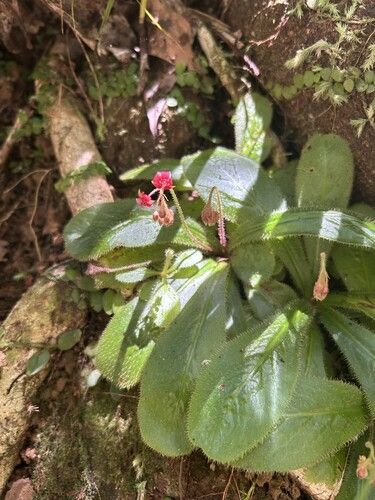
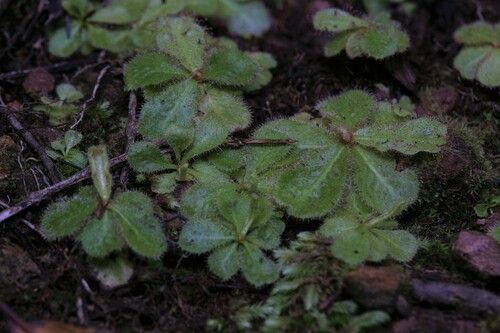
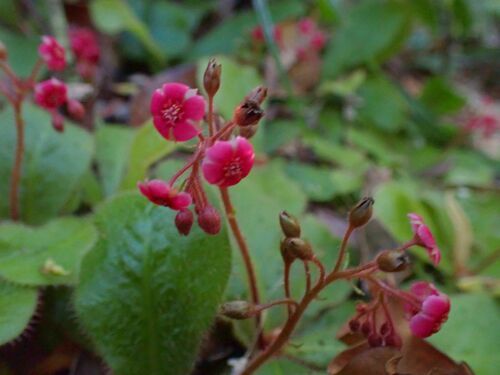
Etymology
- Drosera: from the Greek droserós, “covered in dew”.
- schizandra: from the Greek schízein, “to split”, and anḗr, andrós, “man”, which in botany refers to the stamens. The name probably refers to split anthers (probable interpretation, not confirmed).
History of the description
The German botanist Ludwig Diels, a leading sundew specialist, described it in 1906. A variety of D. adelae that he had named in 1909, var. latior, is now included in it.
Description (how to recognise it)
- Leaves: round to oval, broad and flat, lying in a rosette. Their tip is sometimes notched, which gives them a heart shape, hence its English names.
Distribution
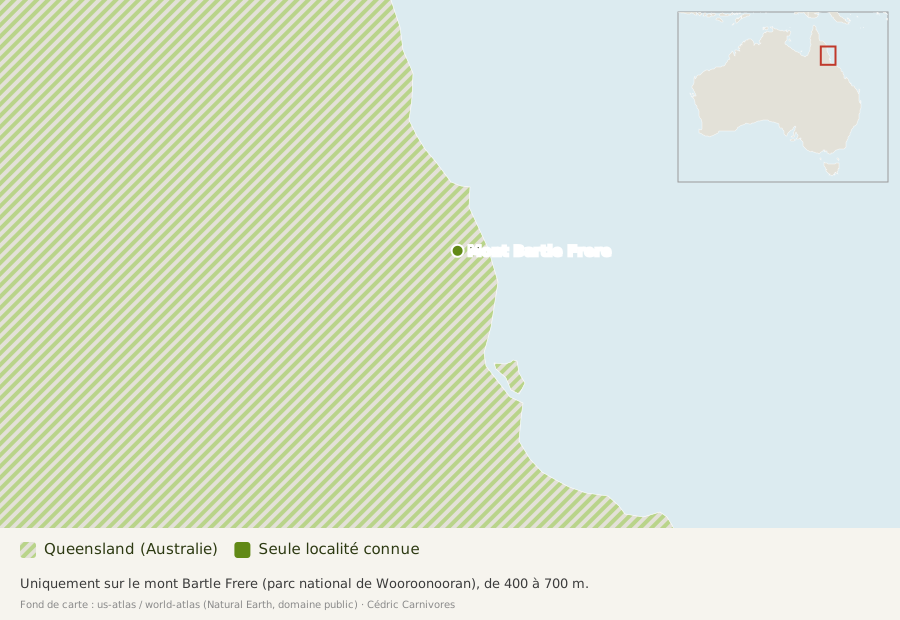
A single mountain in the whole world: Mount Bartle Frere, the highest peak in Queensland, in Wooroonooran National Park, between 400 and 700 m altitude.
Habitat
- Cool, humid tropical mountain forest;
- like its two “sisters”, it lives only in tropical forest, along streams.
The “three sisters of Queensland”
See the sheet on D. adelae: D. adelae lives around Rockingham Bay, D. schizandra 100 km further north on Mount Bartle Frere, and D. prolifera another 140 km further north, on Thornton Peak.
Threats and protection
Classed as “vulnerable” under the Queensland Nature Conservation Act (1992). Its range, limited to a single mountain, makes it very fragile.
Did you know?
- The whole species fits on the slopes of a single mountain.
Sources
- Wikipedia (English), Drosera schizandra: Diels 1906, heart-shaped leaves, names, status.
- International Carnivorous Plant Society, “The sisters of Queensland”: Mount Bartle Frere, Wooroonooran park, 400 to 700 m, cool tropical forest.