Drosera scorpioides Planch.
Species sheet, updated on 29/10/2026.
At a glance
| Scientific name | Drosera scorpioides Jules Émile Planchon, 1848 |
| Family | Droseraceae; subgenus Bryastrum, section Lamprolepis (pygmy sundews) |
| Common names | Shaggy sundew; in French droséra hirsute |
| Distribution | Jarrah forest region and southern coasts of south-western Australia |
| Habitat | White sand and clay, near marshes, on sand ridges, on laterite |
| Flowering | August to October |
Photos in the wild
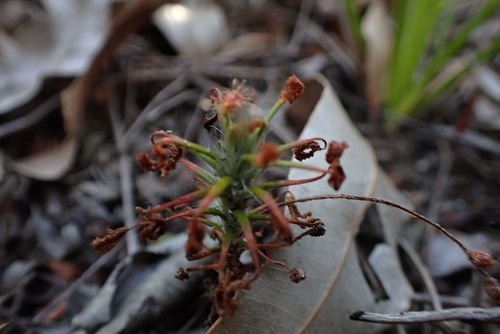
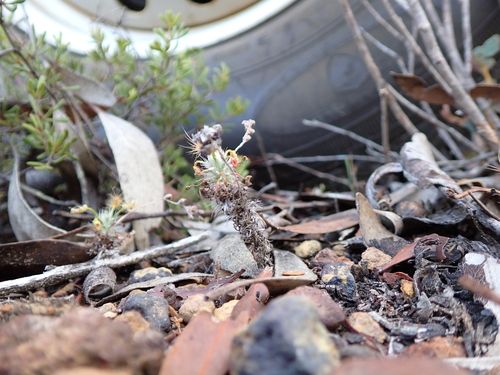
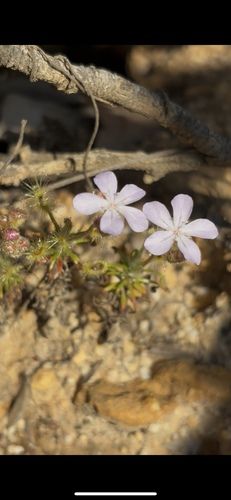
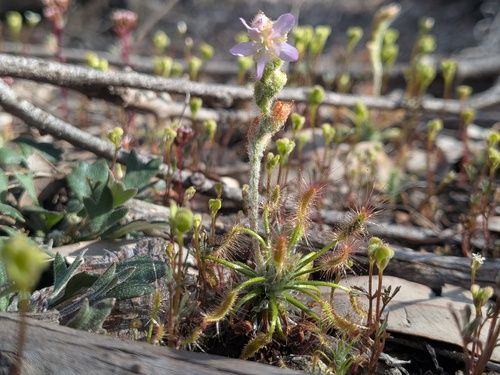
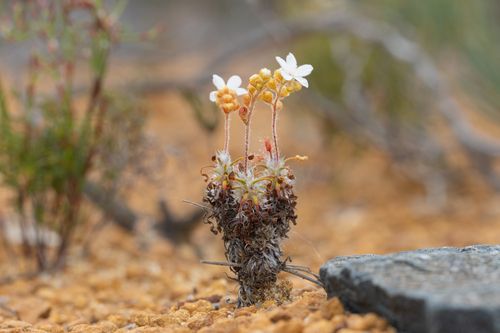
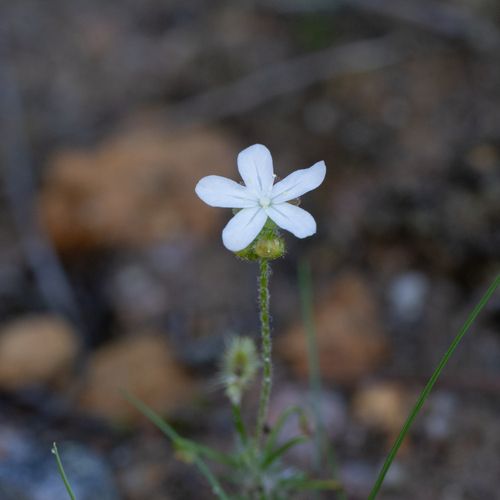
Etymology
- Drosera: from the Greek droserós, “covered in dew”.
- scorpioides: “resembling a scorpion”, from the Greek skorpíos. The name probably refers to its flower stalk, coiled like a scorpion's tail (reason for the name, not confirmed).
History of the description
The French botanist Jules Émile Planchon described it in 1848, the same year as Roridula gorgonias.
Description (how to recognise it)
- A large pygmy: its rosette reaches 5 cm across, and the plant up to 10 cm tall, which is exceptional for a pygmy sundew.
- Flowers: pink and white, from August to October.
- Lifespan: it can live up to seven years, depending on the form.
Distribution
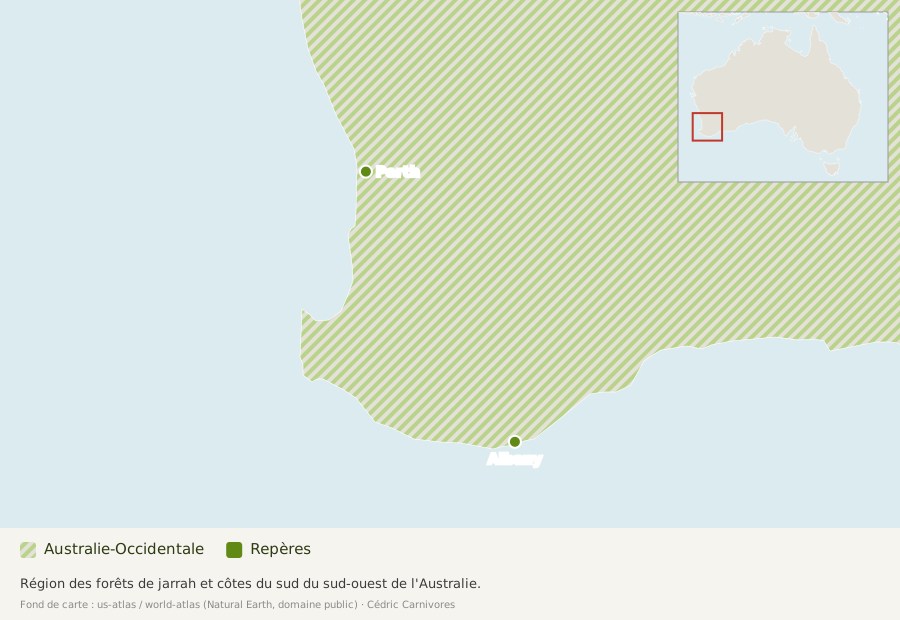
South-western Australia: the jarrah forest region (a local eucalyptus, Eucalyptus marginata) and the southern coasts. The product sold in the shop comes from a population in the Albany area.
Habitat
- White sand and clay;
- near marshes and on sand ridges;
- on laterite, an iron-rich red rock.
Did you know?
- It is one of the largest pygmy sundews: it can reach 10 cm and live for seven years.
Sources
- Wikipedia (English), Drosera scorpioides: Planchon 1848, English name, size, flowering, lifespan, jarrah region, soils; references: FloraBase; D'Amato 1998, The Savage Garden.