Drosera sessilifolia A. St.-Hil.
Species sheet, updated on 29/10/2026.
At a glance
| Scientific name | Drosera sessilifolia Auguste de Saint-Hilaire, 1824 |
| Synonym | D. dentata Benth. (Guyana) |
| Family | Droseraceae (section Thelocalyx) |
| Distribution | Brazil, Guyana, Venezuela |
| Habitat | Seasonal seeps on sandy or gravelly soil |
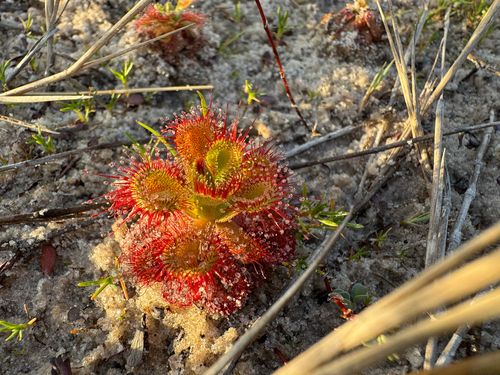
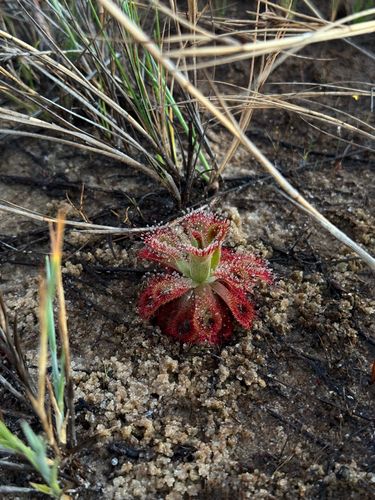
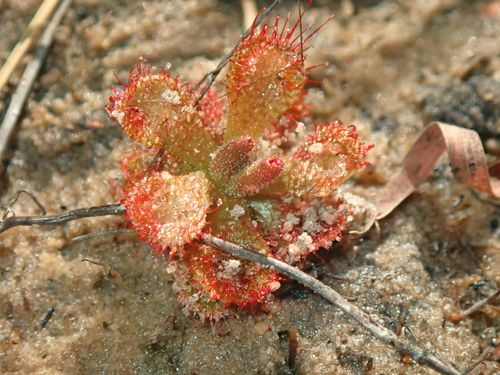
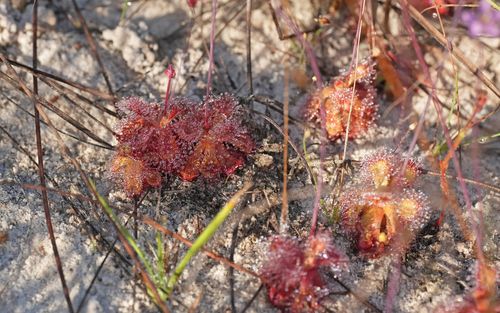
Photos in the wild
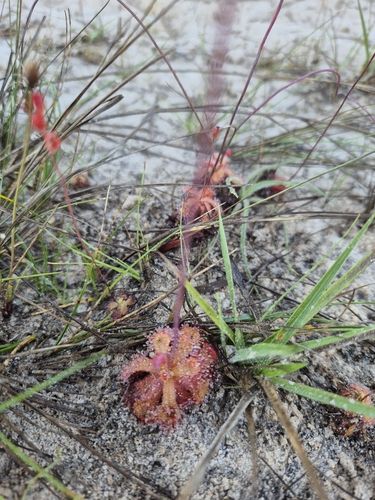
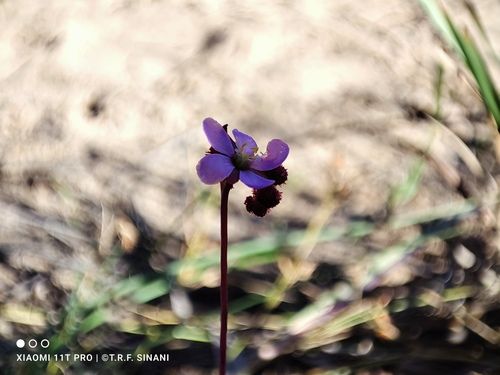
Etymology
- Drosera: see the genus sheet.
- sessilifolia: from the Latin, “with leaves without a petiole”.
History of the description
Saint-Hilaire described it in 1824 from plants from the far west of Minas Gerais, near the São Francisco river. Bentham then described D. dentata from Guyana, which Diels included in it in 1906.
Description (how to recognise it)
- A rosette of small wedge-shaped to round leaves, usually yellowish, which turn red with age.
- Lilac-pink flowers.
Distribution
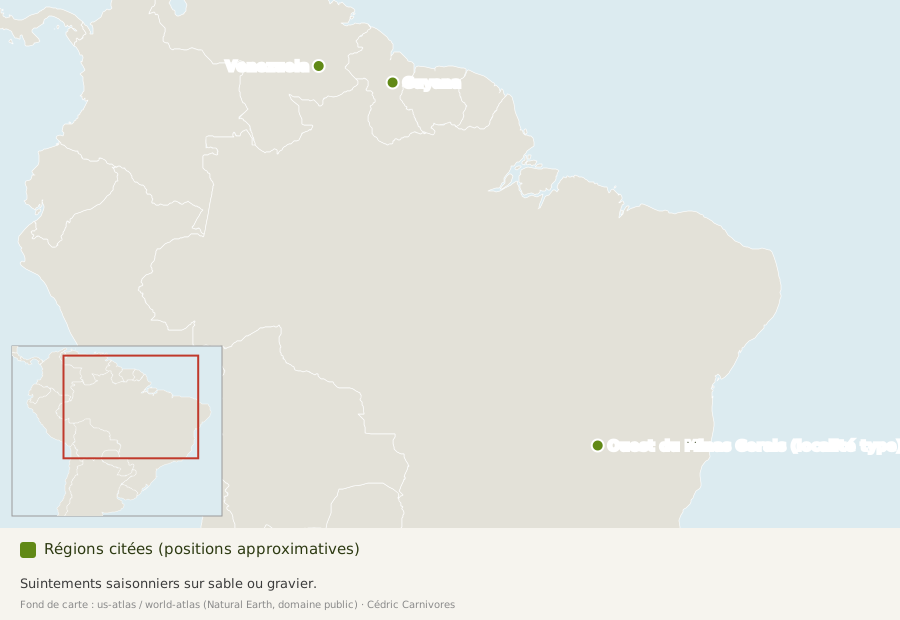
Brazil, Guyana and Venezuela.
Habitat
Sandy or gravelly soils of seasonal seeps, where a thin film of water forms.
Relationships: a distant cousin
It forms the small section Thelocalyx with just one other species, D. burmanni, from Australia and South-East Asia: two cousins separated by half the globe.
Sources
- Wikipedia (English), Drosera sessilifolia: Saint-Hilaire 1824, type locality, synonym, description, chromosomes, range, habitat, section Thelocalyx.