Drosera slackii Cheek
Species sheet, updated on 29/10/2026.
At a glance
| Scientific name | Drosera slackii Martin Cheek, Kew Bulletin 42(3): 738, 1987 |
| Family | Droseraceae, section Drosera |
| Distribution | South-western Cape Province, South Africa: Kleinriviersberg mountains and southern Kogelberg |
| Habitat | Small peaty wetlands, marshy stream sources |
| Flowering | Southern spring |
Photos in the wild
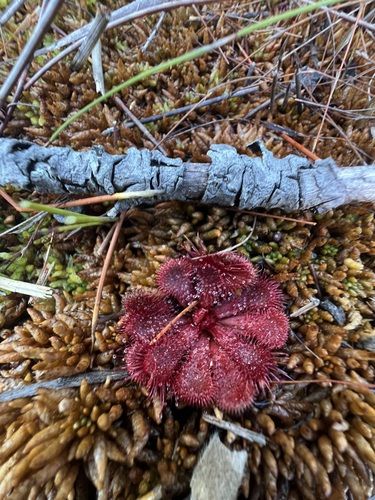
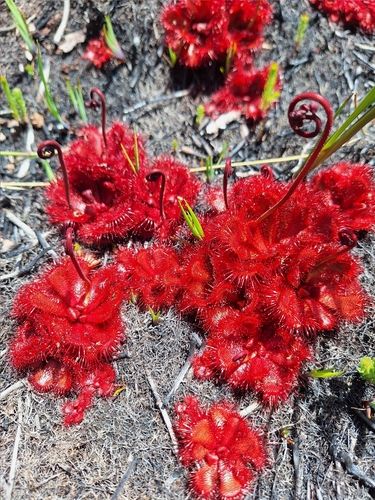
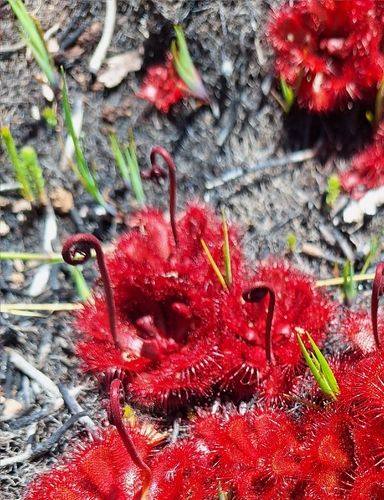
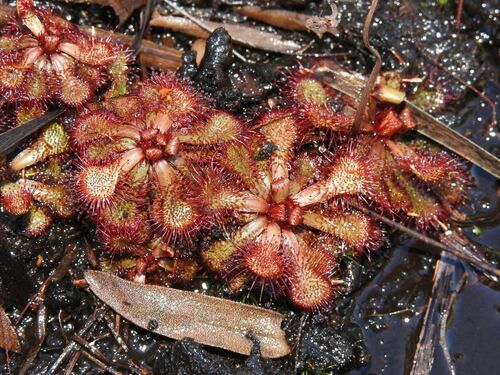
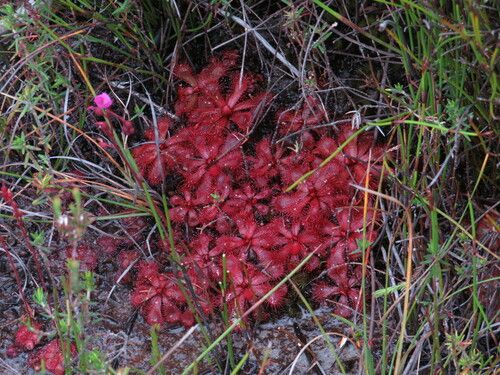
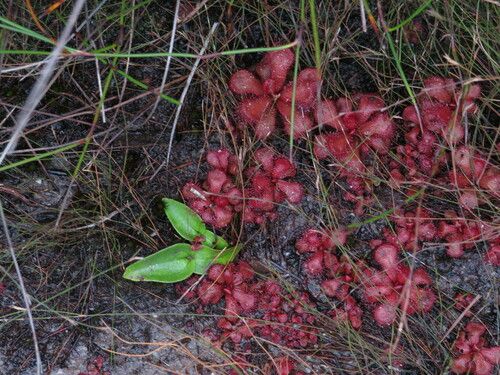
Etymology
- Drosera: from the Greek droserós, “covered in dew”.
- slackii: dedicated to Adrian Slack (1933-2018), a British horticulturist and author, well known to carnivorous plant growers for his books.
History of the description
The botanist Martin Cheek, of Kew Gardens, described it in 1987 in the Kew Bulletin. The reference site of the species (its “type locality”) is in the Kleinriviersberg mountains.
Description (how to recognise it)
- Habit: a flat rosette, up to 8 cm across, which over time forms a very short stem.
- Leaves: of a characteristic shape, with a few stiff, flattened red hairs on their underside.
- Flowers: each spring, adult plants bear one scape (rarely two) up to 40 cm tall, with dark pink flowers.
- Chromosomes: 2n = 40.
Distribution
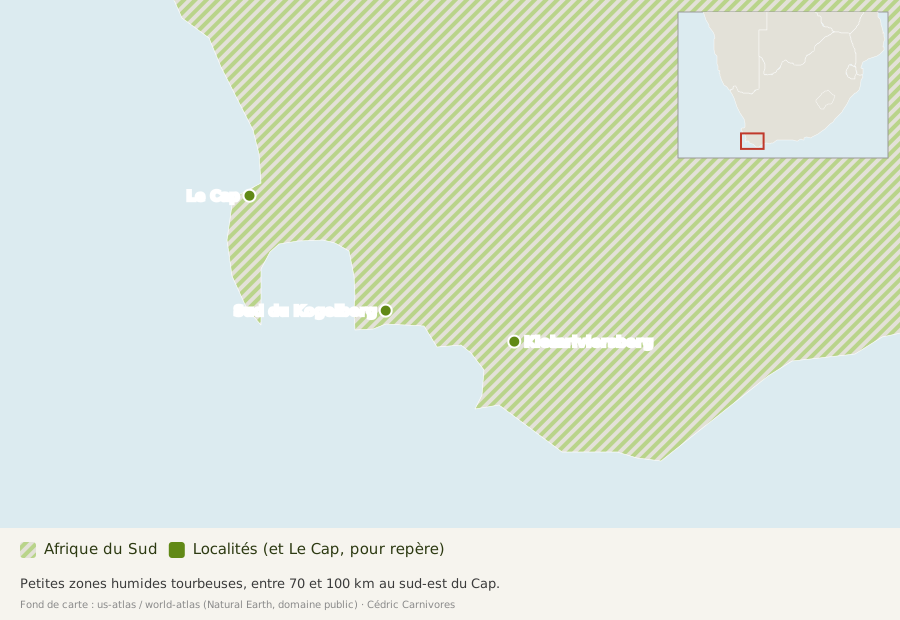
South-western Cape Province, between 70 and 100 km south-east of Cape Town:
- in the Kleinriviersberg mountains, where it is known from at least two stream sources;
- in the southern Kogelberg.
Habitat
- Small peaty wetlands;
- marshy sources of streams, where they rise.
Ecology
It shares its habitat with an astonishing gathering of carnivorous plants: Drosera admirabilis, D. aliciae, D. capensis, the hybrid D. × corinthiaca, the bladderwort Utricularia bisquamata and Roridula gorgonias, the bug plant (see its sheet).
Did you know?
- In the same place there are at least six other carnivorous plants, including Roridula.
Sources
- Wikipedia (English), Drosera slackii: Cheek 1987, Adrian Slack, pink flowers.
- Plants of the World Online (Kew), Drosera slackii: publication, range.
- Gibson, R. (2000), Carnivorous Plant Newsletter (summary of research results): Kleinriviersberg, Kogelberg, peaty wetlands, neighbouring plants, description, 2n = 40.