Drosera spatulata Labill.
Species sheet, updated on 29/10/2026.
At a glance
| Scientific name | Drosera spatulata Jacques Labillardière, 1804-1806 (often spelled spathulata) |
| Common name | Spoon-leaved sundew; in French “droséra à feuilles en spatule” |
| Synonyms | D. loureirii, D. triflora… |
| Family | Droseraceae |
| Distribution | South-East Asia, southern China, Japan, Micronesia, Papua New Guinea, eastern Australia, Tasmania, New Zealand |
Photos in the wild
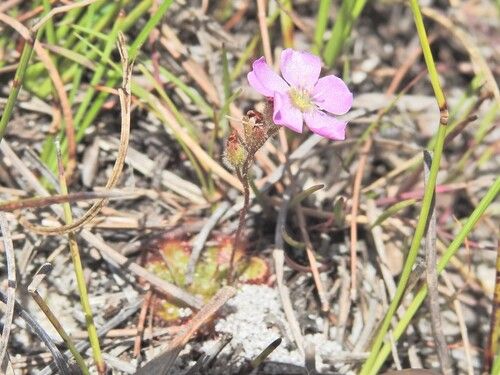
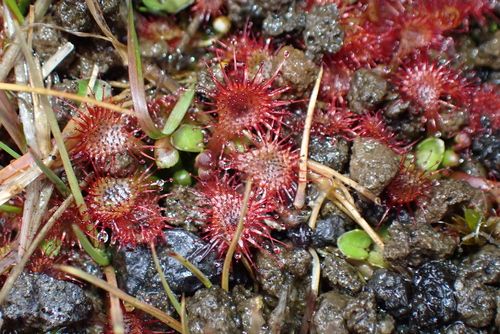
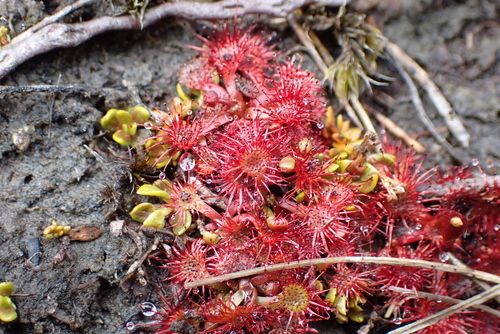
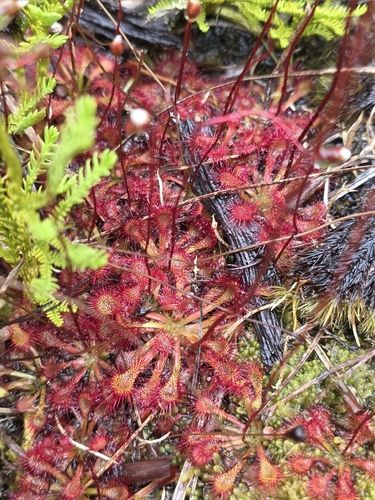
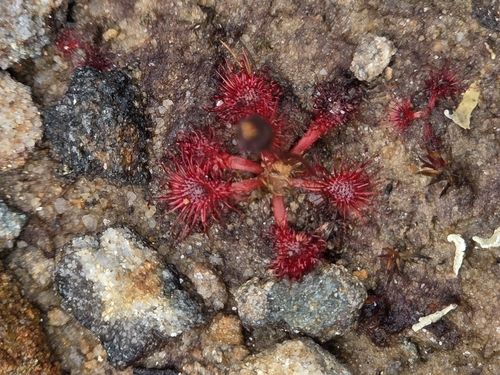
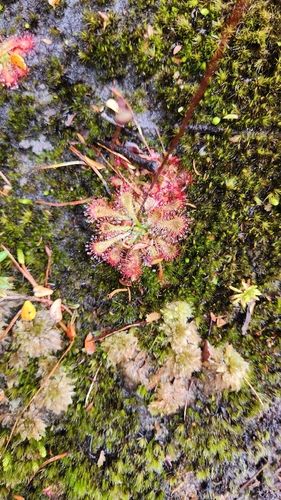
Etymology
- Drosera: see the genus sheet.
- spatulata: from the Latin, “spatula-shaped”, for its leaves. In 1824, Candolle mistakenly spelled it “spathulata”, a spelling that is still common.
History of the description
The French naturalist Jacques Labillardière described it from a plant from Tasmania, collected during the d'Entrecasteaux expedition in search of La Pérouse (expedition: historical reminder, not confirmed).
Description (how to recognise it)
- A small rosette about 4 cm across, with spoon-shaped leaves about 5 mm by 4.
- White or pink flowers, up to 6 mm, about six at a time, on scapes 8 cm tall, at the start of summer.
- Very variable, with no hibernaculum.
Varieties
| Variety | Distinctive feature |
|---|---|
| var. gympiensis (Gibson & Snyder, 2005) | sepals always hairy |
| var. bakoensis (2009) | Bako National Park, Sarawak (Borneo) |
Some cultivars have been named: 'Hong Kong', 'Kanto', 'Ruby Slippers', 'Tamlin'.
Distribution
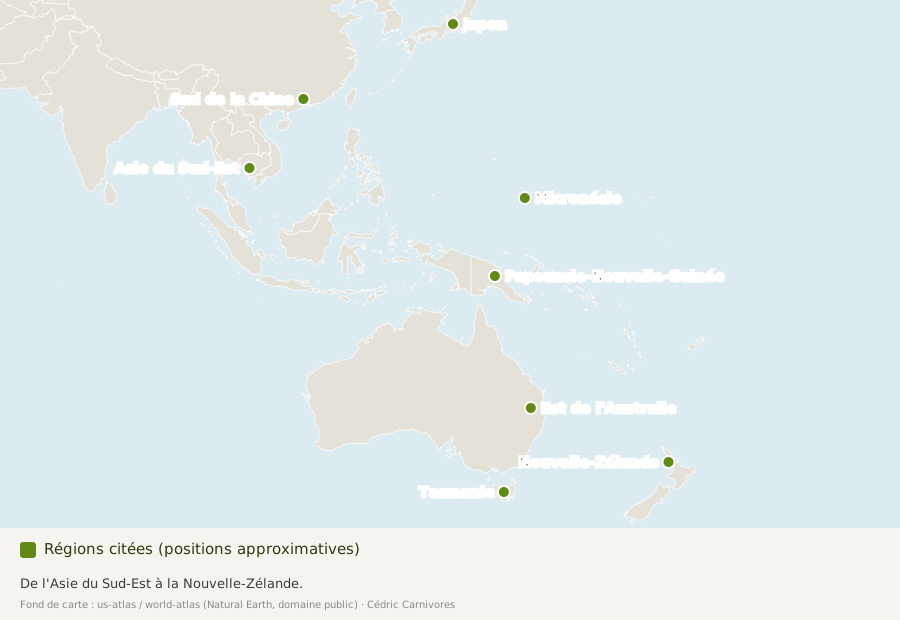
From South-East Asia to Japan, in Micronesia, Papua New Guinea, eastern Australia, Tasmania and New Zealand.
Did you know?
- In cultivation, it self-seeds so freely that it is considered a “weed” in collections.
Sources
- Wikipedia (English), Drosera spatulata: Labillardière, Tasmania, spelling, description, varieties, cultivars, range, synonyms.