Drosera uniflora Willd.
Species sheet, updated on 29/10/2026.
At a glance
| Scientific name | Drosera uniflora Carl Ludwig Willdenow, 1809 |
| Synonyms | D. macloviana, D. magellanica |
| Family | Droseraceae |
| Distribution | Patagonia, Tierra del Fuego, Falkland Islands; coastal mountains of Chile |
| Habitat | Bogs, heathland and wetlands, with its roots in water |
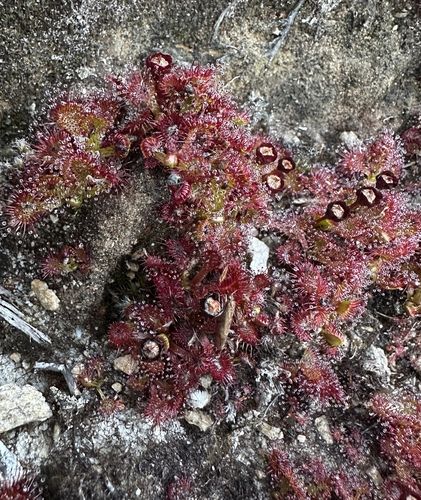
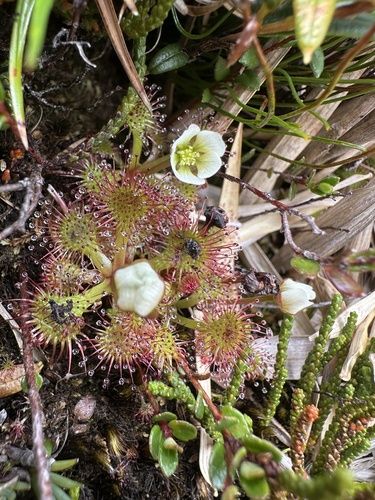
Photos in the wild
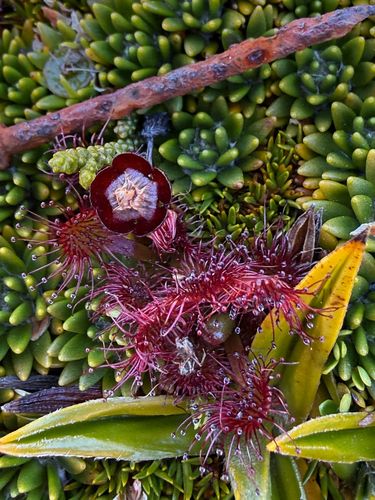
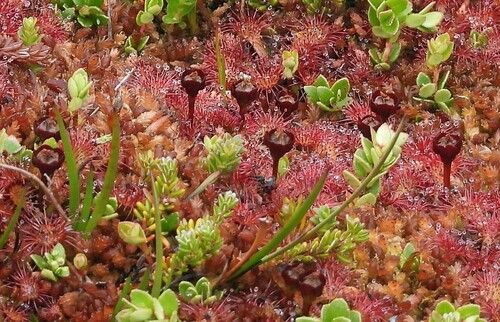
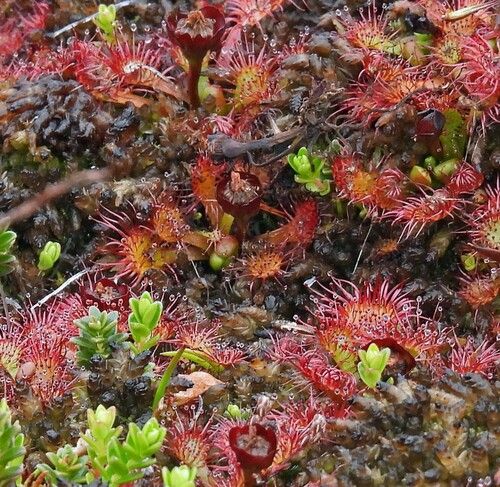
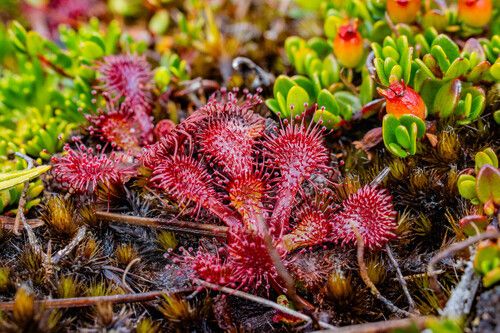
Etymology
- Drosera: see the genus sheet.
- uniflora: from the Latin, “with a single flower”.
Description (how to recognise it)
- A tiny sundew with a single white flower.
- Its mobile tentacles hold and digest insects with proteases and phosphatases.
Distribution
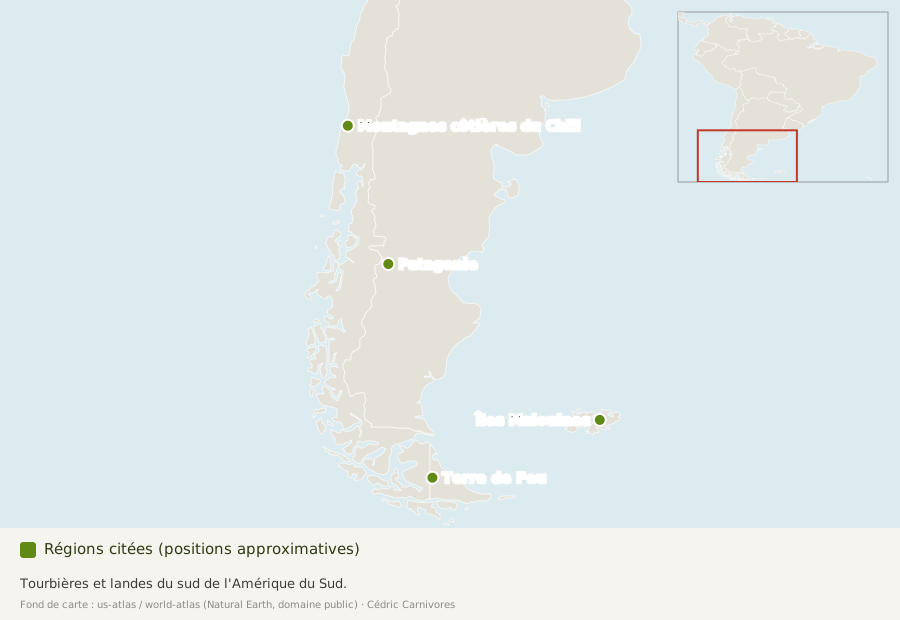
Patagonia, Tierra del Fuego, the Falkland Islands (Malvinas) and the north of the Patagonian forest. In Chile, in the coastal mountains from 500 to 2 000 m, mainly on north-facing slopes. It is the southernmost sundew in the Americas (not confirmed).
Habitat
Unlike most sundews, it likes to have its roots in water: bogs, heathland and other wetlands very poor in nitrogen and phosphorus.
Evolution
Its closest relative is D. stenopetala from New Zealand. Genetics suggests that the sundews of South America descend from Australian ancestors.
Did you know?
- A record from Clarence Island, near Antarctica, is doubtful: it is probably Clarence Island in Chile.
Sources
- Wikipedia (English), Drosera uniflora: Willdenow 1809, synonyms, description, carnivory, range, altitude, habitat, relationships, Clarence Island.