Heliamphora nutans Benth.
Species sheet, updated on 29/10/2026.
At a glance
| Scientific name | Heliamphora nutans George Bentham, 1840 |
| Family | Sarraceniaceae |
| Distribution | Venezuela-Brazil-Guyana border: Roraima, Kukenán, Yuruaní, Maringma, Wei Assipu |
| Habitat | Wet tepui summits (2,000-2,700 m according to our list) |
Photos in the wild
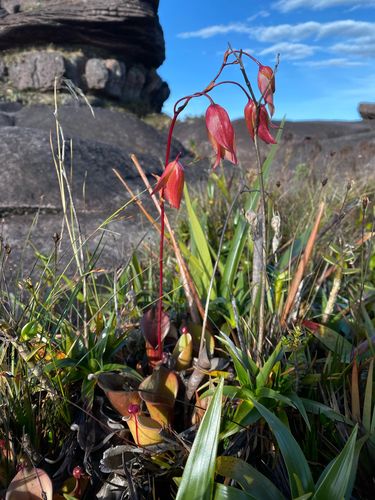
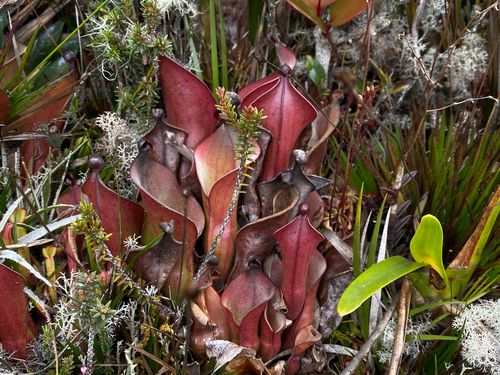
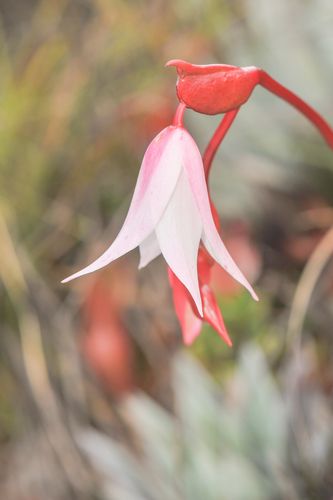
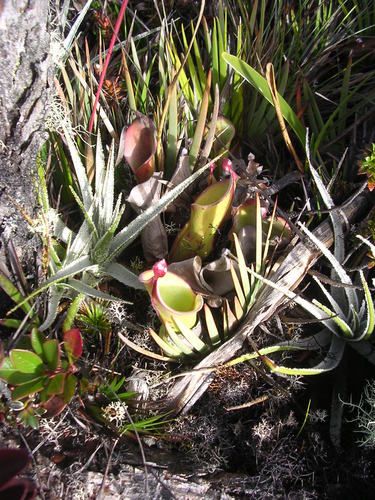
Etymology
- Heliamphora: see the genus sheet.
- nutans: from the Latin, “drooping, nodding” (probably for its drooping flowers, not confirmed).
History of the discovery
- 1839: the brothers Robert and Richard Schomburgk discovered it on Mount Roraima, without collecting any.
- 1840: Bentham described it: it is the first heliamphora described and the type species of the genus. It remained the only one known until 1931.
- 1881: the British collector David Burke collected it in British Guiana and introduced it to England.
Distribution
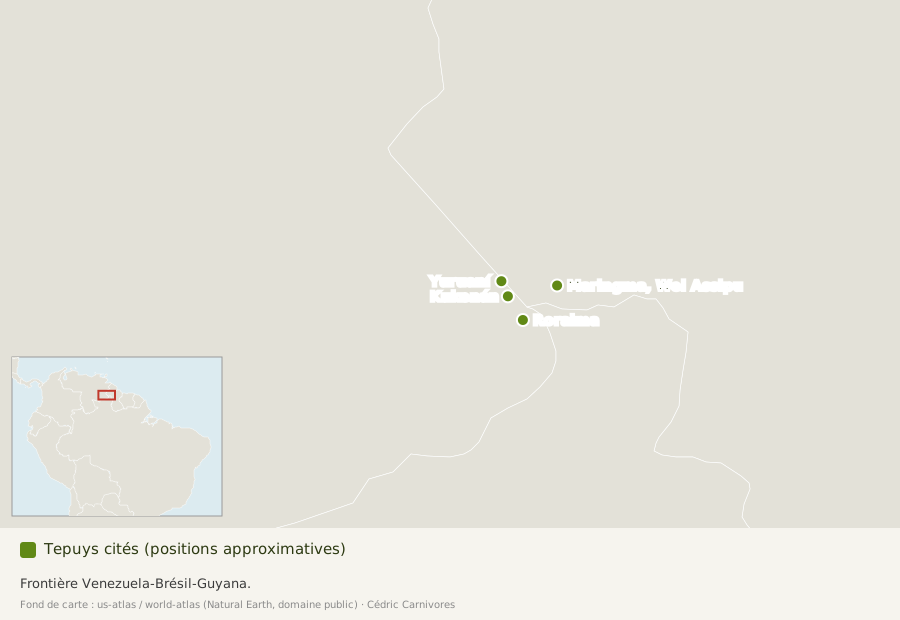
The border region of Venezuela, Brazil and Guyana, on the tepuis Roraima, Kukenán, Yuruaní, Maringma and Wei Assipu.
Ecology: aquaplaning
Its pitchers trap insects by aquaplaning: the downward-pointing hairs inside become much more slippery when wet, and insects slide to the bottom. A mechanism similar to that of many Nepenthes.
Natural hybrids
With H. glabra.
Sources
- Wikipedia (English), Heliamphora nutans: Bentham 1840, Schomburgk 1839, Burke 1881, etymology, range, aquaplaning.
- Wikipedia (English), Heliamphora: altitude, hybrid.