Utricularia gibba L.
Species sheet, updated on 30/10/2026.
At a glance
| Scientific name | Utricularia gibba Linné, 1753 |
| Synonym | U. exoleta R. Br. |
| Common names | Humped bladderwort, floating bladderwort; in French utriculaire bossue |
| Family | Lentibulariaceae (section Utricularia) |
| Distribution | Eastern United States, southeastern Canada, Central America, Caribbean, western Mediterranean, southern Africa, southern India; invasive elsewhere |
| Habitat | Shallow, nutrient-poor ponds, lakes, ditches, bogs and marshes |
| Status | Least concern (IUCN, 2019) |
Photos in the wild
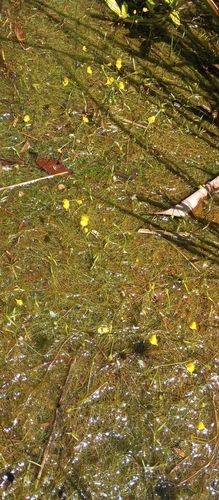
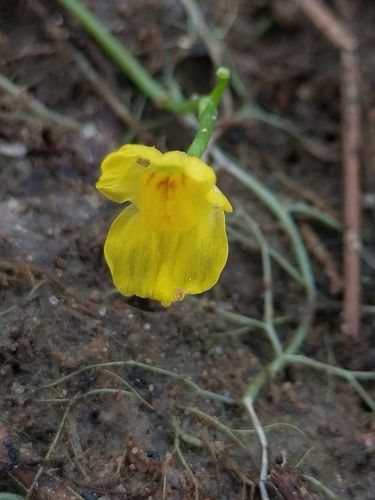
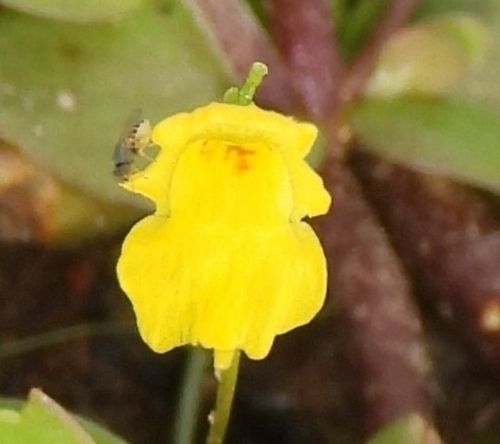
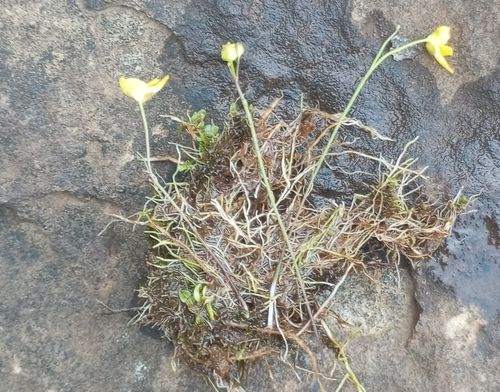
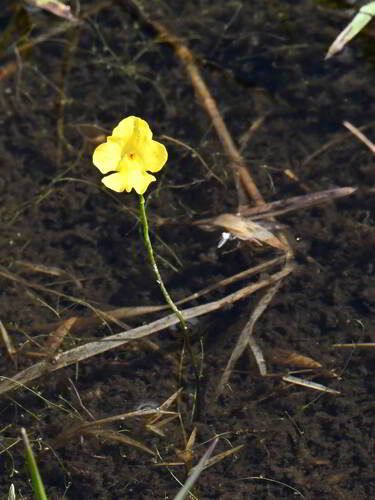
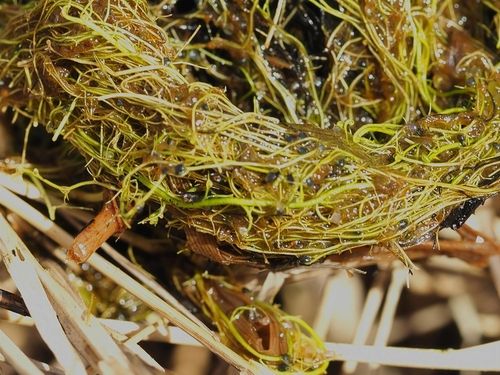
Etymology
- Utricularia: see the genus sheet.
- gibba: from the Latin, “hump”, for the swollen base of the lower lip of the flower.
Description (how to recognise it)
- A small aquatic bladderwort that forms mats, with thin stolons up to 20 cm.
- Tiny traps of 1 to 2.5 mm.
- Yellow flowers of 0.8 to 1.5 cm.
A record genome
Sequenced in 2013, its genome has only about 82 million base pairs, with just 3% repetitive DNA: an exceptionally small genome for a plant. Successive genome duplications, in waters poor in phosphorus, are thought to have pushed it to get rid of useless DNA.
Distribution
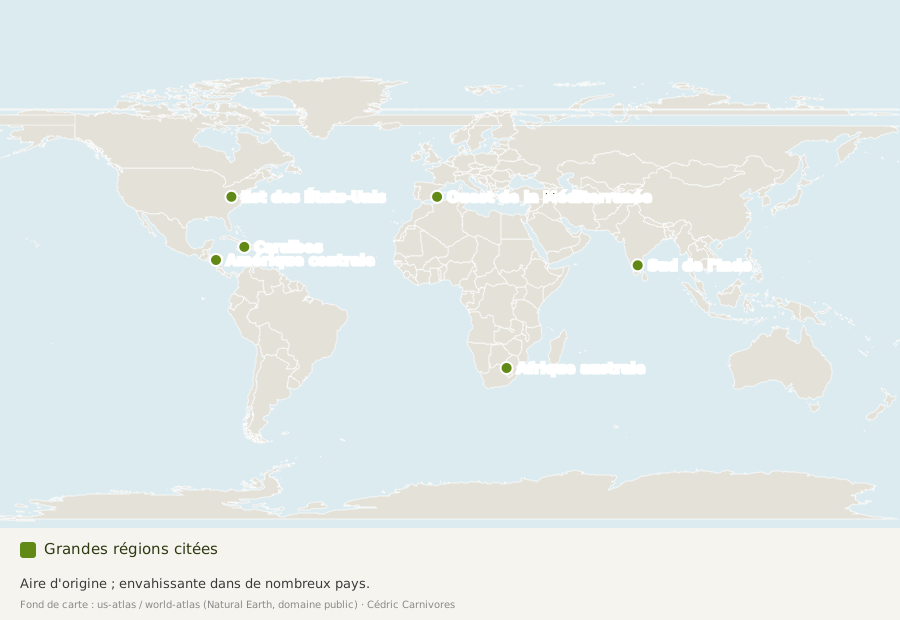
- Native: eastern United States, southeastern Canada, Central America, Caribbean, western Mediterranean, southern Africa, southern India.
- Invasive: Hawaii, Australia, Japan, Brazil, New Zealand, Singapore, Serbia, Hungary, United Kingdom.
Habitat
Ponds, lakes, ditches, bogs and marshes, in shallow, nutrient-poor water.
Ecology
It catches very small prey, down to algae such as Scenedesmus.
In Florida
According to the Atlas of Florida Plants and the specimens in the University of South Florida herbarium.
- Herbarium: the University of South Florida herbarium holds 65 collections made between 1958 and 2024 in 34 Florida counties: Brevard, Broward, Calhoun, Charlotte, Clay, Collier, DeSoto, Escambia, Glades, Hardee, Hendry, Hernando, Highlands, Hillsborough, Indian River, Lee, Levy, Manatee, Marion, Martin, Miami-Dade, Nassau, Orange, Osceola, Palm Beach, Pasco, Pinellas, Polk, Sarasota, Seminole, St. Lucie, Sumter, Wakulla and Walton.
- Habitats noted on the labels: ditches and canals (even almost dry), pasture ponds, sandy shores of shallow lakes, floating mats of vegetation, cattail and pickerelweed marshes, wet mud under cypresses. The Atlas lists it among “obligate wetland” plants.
- Flowering in Florida: all year round, mostly from May to September.
Sources
- Wikipedia (English), Utricularia gibba: Linné 1753, synonym, etymology, description, 2013 genome, range, invasions, habitat, prey, status.
- Atlas of Florida Plants (University of South Florida), Utricularia gibba, and its herbarium specimens: status in Florida, counties, habitats, flowering.