Utricularia humboldtii R. H. Schomb.
Species sheet, updated on 30/10/2026.
At a glance
| Scientific name | Utricularia humboldtii Robert Hermann Schomburgk, 1840 |
| Family | Lentibulariaceae (section Iperua) |
| Distribution | Brazil, Guyana, Venezuela (Guiana Highlands) |
| Habitat | Water held in bromeliads (Brocchinia…), tree trunks, damp savannas; mostly from 1,200 to 2,500 m |
Photos in the wild
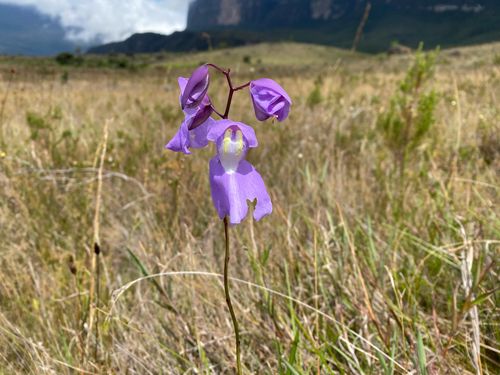
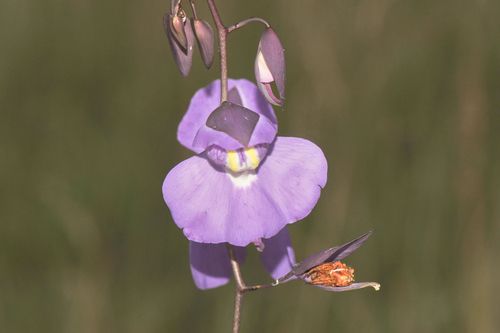
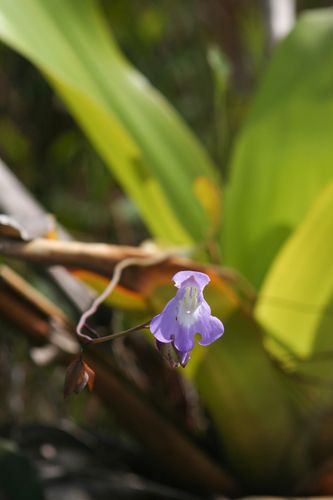
Etymology
- Utricularia: see the genus sheet.
- humboldtii: in honour of the naturalist Alexander von Humboldt (not confirmed).
History of the description
Described in 1840 by Robert Schomburgk, the explorer of British Guiana, the same year that Bentham described Heliamphora nutans from his collections.
Description (how to recognise it)
- A large perennial bladderwort, with the largest flowers in the genus, and probably the largest traps.
A plant that lives inside other plants
- It grows mainly in the water held at the heart of bromeliads, such as Brocchinia micrantha, B. tatei, B. reducta or Orectanthe species.
- It sends out upright stolons that go in search of a neighbouring bromeliad, dip into its water and form a new plant there.
- It is also found on tree trunks, or on the ground in the shallow water of open savannas.
- It has been collected in flower in every month of the year.
Distribution
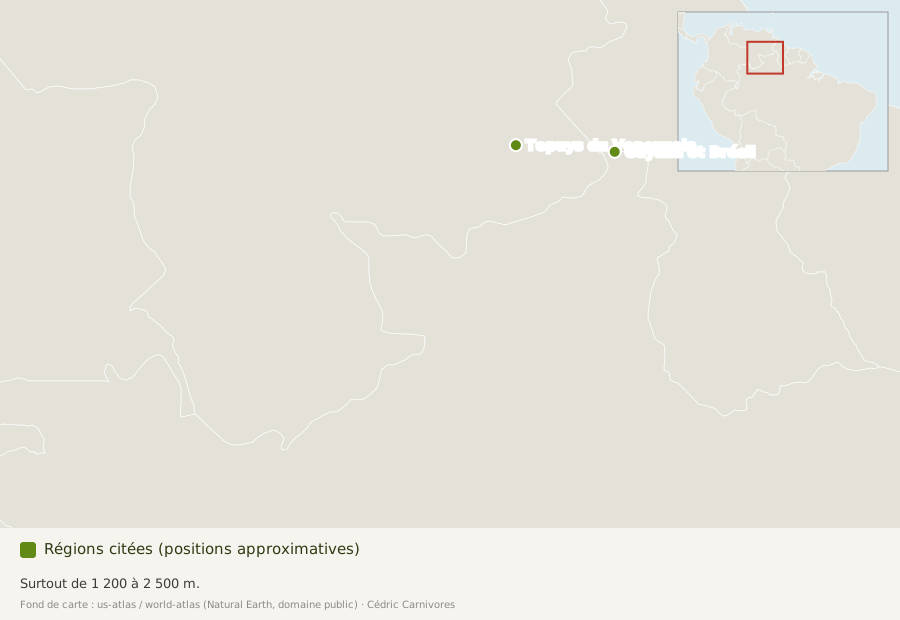
Brazil, Guyana and Venezuela, mostly from 1,200 to 2,500 m, sometimes from as low as 300 m.
Sources
- Wikipedia (English), Utricularia humboldtii: Schomburgk 1840, size of flowers and traps, habitat in bromeliads, stolons, range, altitude, flowering.
- Wikipedia (English), Heliamphora: Schomburgk and Bentham 1840.