Utricularia livida E. Mey.
Species sheet, updated on 30/10/2026.
At a glance
| Scientific name | Utricularia livida Ernst Heinrich Friedrich Meyer, 1837 |
| Common name | Leaden bladderwort (in French “utriculaire plombée”) |
| Family | Lentibulariaceae |
| Distribution | Central and southern Africa (Angola, Kenya, Madagascar, South Africa, Tanzania, Uganda, Zimbabwe…) and Mexico |
| Habitat | Marshy soils or thin soil over rock, from sea level to 2,830 m |
| Status | Least concern (IUCN, 2018) |
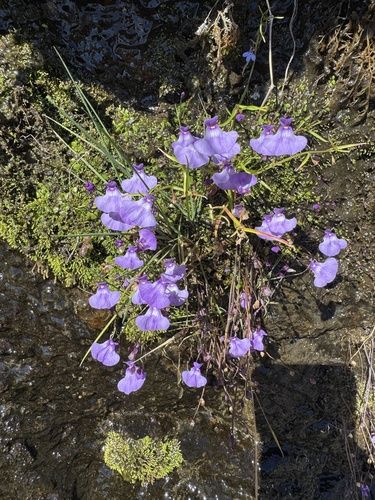
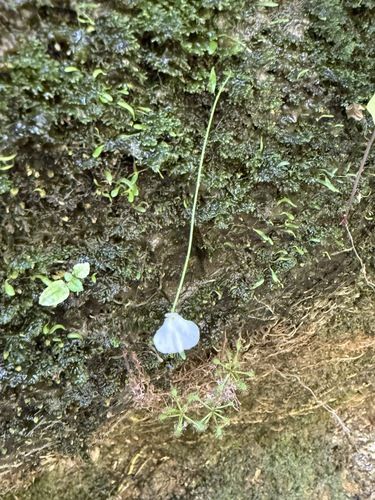
Photos in the wild
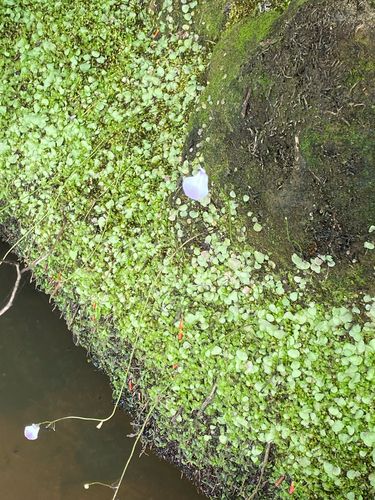
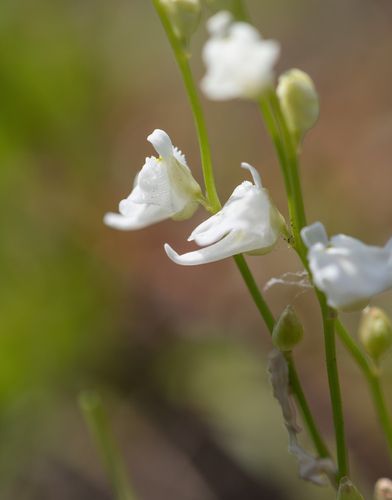
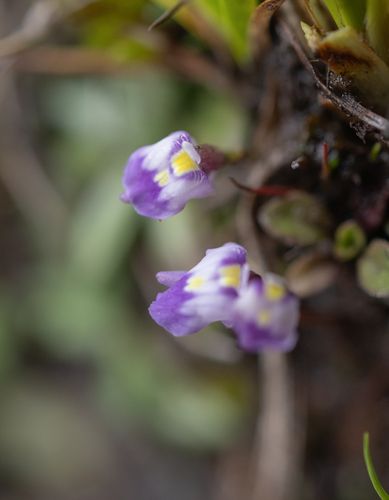
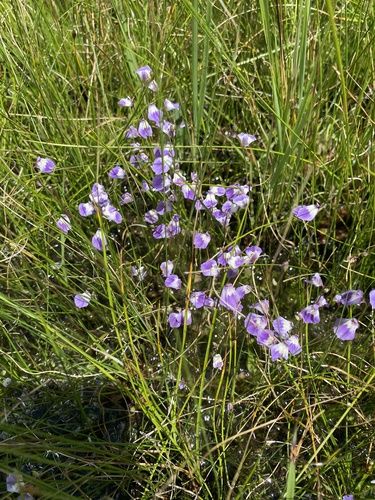
Etymology
- Utricularia: see the genus sheet.
- livida: from the Latin, “livid, lead-coloured”, for the pale colour of its flowers.
Description (how to recognise it)
- A perennial plant up to about 50 cm across; its underground leaves bear tiny traps that catch micro-organisms in the wet soil.
- Pale lavender or white flowers, kidney-shaped, on thin stems, mainly in summer.
- Very variable, hence its many synonyms.
Distribution
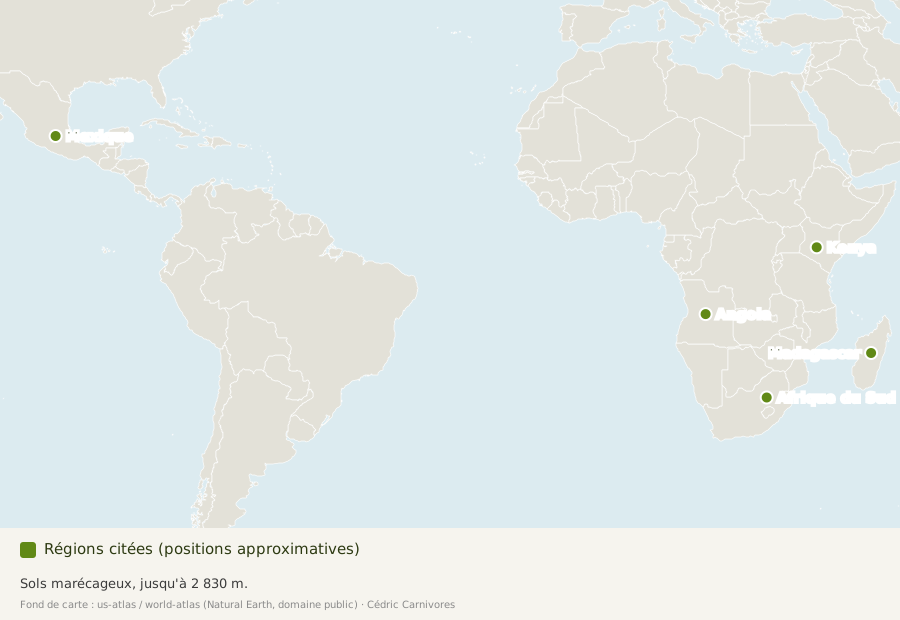
Central and southern Africa: Angola, Kenya, Madagascar, South Africa, Tanzania, Uganda, Zimbabwe…; and, surprisingly, Mexico.
Habitat
On the ground, in marshy areas or on a thin layer of soil lying on rock, from sea level to 2,830 m.
Sources
- Wikipedia (English), Utricularia livida: Meyer 1837, etymology, description, range, habitat, altitude, status.