Utricularia macrorhiza Le Conte
Species sheet, updated on 30/10/2026.
At a glance
| Scientific name | Utricularia macrorhiza John Eatton Le Conte |
| Common name | Common bladderwort |
| Family | Lentibulariaceae (section Utricularia) |
| Distribution | North America (United States, Canada) and temperate East Asia |
| Habitat | Ponds and lakes, also slow streams and rivers |
| Status | “Secure” (NatureServe, G5) |
Photos in the wild
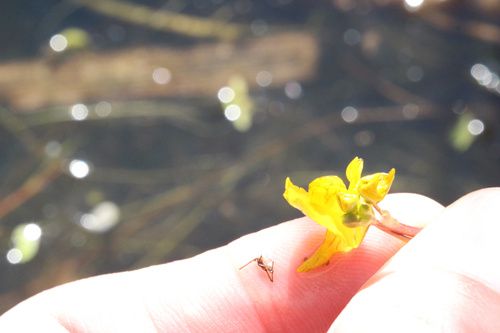
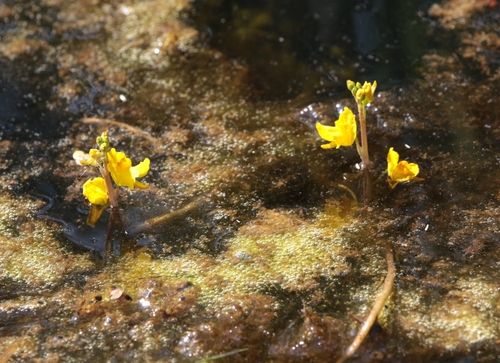
Etymology
- Utricularia: see the genus sheet.
- macrorhiza: from the Greek, “with a large root” (reason for the name; bladderworts have no true roots, not confirmed).
Description (how to recognise it)
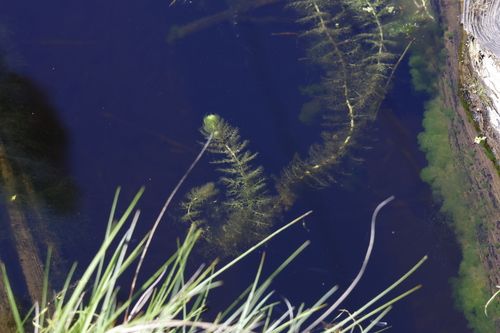
- A free-floating aquatic bladderwort, perennial.
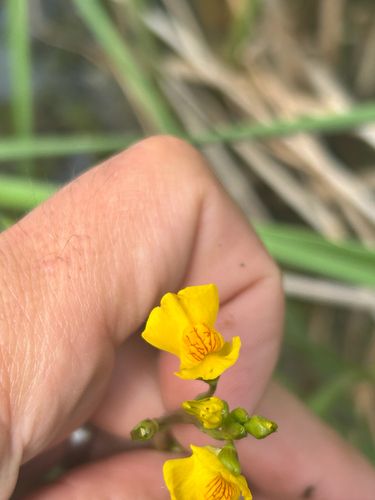
- 6 to 20 large yellow flowers on an upright stem, from June to August: the largest flowers of all bladderworts according to Wikipedia.
The trap in action
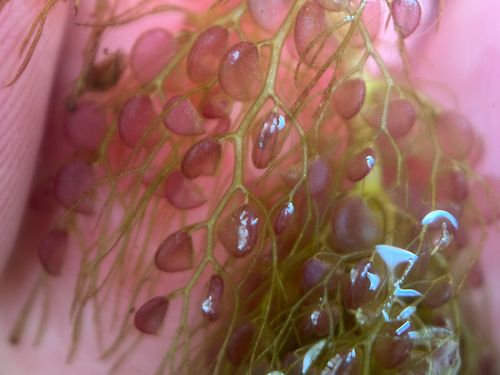
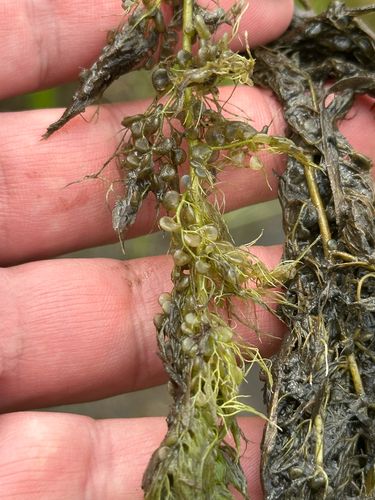
A small animal touches the trigger hairs: the door opens inwards, water and prey are sucked in, and the door closes again in 2 thousandths of a second. Prey that is too large and gets stuck in the opening is digested bit by bit.
Distribution
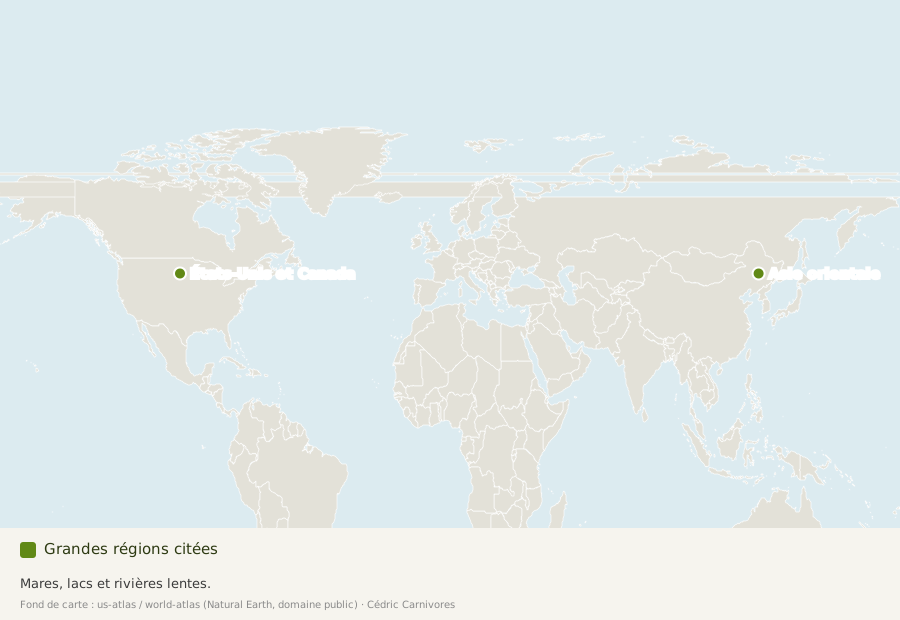
North America (all of the United States and Canada) and temperate East Asia; there it replaces U. vulgaris.
Habitat
Mainly ponds and lakes, also slow streams and rivers.
Sources
- Wikipedia (English), Utricularia macrorhiza: author, name, description, flowers, trap, range, habitat, status.