Utricularia ochroleuca R. W. Hartm.
Species sheet, updated on 30/10/2026.
At a glance
| Scientific name | Utricularia ochroleuca Robert Wilhelm Hartman |
| Synonyms | U. occidentalis, U. brevicornis… |
| Common names | Pale bladderwort, cream-flowered bladderwort; in French utriculaire jaune pâle |
| Family | Lentibulariaceae (section Utricularia) |
| Distribution | Circumboreal: North America, Asia, Europe |
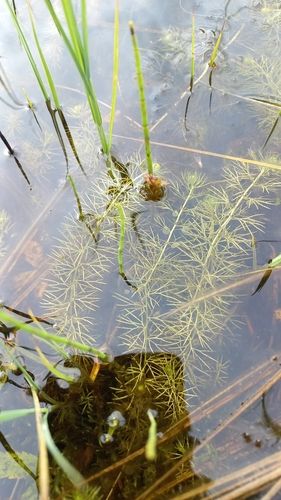
| Habitat | Shallow water, usually anchored to the bottom |
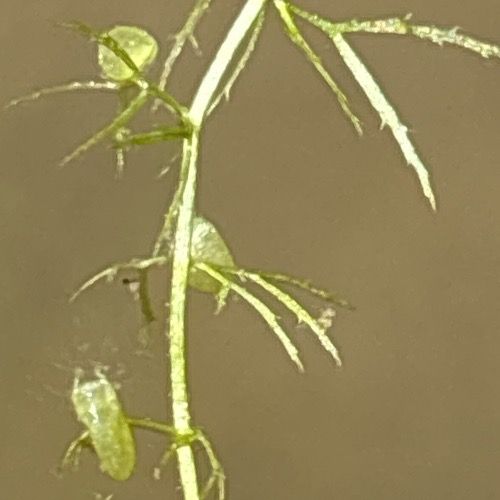
Photos in the wild
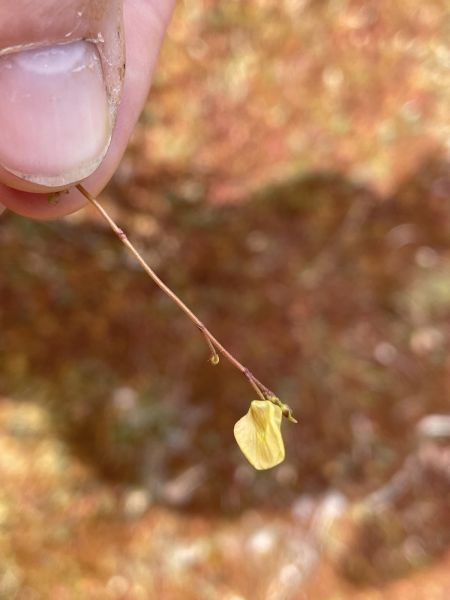
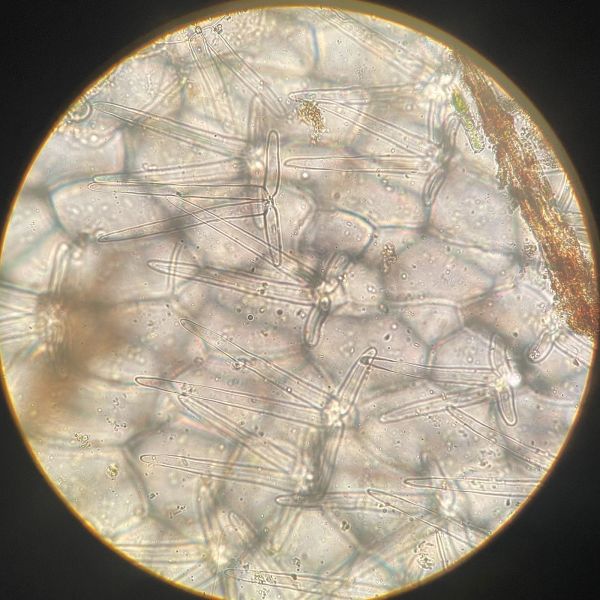
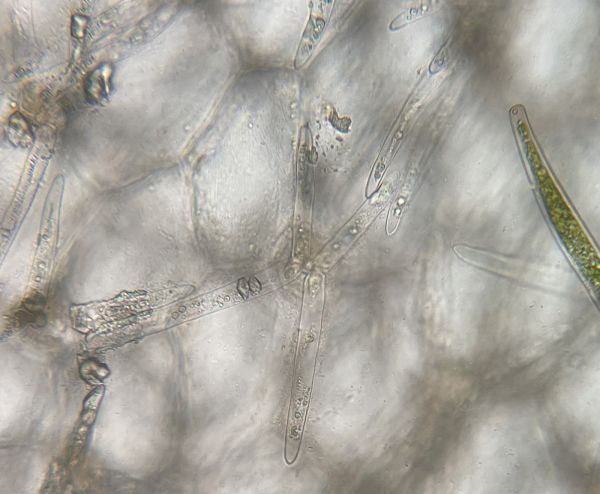
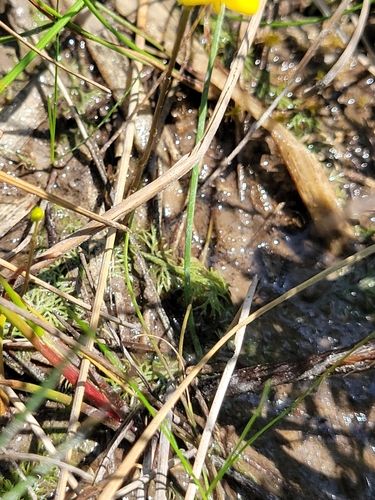
Etymology
- Utricularia: see the genus sheet.
- ochroleuca: from the Greek ochros, “pale yellow”, and leukos, “white”: “yellowish white”, for its flowers.
Description (how to recognise it)
- A small perennial bladderwort, usually anchored to the substrate, with cream flowers.
- A rootless, aquatic to amphibious bladderwort with two kinds of stems: green, roughly horizontal stems that photosynthesise and carry very few traps, and colourless stems buried in the soft bottom, covered with traps (Adamec and Lev, 2002).
- It looks very much like U. intermedia, from which it is told apart by the flower and by the shape of the small four-armed glands inside the traps (Adamec and Lev, 2002).
A debated origin
Among its synonyms is the hybrid U. intermedia* × *U. minor: some authors see it as a species that arose from this cross.
Distribution
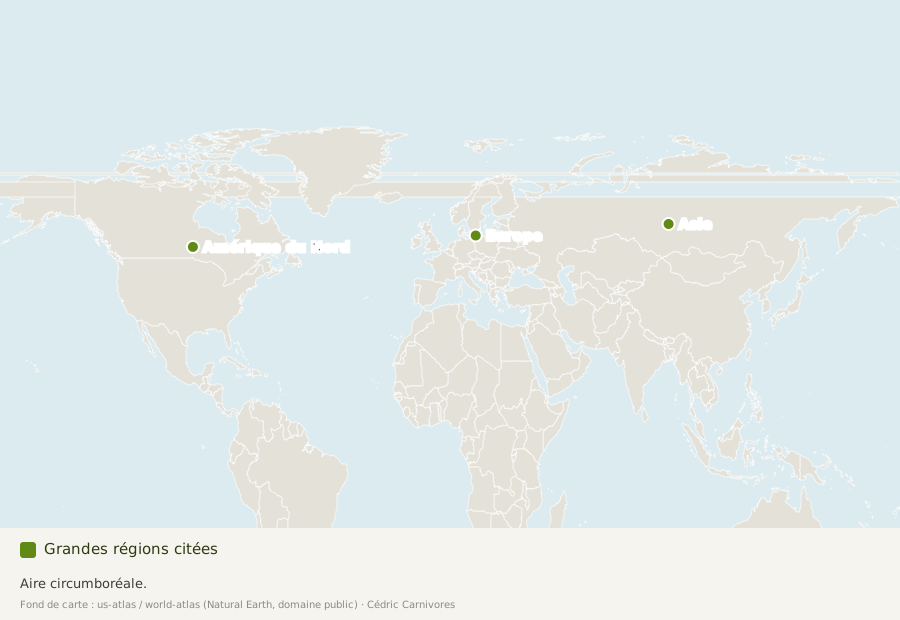
Circumboreal: North America, Asia and Europe. According to Kew's world plant list (WCVP), it is native to 43 regions of the world (see the map and the Kew source).
Habitat
According to Adamec and Lev (2002), it lives in shallow, nutrient-poor, brown standing waters (dystrophic): fen lakes, peat bogs, peaty ponds; in the Třeboň basin (Czech Republic), it tolerated a pH of 5.5 to 8.8, a wider range than U. intermedia, and preferred slightly more calcareous and better-lit waters. In Central Europe, the two species almost never grow in the same wetland.
Sources
- Wikipedia (English), Utricularia ochroleuca: author, names, habit, range, synonyms including the hybrid.
- (Greek etymology: general knowledge.)
- Kew, World Checklist of Vascular Plants (via GBIF): natural distribution.
- Adamec and Lev, Carnivorous Plant Newsletter 31, 2002 (archive.org): morphology, comparative ecology.