Utricularia reniformis A. St.-Hil.
Species sheet, updated on 30/10/2026.
At a glance
| Scientific name | Utricularia reniformis Auguste de Saint-Hilaire, 1830 |
| Synonyms | U. ianthina, U. maxima… |
| Family | Lentibulariaceae (section Iperua) |
| Distribution | Brazil |
| Habitat | Wet grasslands; sometimes in the water of bromeliads; from 750 to 2 500 m |
Photos in the wild
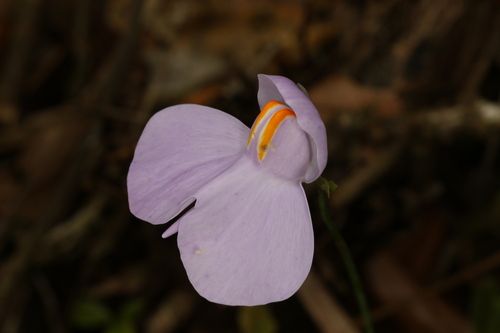
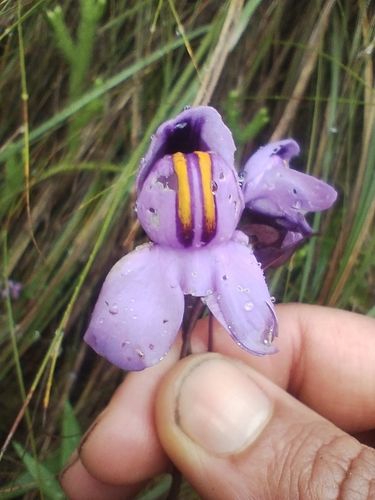
Etymology
- Utricularia: see the genus sheet.
- reniformis: from the Latin, “kidney-shaped”, for its leaves.
Description (how to recognise it)
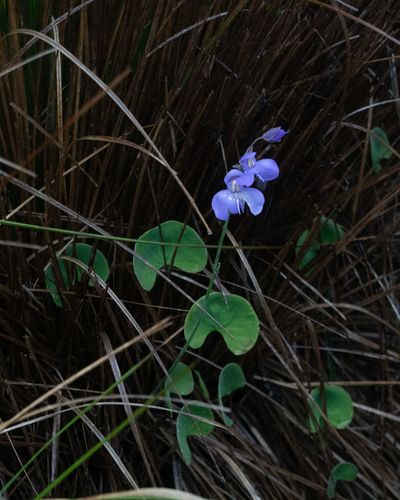
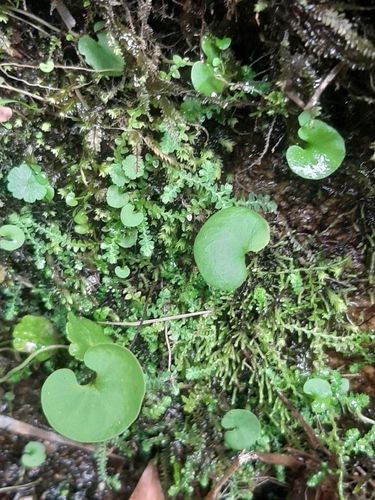
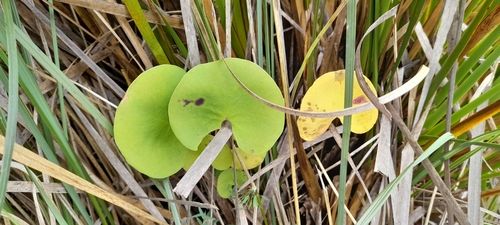
- A large perennial bladderwort with kidney-shaped leaves about 7 cm across, like those of a Dichondra.
- The traps arise from a white, fleshy rhizome and stay below the surface.
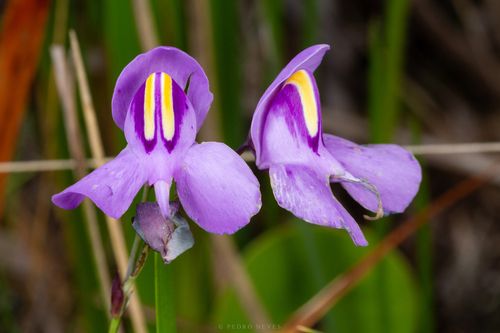
- 2 to 5 flowers on an erect raceme; the upper lip bears two vertical golden stripes edged with purple. Flowers from October to March.
Distribution
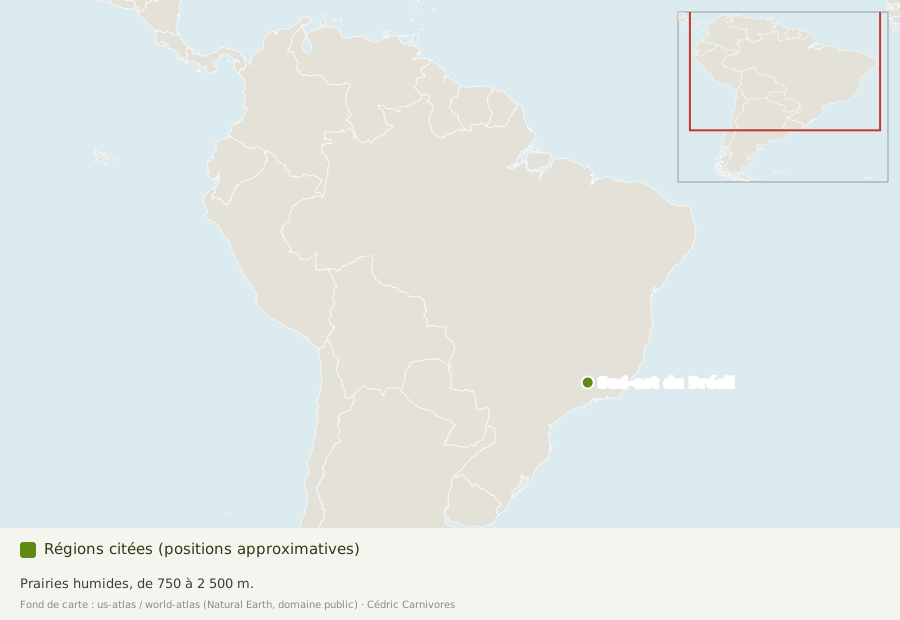
Endemic to Brazil, from 750 to 1 900 m in the south of its range, up to 2 500 m in the north.
Habitat
Mostly on the ground in wet grasslands; sometimes epiphytic, in the water held in the leaf axils of bromeliads.
Sources
- Wikipedia (English), Utricularia reniformis: Saint-Hilaire 1830, description, flowers, range, altitudes, habitat, flowering, synonyms.
- (Section Iperua, not confirmed)