Aldrovanda vesiculosa L.
Species sheet, updated on 29/10/2026.
At a glance
| Scientific name | Aldrovanda vesiculosa Carl von Linné, Species Plantarum, 1753 |
| Common name | Waterwheel plant; in French aldrovandie, plante roue à aubes |
| Family | Droseraceae, together with Dionaea and Drosera |
| Distribution | Europe, Asia, Africa, Australia, in scattered populations |
| Habitat | Calm, shallow, clear, warm and nutrient-poor waters |
| Status | Endangered (IUCN) |
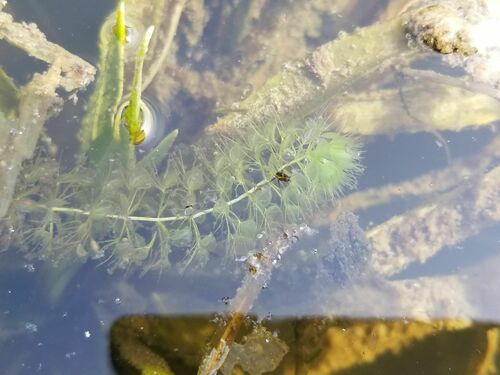
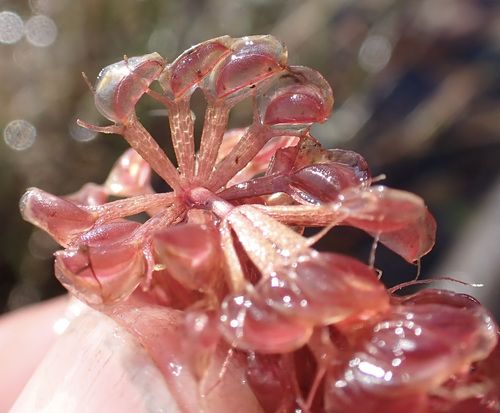
Photos in the wild
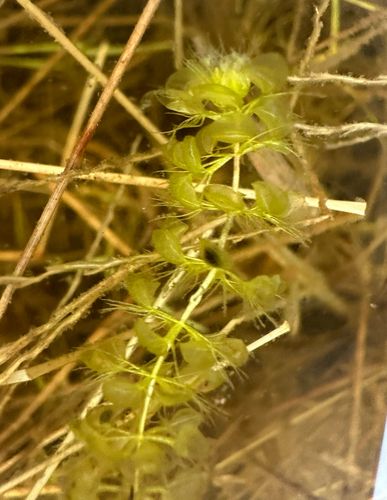
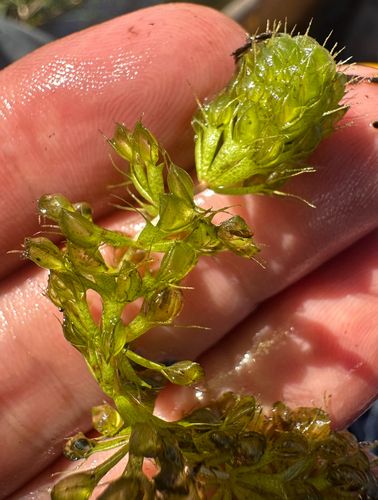
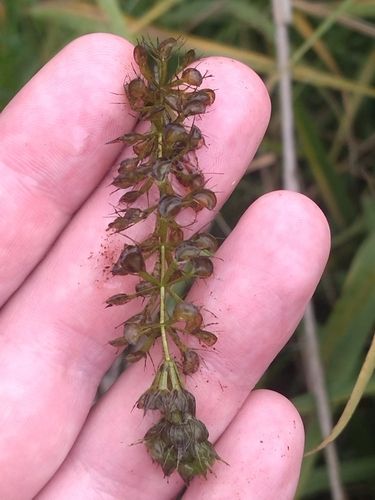
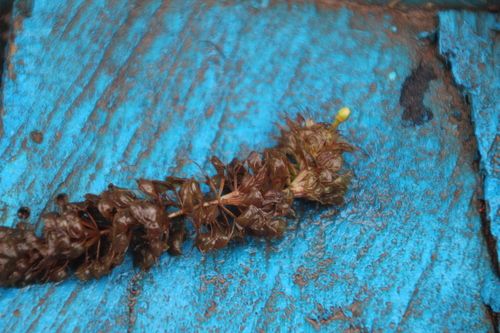
Etymology
- Aldrovanda: in honour of the Italian naturalist Ulisse Aldrovandi (16th century). In 1747, Gaetano Lorenzo Monti had named the Italian plants Aldrovandia; Linnaeus then lost the “i”, probably through a copying error.
- vesiculosa: from the Latin, “bearing small bladders”, for the air pockets that keep it afloat.
History
- 1691: the Englishman Leonard Plukenet is the first to mention and draw it, from plants collected in India.
- 1747: Monti describes it from plants from Italy.
- 1753: Linnaeus gives it its current name.
- Today it is the only living species of its genus, but up to 19 fossil species are known.
Description (how to recognise it)
- A free-floating aquatic plant without roots: the small root of the seedling does not develop and dies.
- Stems 6 to 40 cm long, bearing whorls of 5 to 9 traps, like the spokes of a waterwheel.
- It moves forward by dying: one end keeps growing while the other dies. In Japan, it grows 4 to 9 mm a day: one new whorl a day in good conditions.
- Tiny white flowers, which rise out of the water for a few hours and then sink back to produce their seeds. Flowering is rare in temperate climates.
Ecology: a Venus flytrap under water
- The trap: each trap has two lobes that snap shut like a Venus flytrap, but under water and much smaller. Sensitive hairs trigger the closure.
- A record: it closes in 10 to 20 milliseconds, one of the fastest movements in the plant world.
- It only works in water of at least 20 °C. Bristles around the trap prevent it being triggered by debris.
- Winter: in autumn, the tip forms a dense bud, the turion, which breaks off and sinks to the bottom, where the water stays milder. It withstands down to −15 °C. In spring, at around 12 to 15 °C, it rises again and starts growing.
- Propagation: mainly by fragmentation; old parts break off and give rise to new plants.
- Travelling with birds: water birds carry it on their feet. This is why its populations follow migration routes. It is the most widespread carnivorous plant in the world after the bladderworts.
Distribution
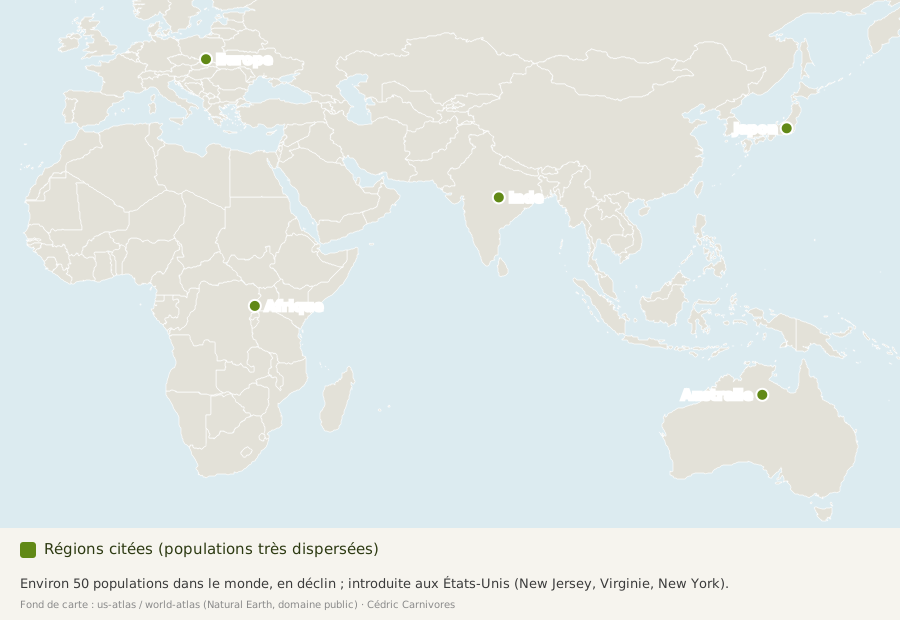
Europe, Asia, Africa and Australia, in very scattered populations. Introduced by hobbyists in the 1970s into ponds in New Jersey, Virginia and the Catskills (New York), where it could become invasive.
Habitat
Clear, shallow and warm standing water, very well lit, poor in nutrients and slightly acidic (pH around 6): marshes, bog pools, Australian billabongs, lakes, lagoons, deltas, oxbows. It copes very badly with the slightest degradation: a small chemical change is enough to make it disappear.
Threats and protection
- “Endangered” according to the IUCN. Only about 50 confirmed populations remain worldwide, and it has disappeared from a growing number of countries.
- Its genetic diversity is very low.
- Threats: development, agriculture, aquaculture; in Europe, acidification, drainage, eutrophication and pollution.
Sources
- Wikipedia (English), Aldrovanda vesiculosa: Linnaeus 1753, Monti 1747, Plukenet 1691, etymology, fossils, description, growth, trap and speed, temperature, turions, flowers, dispersal by birds, range, introductions, habitat, decline, status, threats.
- (Aldrovandi “16th century” and meaning of vesiculosa: general background.)