
 Français
 Español
 Deutsch
 Italiano



Encyclopedia: the small genera (Venus flytrap, Cephalotus…)


The small genera
Venus flytrap, waterwheel plant, Cephalotus, Darlingtonia, Drosophyllum, Roridula, Triphyophyllum and Brocchinia: the genera with one or two carnivorous species.
Eight genera have only one or two carnivorous species. Some are very well known, like the Venus flytrap; others are rare curiosities, like the carnivorous vine of Africa or the carnivorous bromeliad of the tepuis.
Darlingtonia californica
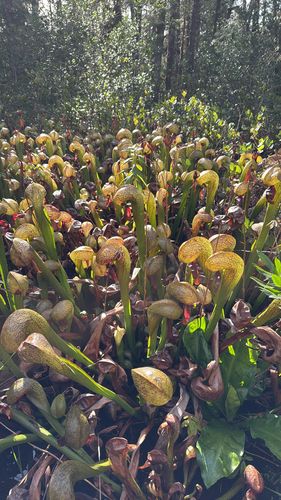
Scientific name
Darlingtonia californica John Torrey, Smithsonian Contributions to Knowledge 6(4): 5, plate 12, 1853
Family
Sarraceniaceae (with Sarracenia and Heliamphora)
Genus
Darlingtonia, conserved name; a single species
Ancien nom
Chrysamphora californica Greene, 1891 (synonym)
Common names
Cobra lily, cobra plant, California pitcher plant; in French darlingtonie, plante cobra
Distribution
Northern California and south-western Oregon
Habitat
Boggy streams, seeps and bogs on serpentine rock, from sea level to 2,600 m
Flowering
From mid-April to July
Status
Least concern (IUCN, 2000); “vulnerable” for NatureServe
Read the full profile of Darlingtonia californica →
Dionaea muscipula
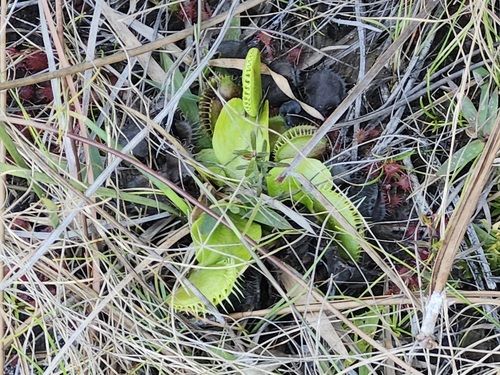
Scientific name
Dionaea muscipula John Ellis, St. James's Chronicle or the British Evening Post no. 1172, 1768
Genus
Dionaea Solander ex J. Ellis; a single species
Family
Droseraceae (with Drosera and Aldrovanda)
Common names
Venus flytrap, meadow-clam, tippitiwitchet; in French dionée attrape-mouche
Distribution
Coastal plain of North and South Carolina, around Wilmington
Habitat
Moist sandy-peaty soils, sphagnum mats, longleaf pine savannas, from 0 to 100 m
Flowering
Late May-June
Status
Vulnerable (IUCN); CITES Appendix II; stealing it has been a felony in North Carolina since 2014
Read the full profile of Dionaea muscipula →
Aldrovanda vesiculosa
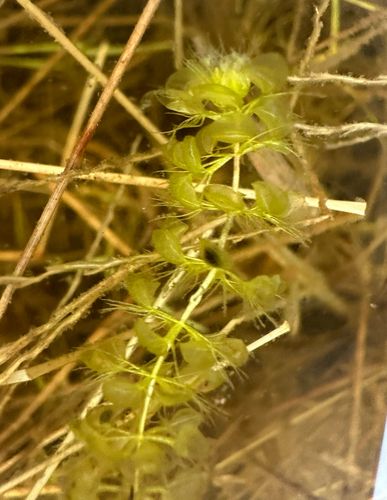
Scientific name
Aldrovanda vesiculosa Carl Linnaeus, Species Plantarum, 1753
Common name
“Waterwheel plant”; in French “aldrovandie”
Family
Droseraceae, with Dionaea and Drosera
Distribution
Europe, Asia, Africa, Australia, in scattered populations
Habitat
Calm, shallow, clear, warm and nutrient-poor waters
Status
Endangered (IUCN)
Read the full profile of Aldrovanda vesiculosa →
Drosophyllum lusitanicum
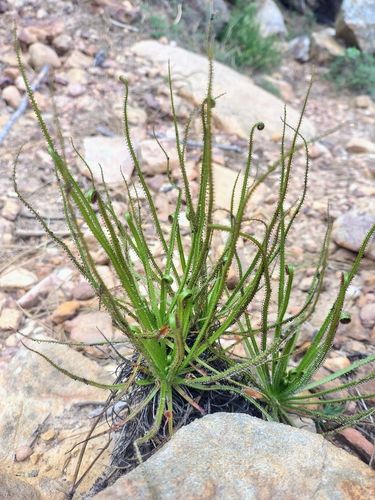
Scientific name
Drosophyllum lusitanicum (Linnaeus) Johann Heinrich Friedrich Link
Synonyms
Drosera lusitanica, Rorella lusitanica, Spergulus droseroides
Common names
Dewy pine; in French “drosophylle du Portugal”, “rossolis du Portugal”
Family
Drosophyllaceae, of which it is the only species
Distribution
Portugal, south-western Spain, northern Morocco
Habitat
Dry soils, from sea level to 1,200 m
Read the full profile of Drosophyllum lusitanicum →
Triphyophyllum peltatum
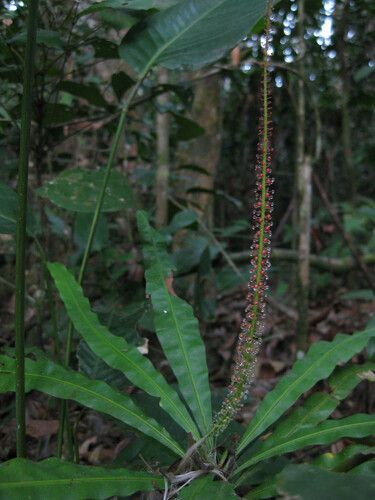
Scientific name
Triphyophyllum peltatum (Hutchinson & Dalziel) Herbert Kenneth Airy Shaw, 1952
Premier nom
Dioncophyllum peltatum Hutch. & Dalziel, 1927
Family
Dioncophyllaceae
Distribution
Guinea, Sierra Leone, Liberia, Ivory Coast
Habitat
Dry dense evergreen forest, primary or old secondary
Status
Near threatened (IUCN, 2025)
Read the full profile of Triphyophyllum peltatum →
Cephalotus follicularis
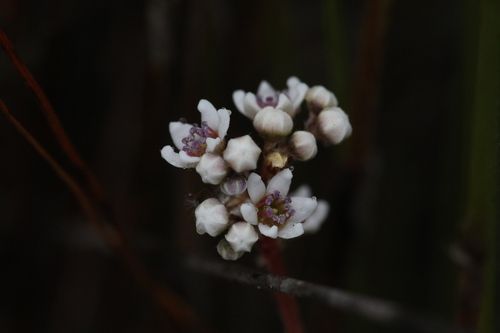
Scientific name
Cephalotus follicularis Jacques-Julien Houtou de Labillardière, Novae Hollandiae plantarum specimen, 1806
Family
Cephalotaceae: the only species in its family
Common names
Albany pitcher plant, Western Australian pitcher plant, fly-catcher plant; in French céphalote
Distribution
South-west of Western Australia, on a coastal strip of about 400 km
Habitat
Acidic, moist peaty sands: marshes, seeps, stream banks
Flowering
January-February (the southern summer)
Status
Vulnerable (IUCN); not threatened under Australian law; removed from CITES Appendix II
Read the full profile of Cephalotus follicularis →
Roridula dentata
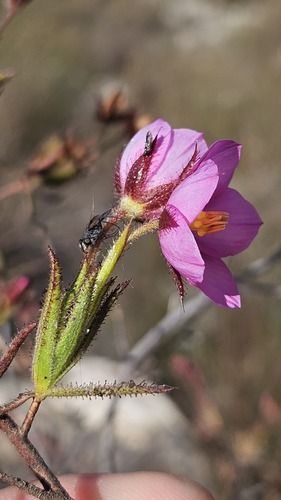
Scientific name
Roridula dentata Carl Linnaeus, 1764
Common name
Northern dewstick
Family
Roridulaceae
Distribution
Inland mountains of the Western Cape (South Africa): around Clanwilliam, Tulbagh and Ceres
Habitat
Warmer and drier inland mountains
Status
Least concern (SANBI Red List)
Read the full profile of Roridula dentata →
Roridula gorgonias
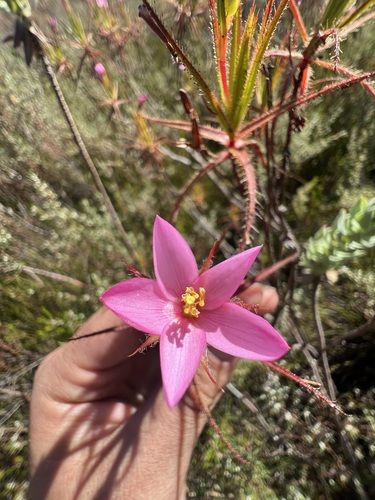
Scientific name
Roridula gorgonias Jules Émile Planchon, 1848
Family
Roridulaceae (two species: R. gorgonias and R. dentata), order Ericales
Common names
Gorgon's dewstick, fly bush, fly catcher bush; in Afrikaans vliebos, vlieëbossie (“fly bush”)
Distribution
Mountains of the south-west of the Western Cape province, South Africa
Habitat
Cool, moist places, mountain seeps, acidic sandy soils, from 155 to 915 m
Flowering
July to October (late winter and southern spring)
Status
Not listed on the South African Red List, but its range is small
Read the full profile of Roridula gorgonias →
Brocchinia hechtioides
Scientific name
Brocchinia hechtioides Carl Christian Mez, 1913
Synonym
B. cryptantha L. B. Sm.
Family
Bromeliaceae
Distribution
Colombia, Guyana, Venezuela (Guiana Shield)
Read the full profile of Brocchinia hechtioides →
Brocchinia reducta
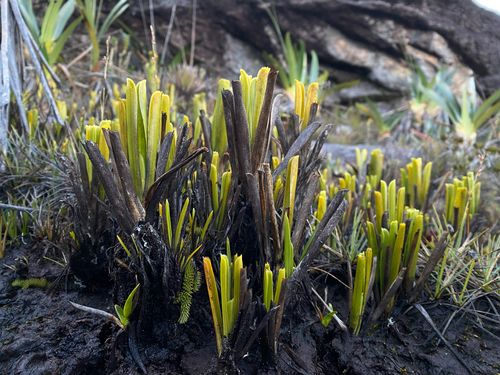
Scientific name
Brocchinia reducta John Gilbert Baker, 1882
Family
Bromeliaceae, the pineapple family; subfamily Brocchinioideae
Genus
Brocchinia, about 20 species
Distribution
Guiana Shield: southern Venezuela, Guyana, Colombia, northern Brazil
Habitat
Wet sandy savannas and very poor soils, up onto the tepuis (Mount Roraima)
Feature
The first bromeliad recognised as carnivorous (1984)
Share this article:


