Byblis filifolia Planch.
Species sheet, updated on 29/10/2026.
At a glance
| Scientific name | Byblis filifolia Jules Émile Planchon, 1848 |
| Synonym | B. liniflora subsp. occidentalis Conran & Lowrie (1993) |
| Family | Byblidaceae |
| Distribution | Northern Australia (Northern Territory, Western Australia) |
| Status | Least concern (IUCN, 2018) |
Photos in the wild
Etymology
- Byblis: see the genus sheet.
- filifolia: from the Latin filum, “thread”, and folium, “leaf”: “with thread-like leaves”.
History of the description
The French botanist Jules Émile Planchon described it in 1848.
Description (how to recognise it)
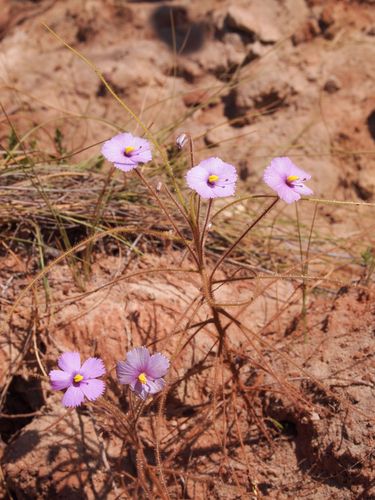
Annual, up to 60 cm, of the liniflora complex.
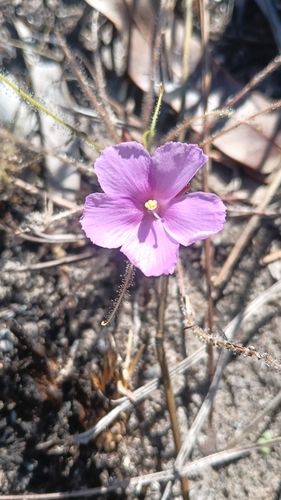
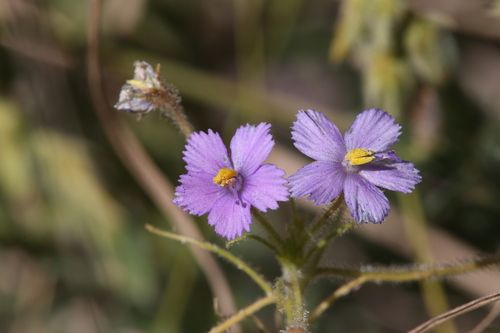
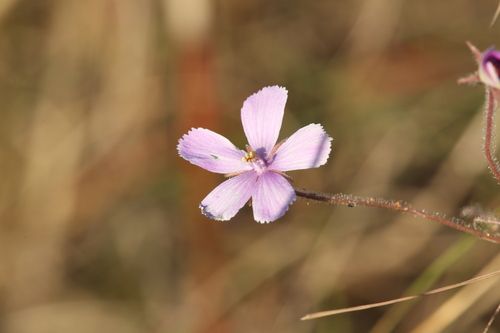
- According to FloraBase: erect or leaning annual plant, 20 to 60 cm tall, anthers as long as the filaments or longer, sepals bearing stalked glands 0.3 to 0.5 mm long. Purple, white or yellow flowers, from March to June.
Distribution
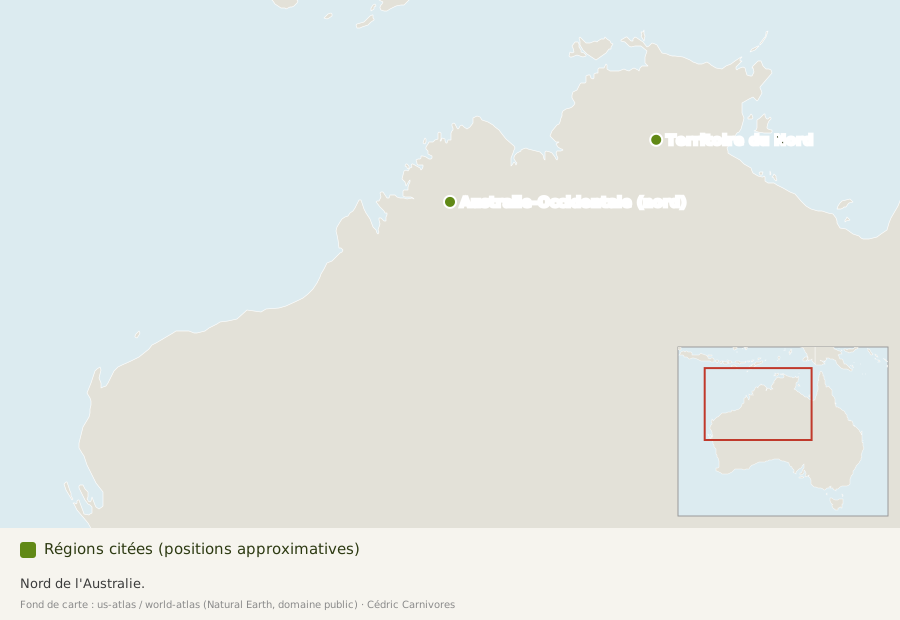
Endemic to northern Australia: Northern Territory and Western Australia. In Western Australia, FloraBase records it in these natural regions (IBRA): Central Kimberley, Dampierland, Darwin Coastal, Great Sandy Desert, Northern Kimberley, Ord Victoria Plain, Tanami, Victoria Bonaparte.
Habitat
According to FloraBase: sandy soils. Wooded savanna, banks of rivers and creeks, watershed divides.
Did you know?
- It was in this species that it was proved, in 2005, that Byblis digest their prey with their own enzymes, secreted by the sessile glands.
Sources
- Wikipedia (English), Byblis filifolia: Planchon 1848, synonym, range, status.
- Wikipedia (English), Byblis): size, life cycle, 2005 proof.
- FloraBase, Western Australian Herbarium, Byblis filifolia Planch.: description (Helen Coleman, 31 March 1998), flowering, soil and habitat, regions, status in Western Australia.