
 Français
 Español
 Deutsch
 Italiano



Encyclopedia: the genus Byblis


The genus Byblis
Byblis from Australia and New Guinea, the sundew-like “rainbow plants”.
Cover photo: Byblis aquatica, Thomas Mesaglio, CC BY 4.0, original observation.
At a glance
Genus
Byblis Salisbury, 1808
Common name
“Rainbow plants”
Family
Byblidaceae, of which it is the only genus
Number of species
88
Distribution
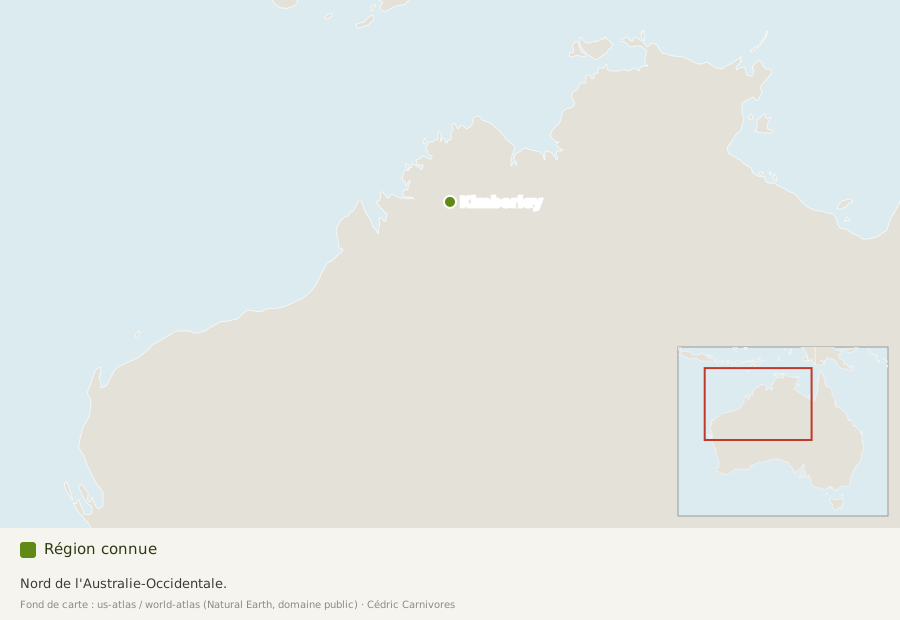
Australia; one species (B. liniflora) also in southern Indonesia and Papua New Guinea
Habitat
Marshes and sandy soils that are wet for part of the year
In the wild
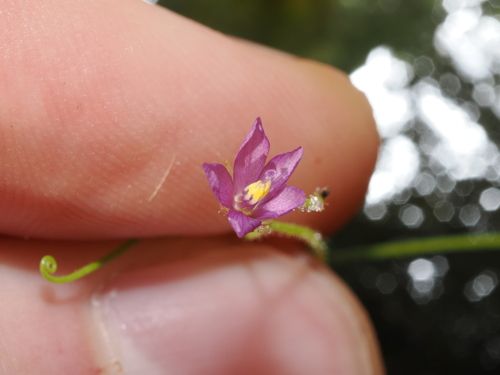
Thomas Mesaglio, CC BY
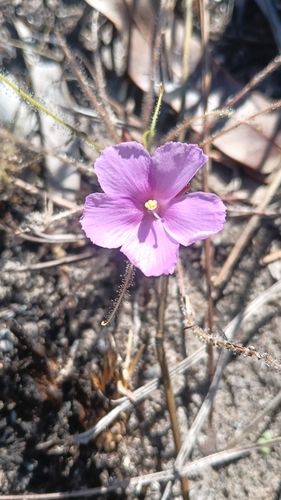
Genevieve Early, CC BY
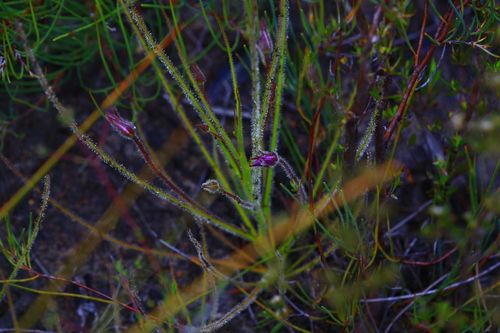
Hugo Innes, CC BY
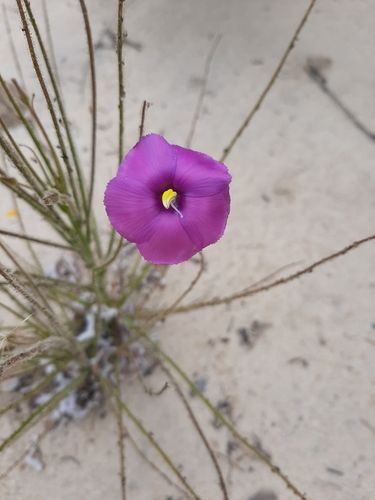
T. Hammer, CC BY
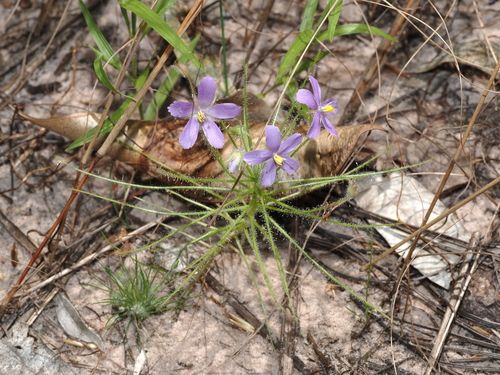
Thomas Mesaglio, CC BY
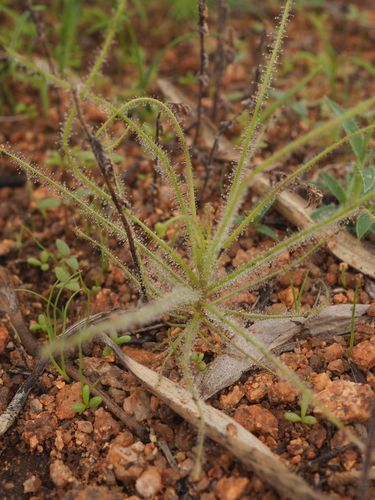
Hugo Innes, CC BY
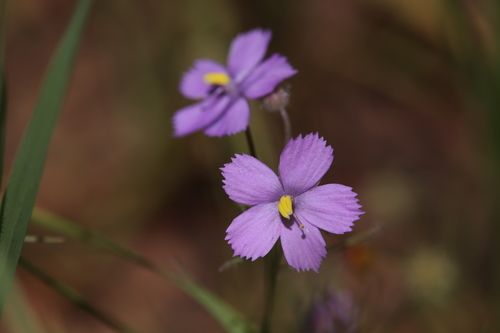
Hugo Innes, CC BY
Etymology
- Byblis: from Byblis, a young woman of Greek mythology told by Ovid in the Metamorphoses. In unrequited love with her twin brother, she wept so much that she turned into a spring. The droplets on the leaves are said to recall her tears.
- “Rainbow plant”: in the sun, the drops of mucilage sparkle in every colour.
History
- 1808: the English botanist Richard Anthony Salisbury describes the first species, B. liniflora.
- 1839: Lindley describes B. gigantea; 1848: Planchon describes B. filifolia.
- 1980s-2010s: the work of Allen Lowrie and John Conran brings most of the other species to light.
Description (how to recognise them)
- Very long, thin leaves, round in cross-section, covered with two kinds of glands:
- stalked glands that bear a drop of sticky mucilage and trap small insects;
- sessile glands, 5 to 10 times more numerous, which secrete the digestive juices.
- Flowers with five petals, usually purple to pale violet, sometimes white, solitary, from early spring to late summer.
- Weak, fibrous roots.
The two groups
| Group | Species | Cycle | Range |
|---|---|---|---|
| liniflora complex | B. liniflora, B. rorida, B. filifolia, B. aquatica | annuals | northern Australia |
| More recent | B. guehoi (Kimberley, 2008), B. pilbarana (Pilbara, 2013) | north-western Australia | |
| gigantea complex | B. gigantea, B. lamellata | perennials, spend the dry summer underground | Perth region (south-west) |
Ecology
- A more active trap than we thought: they were classed among passive traps, like flypaper. In 2019, the hairs of B. liniflora were shown to fold down onto the prey; this was then seen in B. gigantea.
- Digestion by their own enzymes was proven in 2005 in B. filifolia, then in B. liniflora.
- Commensal bugs: bugs of the genus Setocoris live on every species and eat the insects caught by the plant.
- Flowers that listen: in B. gigantea and B. lamellata, the pollen only comes out when the flower vibrates at the frequency of the wingbeats of a pollinator.
- Fire: the capsules open when dry, and many species germinate after bushfires, woken up by the chemicals in the smoke.
Evolution: a sundew lookalike
They look very much like sundews and Drosophyllum, but they are not related: genetic studies place them in the order Lamiales, near the Lentibulariaceae (butterworts, bladderworts). It is a fine example of convergence. Roridula, once grouped with them, has its own family.
A fossil seed from the Middle Eocene of South Australia, similar to the liniflora complex, has been attributed to them; the only specimen was destroyed in a laboratory accident shortly after being photographed.
Threats and protection
- All the species are protected in Australia.
- B. gigantea is “critically endangered” (IUCN): the urban growth of Perth and the draining of wetlands threaten the species of the south-west.
- The genus was listed in CITES Appendix II until 2000.
The species
aquatica, filifolia, gigantea, guehoi, lamellata, liniflora, pilbarana, rorida.
Sources
- Wikipedia (English), Byblis: myth, common name, Salisbury 1808, Lowrie, species, range, habitat, glands, flowers, buzz pollination, fire, carnivory (2005, 2019), Setocoris, systematics, groups, fossil, protection, CITES.
- Wikipedia pages of B. gigantea and B. filifolia: Lindley 1839, Planchon 1848.
All the species (8)
Each profile presents the species in the wild: origin of the name, history, description, distribution map, habitat and sources. To search by name or by growing method: search for a species.
Share this article:


