Byblis lamellata Conran & Lowrie
Species sheet, updated on 29/10/2026.
At a glance
| Scientific name | Byblis lamellata John Conran & Allen Lowrie |
| Family | Byblidaceae |
| Distribution | South-west of Western Australia (Perth region) |
| Status | Vulnerable (IUCN, 2020) |
Photos in the wild
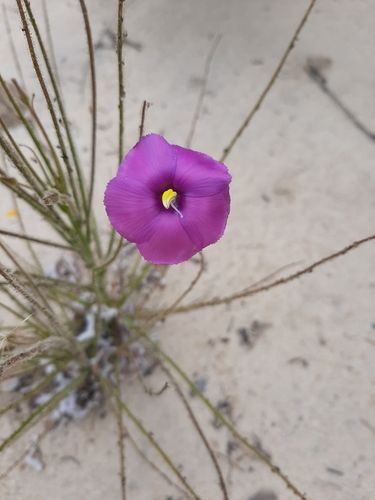
Etymology
- Byblis: see the genus sheet.
- lamellata: from the Latin, “with lamellae” (probably for the surface of its seeds, not confirmed).
Description (how to recognise it)
- A perennial plant, up to 45 cm, which spends the dry summer underground.
- It looks very much like B. gigantea, from which it is distinguished by its seeds.
- As in B. gigantea, the pollen is only released if the flower vibrates at the rhythm of a pollinator's wings.
- According to FloraBase: small branched shrub (or subshrub), up to 60 cm tall. Pink, violet or white flowers, from September to December or January.
Distribution
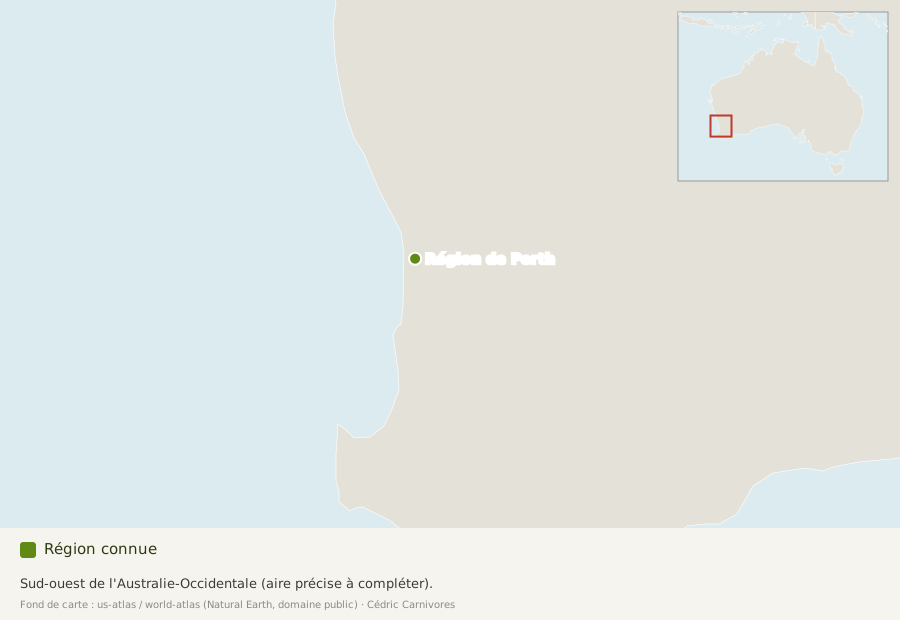
Endemic to the south-west of Western Australia, Perth region. In Western Australia, FloraBase records it in these natural regions (IBRA): Geraldton Sandplains, Jarrah Forest, Swan Coastal Plain.
Habitat
According to FloraBase: white, well-drained siliceous sands. Sandplains.
Threats and protection
“Vulnerable” according to the IUCN (A. Cross, 2020). The urban growth of Perth and the draining of wetlands threaten it.
Sources
- Wikipedia (English), Byblis lamellata: authors, 2002 revision, range, status.
- Wikipedia (English), Byblis): size, life cycle, pollination, threats.
- Wikipedia (English), Byblis gigantea: difference in the seeds.
- FloraBase, Western Australian Herbarium, Byblis lamellata Conran & Lowrie: description (Amanda Spooner, 5 May 2003), flowering, soil and habitat, regions, status in Western Australia.