Byblis liniflora Salisb.
Species sheet, updated on 29/10/2026.
At a glance
| Scientific name | Byblis liniflora Richard Anthony Salisbury, 1808 |
| Synonym | B. caerulea R. Br. ex Planch. |
| Family | Byblidaceae |
| Distribution | Northern Australia, southern Indonesia, Papua New Guinea |
| Habitat | Seasonally wet sandy soils (not confirmed) |
| Status | Least concern (IUCN, 2018) |
Photos in the wild
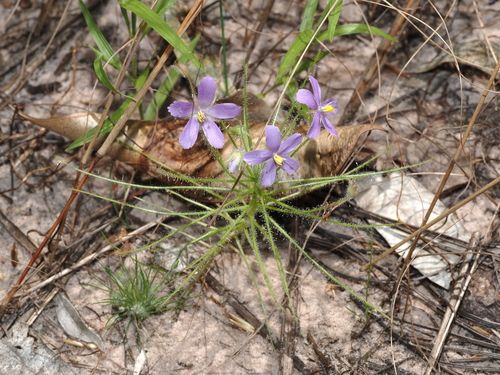
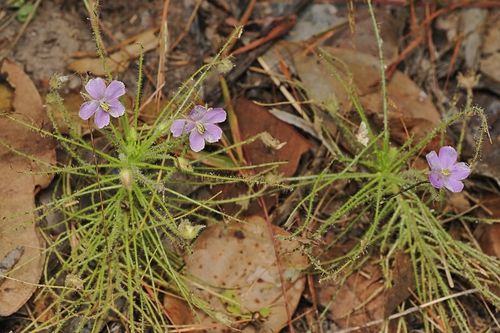
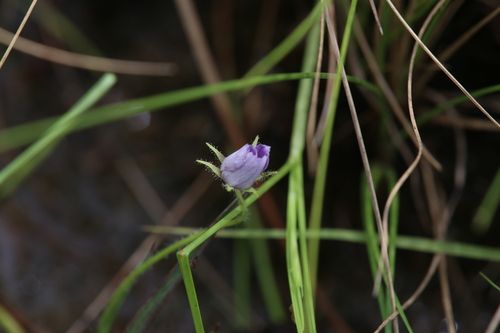
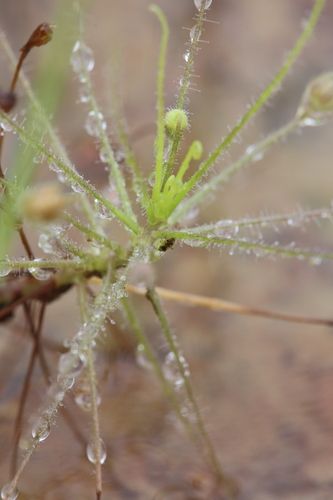
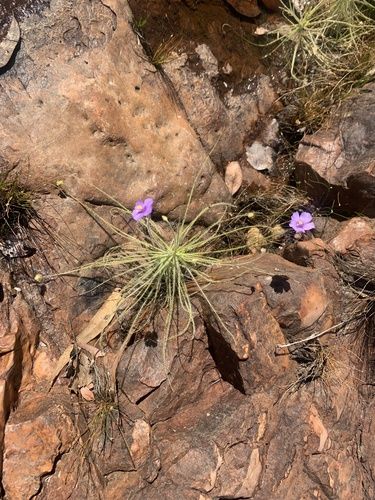
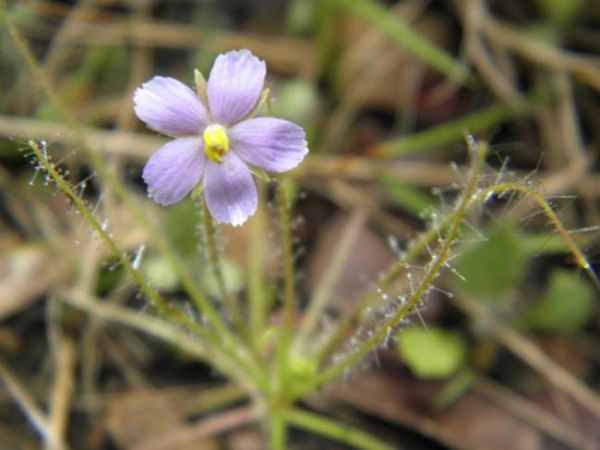
Etymology
- Byblis: see the genus sheet.
- liniflora: “with flax flowers” (probable meaning, from the Latin linum, “flax”, not confirmed).
History of the description
It is the first Byblis described, by Salisbury in 1808, and the type species of the genus.
Description (how to recognise it)
- A small annual, up to 15 cm.
- The only self-fertile Byblis: a flower can fertilise itself.
- It is tetraploid (2n = 32), unlike its close relatives.
Distribution
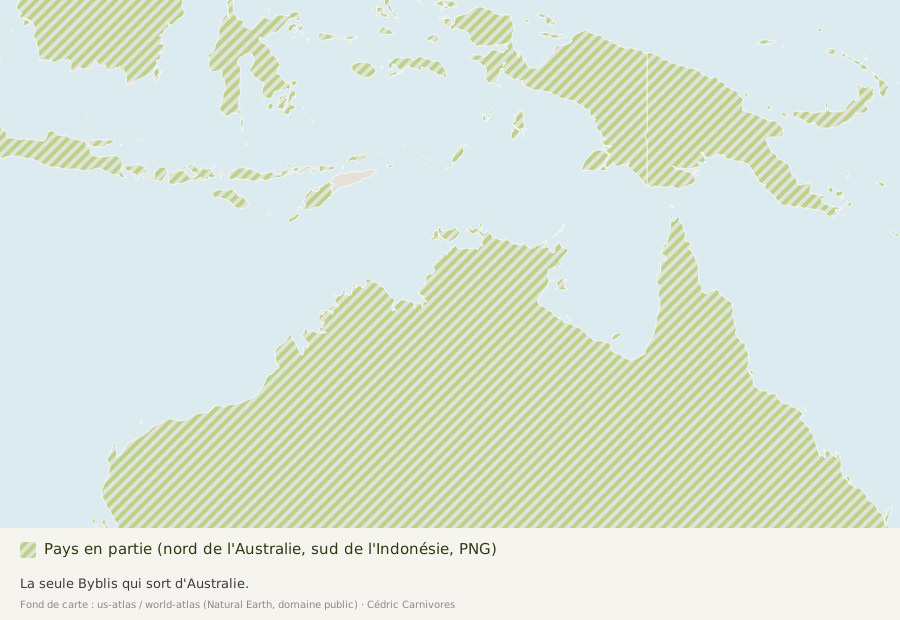
Northern Australia, southern Indonesia and Papua New Guinea: the only Byblis found outside Australia.
Ecology
- In 2019, it was shown that its glandular hairs bend over the prey.
- It digests its prey with its own enzymes.
- It contains acteoside, a substance common in the Lamiales.
Threats and protection
“Least concern” according to the IUCN (2018).
Sources
- Wikipedia (English), Byblis liniflora: author, synonym, range, acteoside, status.
- Wikipedia (English), Byblis): 1808, size, self-fertility, chromosomes, movement of the hairs, digestion.