Byblis rorida Lowrie & Conran
Species sheet, updated on 29/10/2026.
At a glance
| Scientific name | Byblis rorida Allen Lowrie & John Conran, 1998 |
| Family | Byblidaceae |
| Distribution | Northern Australia |
| Status | Least concern (IUCN, 2018) |
Photos in the wild
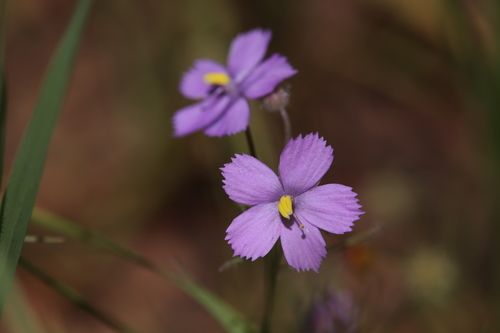
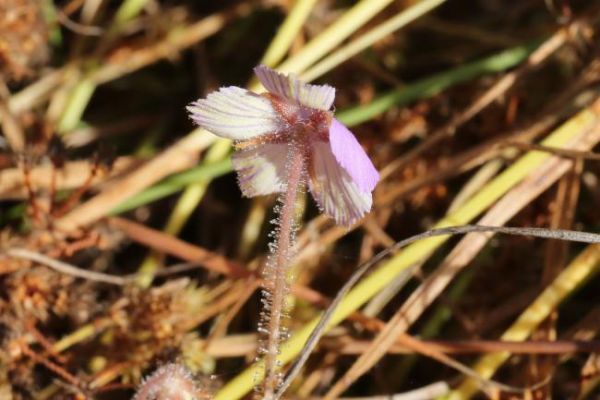
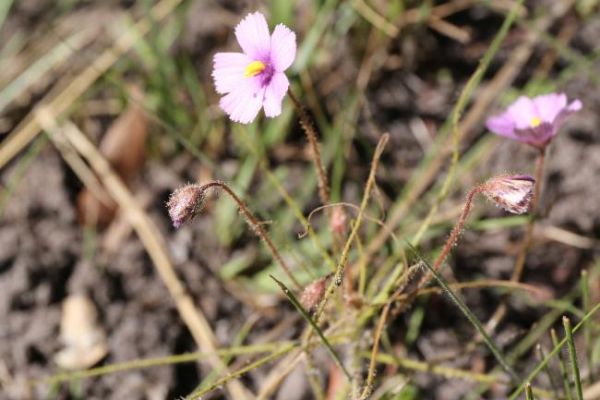
Etymology
- Byblis: see the genus sheet.
- rorida: from the Latin roridus, “covered with dew”, for its drops of mucilage.
Description (how to recognise it)
- An annual up to 30 cm, with fibrous roots, covered with glandular hairs that trap and digest small insects.
- It dies at the end of the dry season and only comes back from its seeds in the rainy season.
- According to FloraBase: erect or leaning annual plant, 6 to 30 cm tall, anthers longer than the filaments, sepals bearing glandular bristles 0.7 to 1.5 mm long. Purple flowers, from January to May.
Distribution
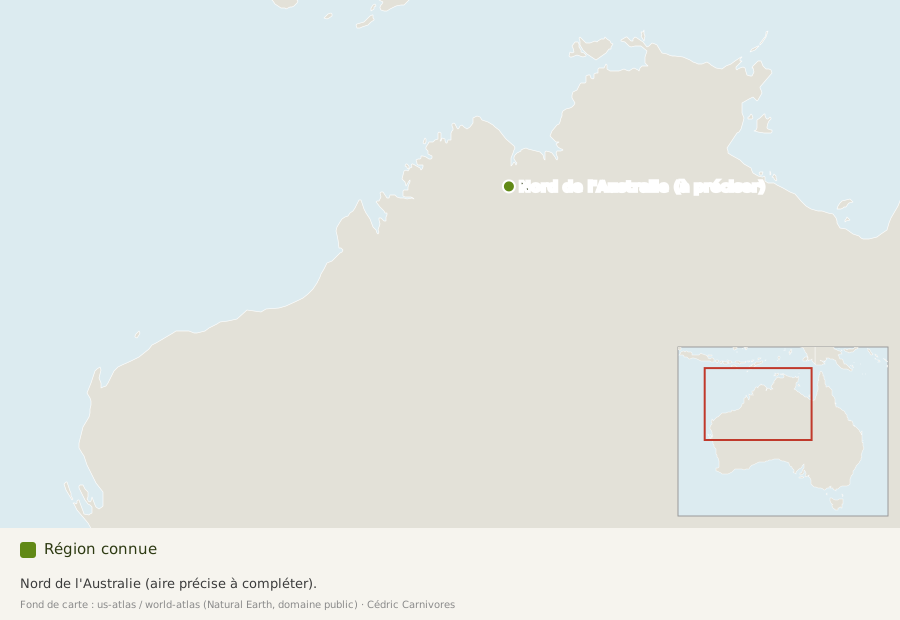
Endemic to northern Australia. According to Kew's world checklist of plants (WCVP), it is native to this single region: Western Australia. In Western Australia, FloraBase records it in these natural regions (IBRA): Central Kimberley, Dampierland, Great Sandy Desert, Little Sandy Desert, Northern Kimberley, Ord Victoria Plain, Victoria Bonaparte.
Habitat
According to FloraBase: red or yellow sand, clayey sand, lateritic or rocky soil. Creek banks, sandstone outcrops, open woodland.
Sources
- Wikipedia (English), Byblis rorida: Lowrie & Conran 1998, description, life cycle, status.
- Wikipedia (English), Byblis): size, range.
- Kew, World Checklist of Vascular Plants (via GBIF): natural distribution.
- FloraBase, Western Australian Herbarium, Byblis rorida Lowrie & Conran: description (Amanda Spooner, 3 September 1999), flowering, soil and habitat, regions, status in Western Australia.