Drosera aberrans (Lowrie & Carlquist) Lowrie & Conran
Species sheet, updated on 30/10/2026.
At a glance
| Scientific name | Drosera aberrans Allen Lowrie & Sherwin Carlquist (1992, as a subspecies); Allen Lowrie & John Conran (2008, as a species) |
| Synonyms | D. whittakeri subsp. aberrans Lowrie & Carlquist |
| Family | Droseraceae (subgenus Ergaleium, section Erythrorhiza: tuberous sundews) |
| Distribution | Inland southern South Australia, southern and central Victoria |
| Habitat | Sands, lateritic gravels and calcareous clays, in mallee, heathland and open woodland |
| Status | Least concern (LC) on the IUCN Red List |
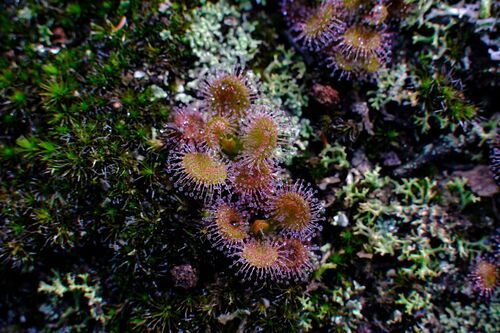
Photos in the wild
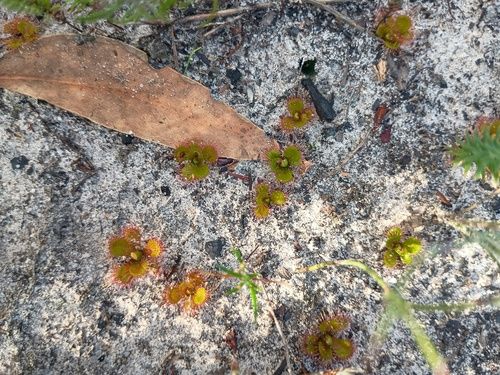
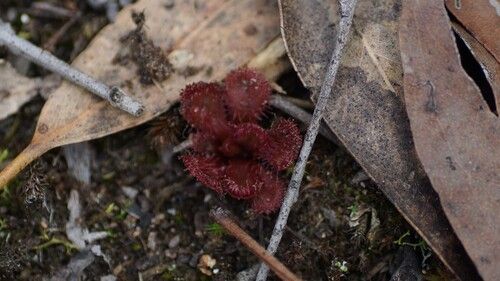
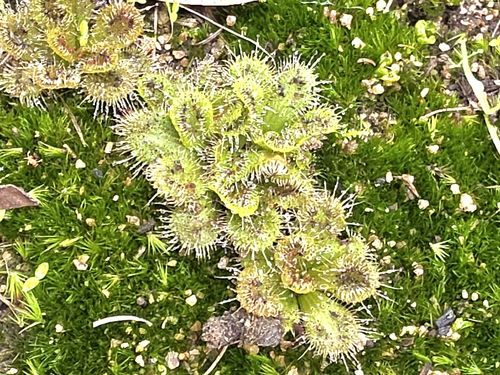

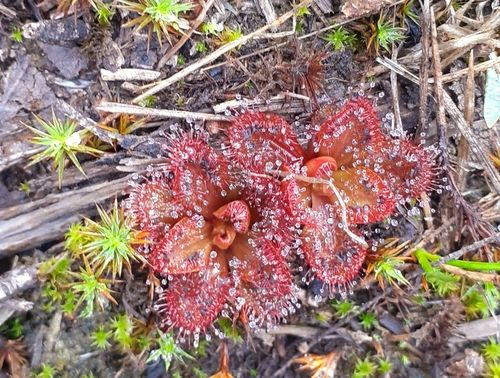
Etymology
- Drosera: see the genus sheet.
- aberrans: from the Latin, “straying away” (from D. whittakeri, of which it was a subspecies).
History of the description
- 1879: Ferdinand von Mueller may have drawn it under the name “Drosera whitackeri”.
- 1992: described as a subspecies of D. whittakeri.
- 2008: raised to species rank.
Description (how to recognise it)
- Tuberous perennial plant forming a rosette 3 to 5 cm across.
- Leaves green, orange-yellow or red.
- Flowers from July to September (southern winter).
Distribution
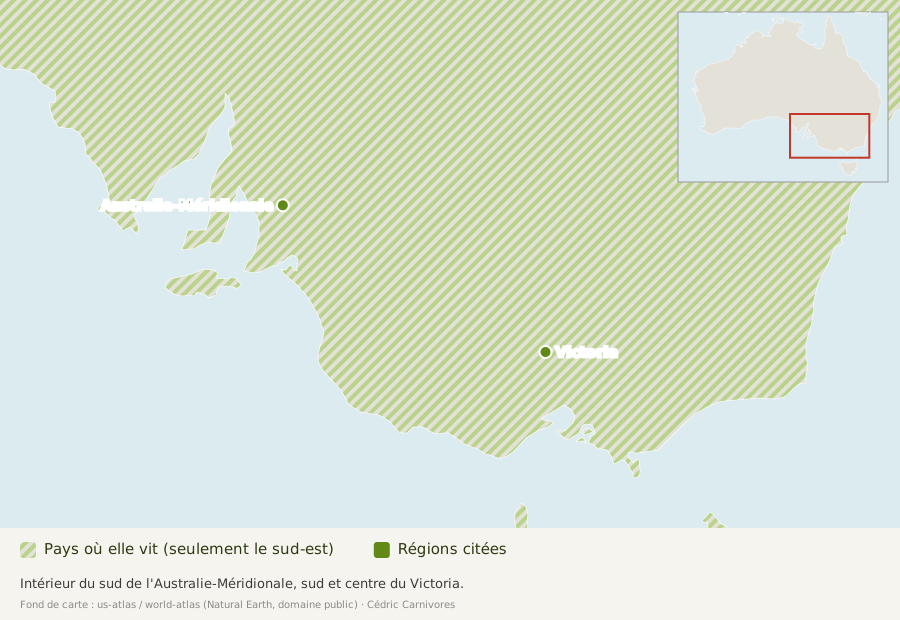
Endemic to Australia: inland southern South Australia, southern and central Victoria; a single collection in New South Wales.
Habitat
Sandy soils, lateritic gravels and calcareous clays, in mallee (dwarf eucalyptus scrub), heathland and open woodland.
Sources
- Wikipedia (English), Drosera aberrans: authors, synonym, history, description, range, habitat, flowering, section.
- GBIF, Drosera aberrans: author, original publication, IUCN Red List category, countries and localities of herbarium specimens and observations.