Drosera albonotata A. S. Rob., A. T. Cross, Meisterl & A. Fleischm.
Species sheet, updated on 30/10/2026.
At a glance
| Scientific name | Drosera albonotata Alastair Robinson, Adam Cross, Manfred Meisterl & Andreas Fleischmann, Phytotaxa, 2018 |
| Family | Droseraceae (subgenus Ergaleium, section Bryastrum: pygmy sundews) |
| Distribution | Western Wheatbelt (Western Australia) |
Photos in the wild
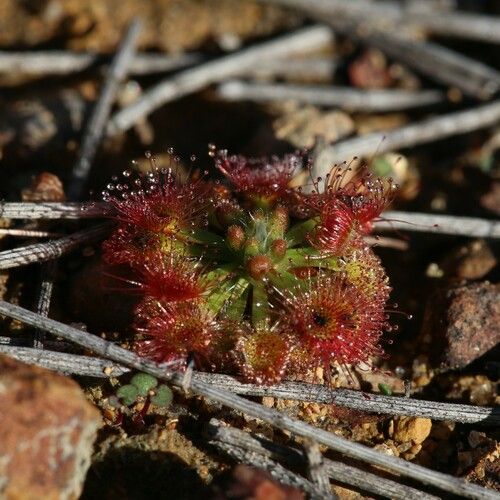
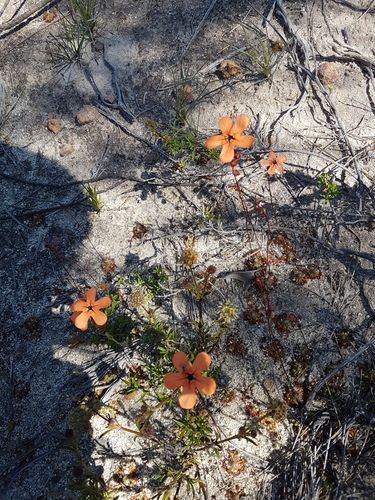
Etymology
- Drosera: see the genus sheet.
- albonotata: from the Latin, “marked with white”, for the white spots at the base of the petals.
Description (how to recognise it)
- Pygmy sundew forming a small rosette about 15 mm across (up to 22), sometimes with a short stem in old plants.
- Orange flowers about 25 mm across, with a white ring in the centre; 1 to 15 flowers on a scape up to 14 cm tall.
- Flowers in September and October.
Distribution
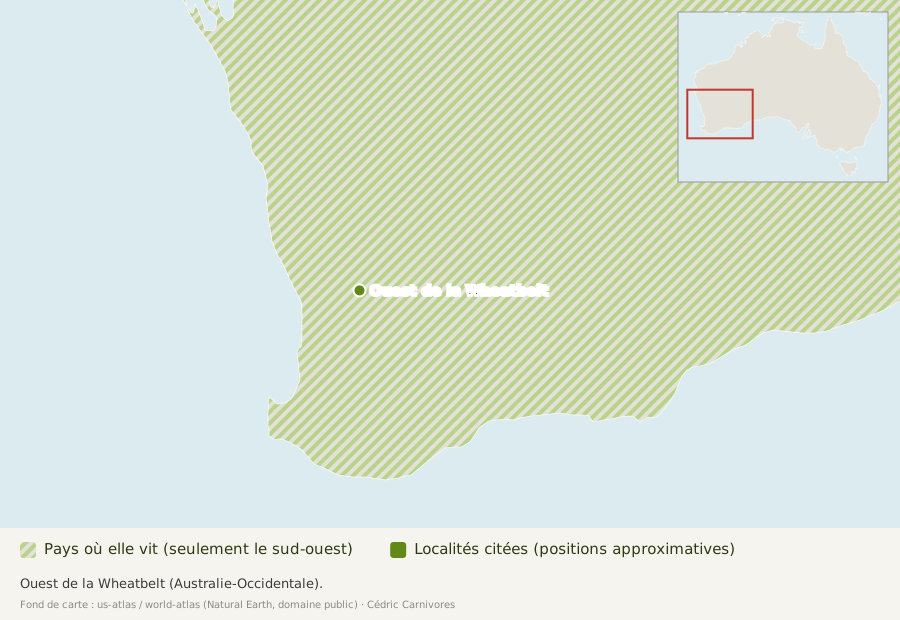
Endemic to Western Australia: western Wheatbelt (the grain-growing region).
Did you know?
- It looks like D. miniata, from which it differs in the veins and shape of the petals, the colour of the anthers, and the shape of the leaves and their glands.
Sources
- Wikipedia (English), Drosera albonotata: authors, etymology, description, flowering, range, section, comparison.