Drosera auriculata Backh. ex Planch.
Species sheet, updated on 30/10/2026.
At a glance
| Scientific name | Drosera auriculata James Backhouse ex Jules Émile Planchon, 1848 |
| Synonyms | D. peltata subsp. auriculata (according to the English Wikipedia) |
| Family | Droseraceae (subgenus Ergaleium, section Ergaleium: erect tuberous sundews) |
| Distribution | Australia |
Photos in the wild
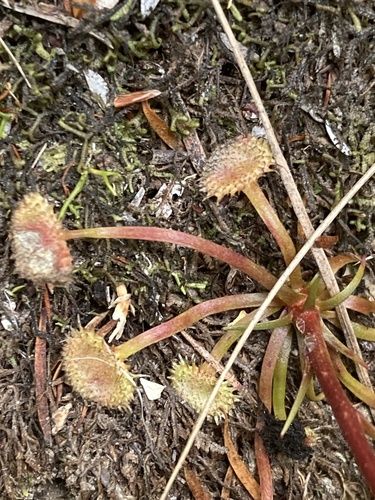
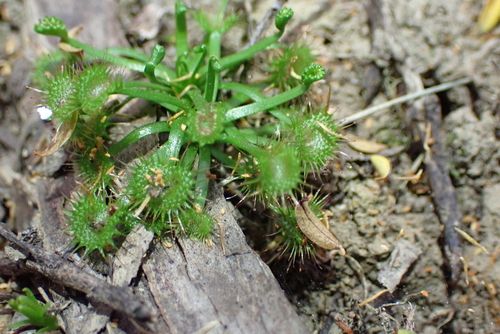
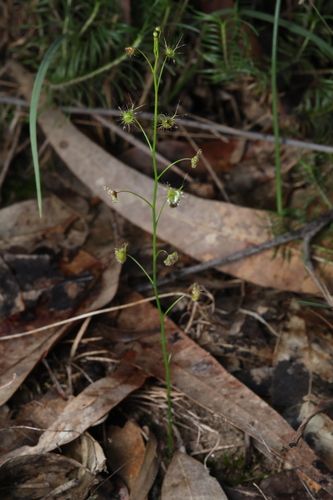
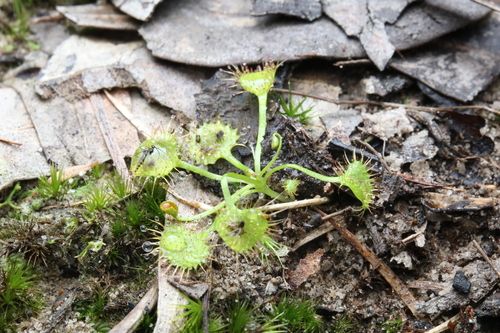
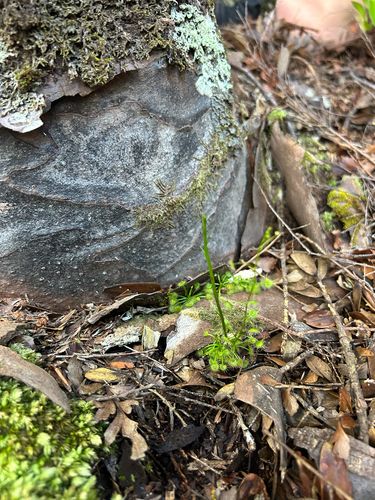
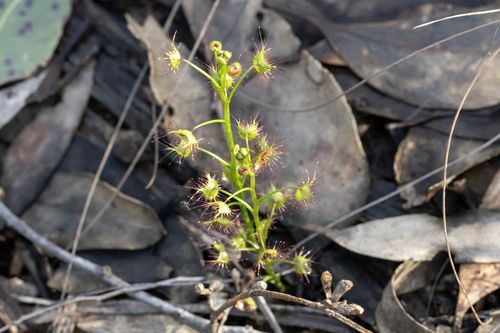
Etymology
- Drosera: see the genus sheet.
- auriculata: from the Latin, “with small ears”.
Description (how to recognise it)
- Tuberous sundew, erect.
- The English Wikipedia treats it as a subspecies of D. peltata, the shield sundew; the list followed here keeps it as a species.
- According to Diels (1906): small tuber; underground stem 3 to 5 cm long, then a slender, upright aerial stem 10 to 30 cm tall (rarely 40 to 60 cm), hairless.
- Basal rosette of round, peltate leaves about 3 mm across, often gone by flowering time; stem leaves peltate, truncate on one side and extended into two fine, fringed points.
- Simple raceme of 5 to 10 flowers; obovate pink petals about 6 mm long.
Distribution
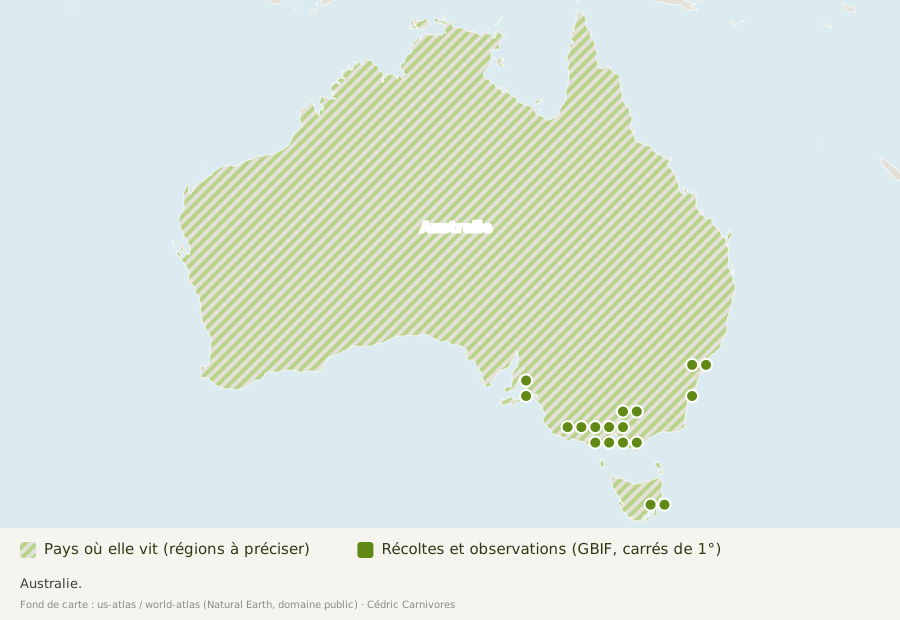
Australia. According to Kew's world checklist of plants (WCVP), it is native to the following regions: New South Wales, North Island (New Zealand), South Island (New Zealand), South Australia, Tasmania and Victoria.
Habitat
Diels (1906) describes it as “not rare” on the sandy pastures of Victoria, very common in Tasmania and frequent in New Zealand; he also cites collections from Queensland, New South Wales and South Australia.
Sources
- Wikipedia (English), Drosera peltata: treatment as a subspecies, section.
- List of Drosera: author, year.
- Kew, World Checklist of Vascular Plants (via GBIF): natural distribution.
- Diels, Das Pflanzenreich IV.112: Droseraceae, 1906 (archive.org): description, localities and habitats of the specimens (translated from Latin and German).
- GBIF, Drosera auriculata: author, original publication, countries and localities of herbarium specimens and observations.