Drosera chrysolepis Taub.
Species sheet, updated on 30/10/2026.
At a glance
| Scientific name | Drosera chrysolepis Paul Hermann Wilhelm Taubert, 1893 |
| Family | Droseraceae |
| Distribution | Brazil and Peru |
| Status | Not yet assessed by the IUCN |
Photos in the wild
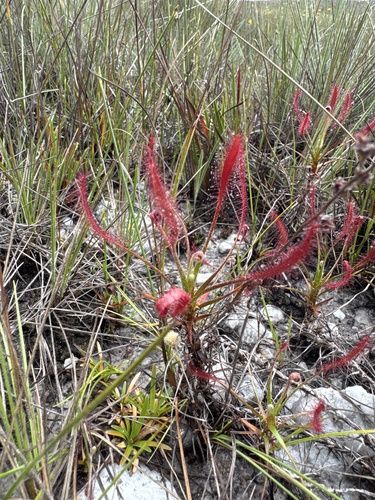
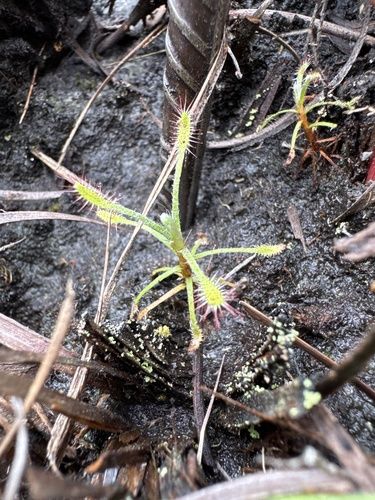
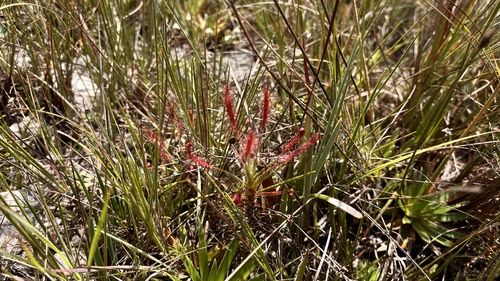
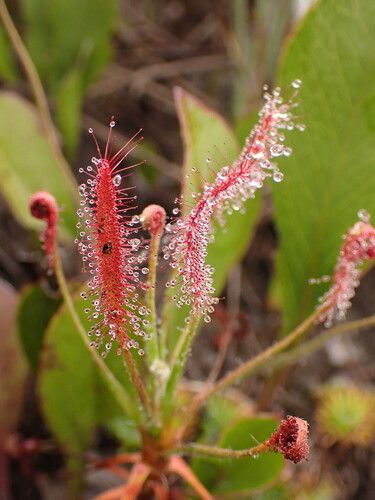
Etymology
- Drosera: see the genus sheet.
- chrysolepis: from the Greek chrysos, “gold”, and lepis, “scale”.
Description (how to recognise it)
- According to Diels (1906): elongated stem 6 to 10 cm long, covered with the remains of old leaves and with large pale, shiny stipules (8 to 12 mm by 5 to 6 mm), reddish-brown and membranous.
- Upright leaves in a rosette; petiole 2 to 3 cm with woolly white hairs; very narrow, almost linear blade, 1.5 to 2 cm by 2 to 3 mm, hairy underneath.
- Woolly scapes 5 to 8 cm bearing 3 to 5 flowers; obovate pink petals about 10 mm.
Distribution
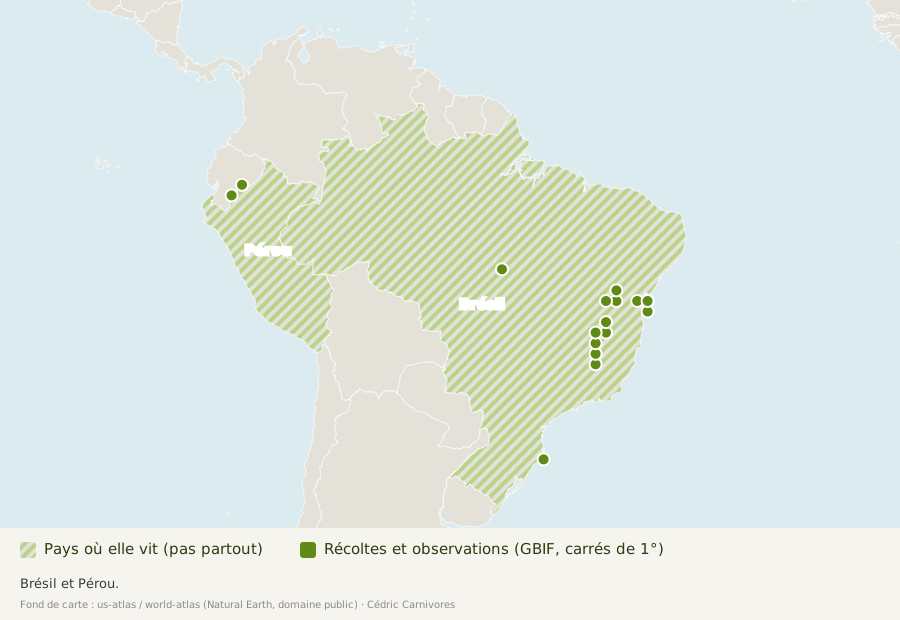
Brazil and Peru. Regions where most of the herbarium specimens and observations published in GBIF come from (number of records): Minas Gerais (187), Bahia (95). According to Kew's world checklist of plants (WCVP), it is native to the following regions: north-eastern Brazil and south-eastern Brazil.
Habitat
Diels (1906) cites only Minas Gerais (Brazil): Serra do Cipó, in flower in April (type specimen by Glaziou). According to the collections and observations published in GBIF, it grows mostly from 600 to 1,695 m above sea level.
Sources
- Wikipedia (English), List of Drosera species: range.
- List of Drosera: authors, year.
- Kew, World Checklist of Vascular Plants (via GBIF): natural distribution.
- Diels, Das Pflanzenreich IV.112: Droseraceae, 1906 (archive.org): description, localities and habitats of the specimens (translated from Latin and German).
- GBIF, Drosera chrysolepis: author, original publication, countries, altitude and localities of herbarium specimens and observations.