Drosera communis A. St.-Hil.
Species sheet, updated on 30/10/2026.
At a glance
| Scientific name | Drosera communis Auguste de Saint-Hilaire, 1824 |
| Family | Droseraceae (subgenus and section Drosera) |
| Distribution | Brazil, Colombia, Paraguay and Venezuela |
| Status | Not yet assessed by the IUCN |
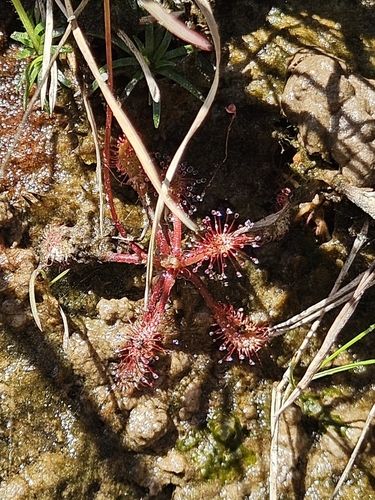
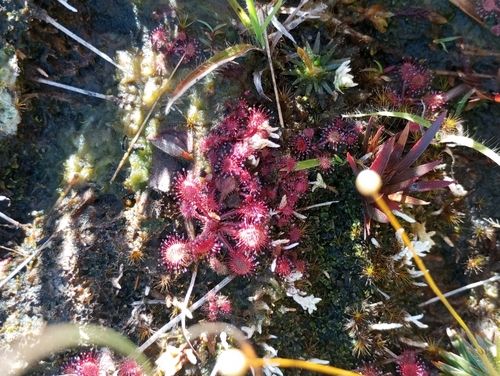
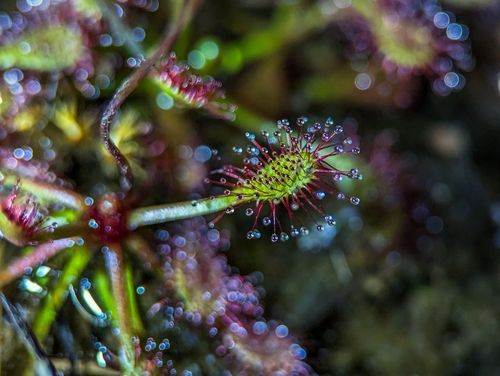
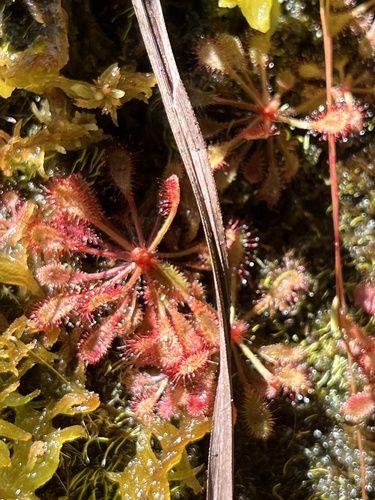
Photos in the wild
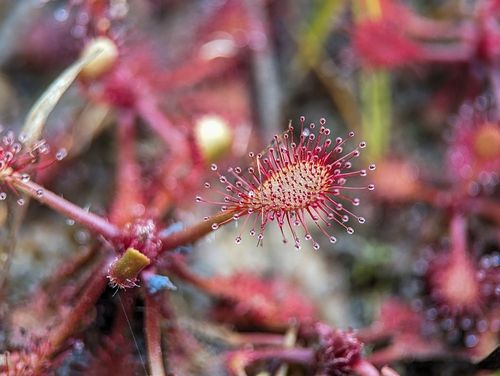
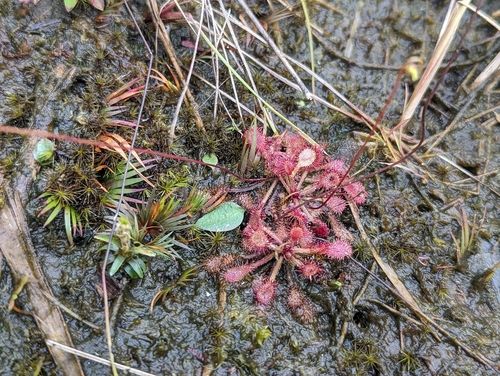
Etymology
- Drosera: see the genus sheet.
- communis: from the Latin, “common”.
Description (how to recognise it)
- According to Diels (1906): short stem; leaves erect, then bent back as they dry; petiole 6 to 10 mm, blade oblong and spoon-shaped, 6 to 10 mm.
- 1 to 3 angular, almost hairless scapes of 10 to 25 cm, bearing 3 to 6 flowers; obovate pink petals of 6 to 7 mm.
Distribution
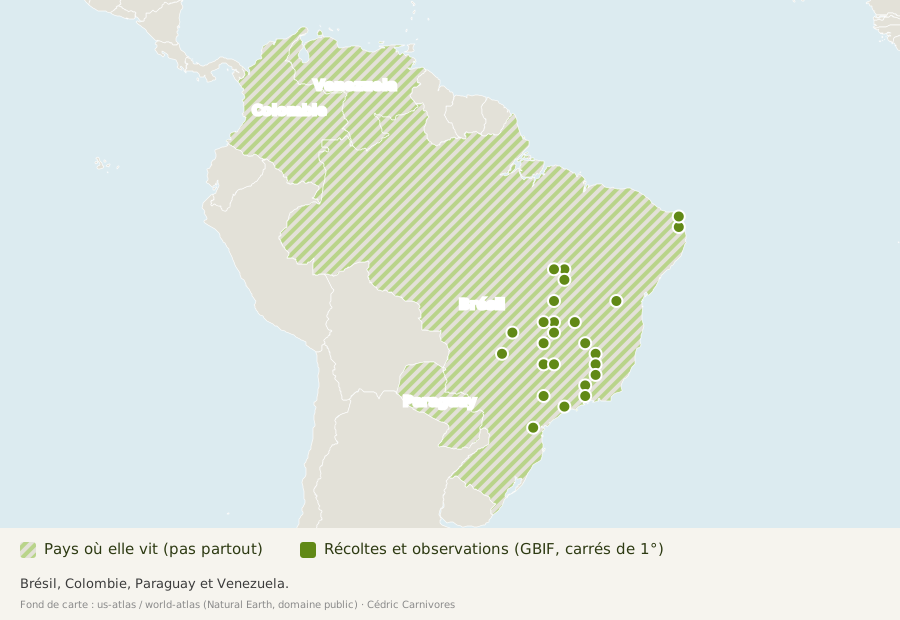
South America: Brazil, Colombia, Paraguay and Venezuela. Regions where most of the herbarium specimens and observations published in GBIF come from (number of records): Minas Gerais (374), Goiás (187), São Paulo (155), Paraná (140), Bahia (75), Federal District (Brasília) (69). According to Kew's world plant list (WCVP), it is native to the following regions: northeast Argentina, Bolivia, northeast Brazil, north Brazil, southeast Brazil, south Brazil, west-central Brazil, Colombia, Paraguay and Venezuela.
Habitat
According to the collections cited by Diels (1906): wet rocks (“common” at Tijuca), marshes in Minas Gerais and São Paulo (up to 2 200 m at Campos do Jordão), schist walls at around 1 800 m in Colombia (Antioquia), flat marshy ground in Paraguay. According to the collections and observations published in GBIF, it grows mostly at 8 to 1 325 m above sea level.
Sources
- Wikipedia (English), List of Drosera species: range.
- List of Drosera: authors, year.
- Kew, World Checklist of Vascular Plants (via GBIF): natural distribution.
- Diels, Das Pflanzenreich IV.112 : Droseraceae, 1906 (archive.org): description, localities and habitats of the specimens (translated from Latin and German).
- GBIF, Drosera communis: author, original publication, countries, altitude and localities of the herbarium specimens and observations.