Drosera dilatatopetiolaris K. Kondo
Species sheet, updated on 30/10/2026.
At a glance
| Scientific name | Drosera dilatatopetiolaris Katsuhiko Kondo, 1984 |
| Family | Droseraceae (subgenus and section Lasiocephala: the “petiolaris” sundews of northern Australia) |
| Distribution | Coasts around Darwin (Northern Territory) and northern Kimberley (Western Australia) |
| Habitat | Damp sands, slightly higher than D. petiolaris |
| Status | Least concern (LC) on the IUCN Red List |
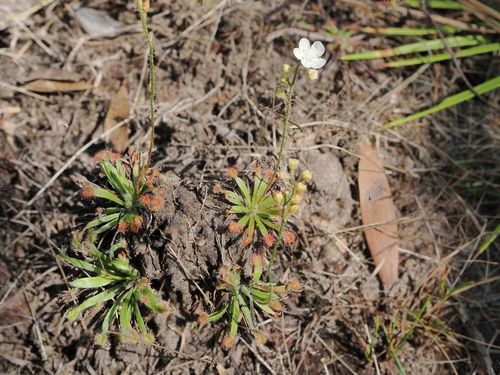
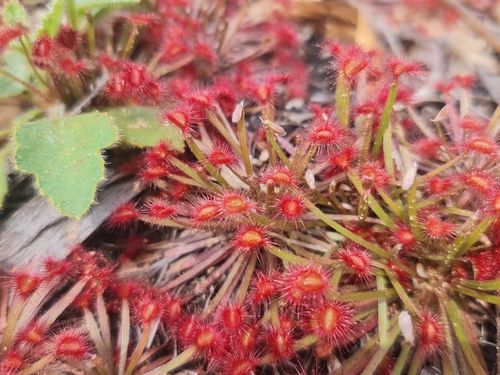
Photos in the wild
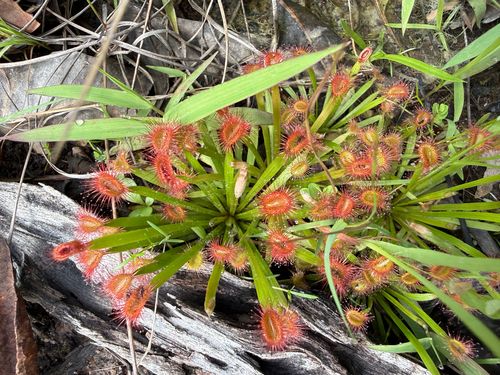
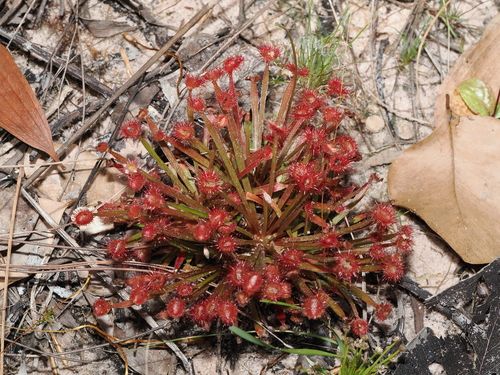
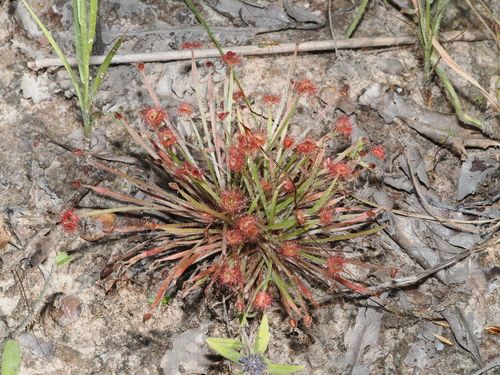
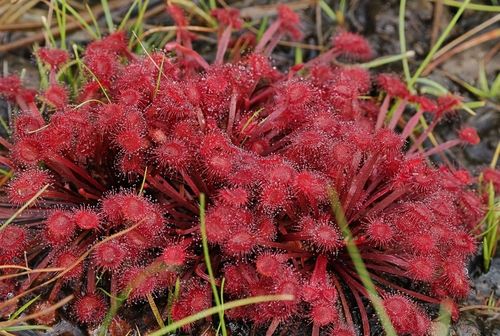
Etymology
- Drosera: see the genus sheet.
- dilatatopetiolaris: from the Latin, “with a widened petiole”.
History of the description
- 1906: Ludwig Diels recognises it and illustrates it in his monograph of the Droseraceae.
- 1984: Katsuhiko Kondo describes it (under the spelling “dilatato-petiolaris”).
Description (how to recognise it)
- Rosette that produces plantlets and forms clumps over 30 cm across.
- Green petioles 3 to 5 mm wide; small, round, red trap blades lying on the ground.
- Scapes about 18 cm, white flowers from April to May.
Distribution
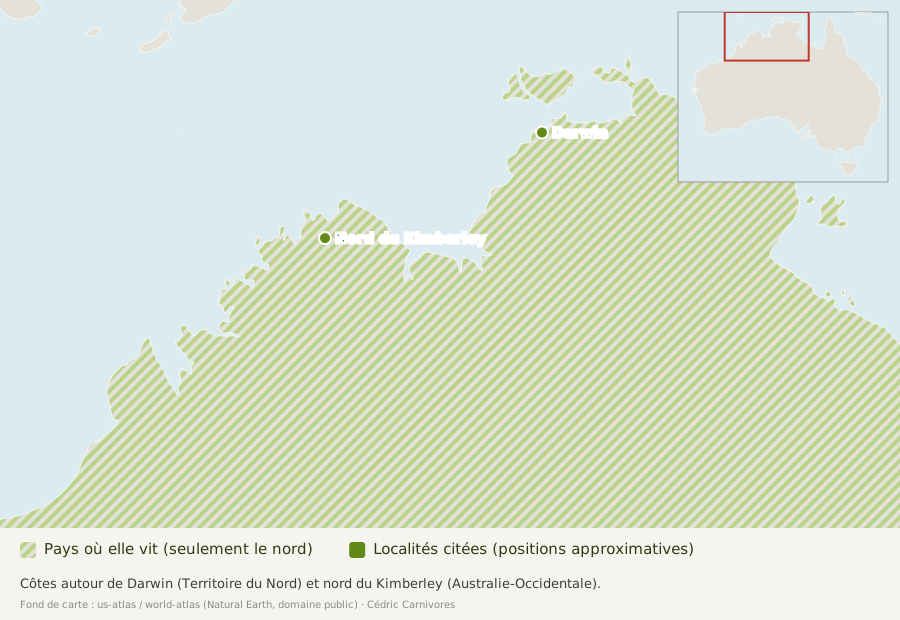
Endemic to northern Australia: coasts around Darwin and northern Kimberley.
Habitat
Damp sands, on ground slightly higher than that of its close relative D. petiolaris. According to the collections and observations published in GBIF, it grows mostly at 34 to 355 m above sea level.
Sources
- Wikipedia (English), Drosera dilatatopetiolaris: author, history, description, flowering, range, habitat, relationships.
- GBIF, Drosera dilatatopetiolaris: author, original publication, IUCN Red List category, countries, altitude and localities of the herbarium specimens and observations.