Drosera ericgreenii A. Fleischm., R. P. Gibson & Rivadavia
Species sheet, updated on 30/10/2026.
At a glance
| Scientific name | Drosera ericgreenii Andreas Fleischmann, Robert Gibson & Fernando Rivadavia, 2008 |
| Family | Droseraceae |
| Distribution | South Africa |
| Status | Not yet assessed by the IUCN |
Photos in the wild
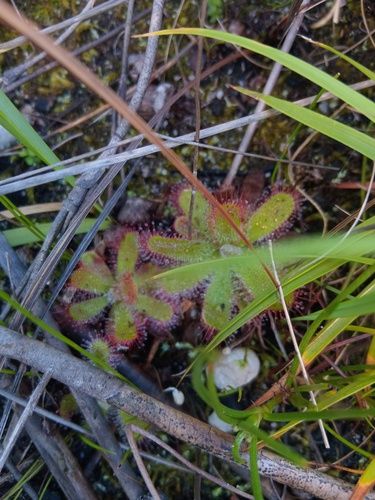
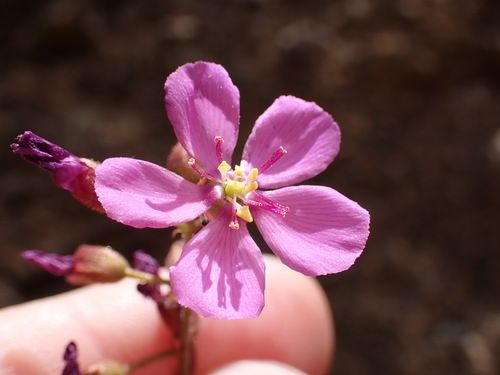
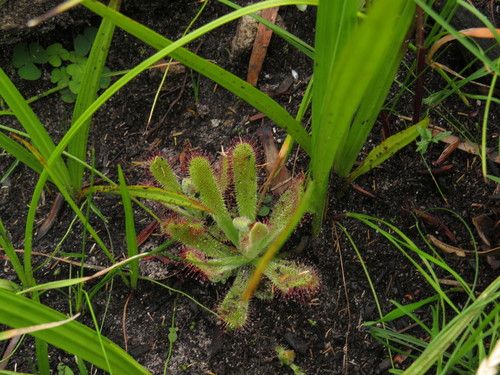
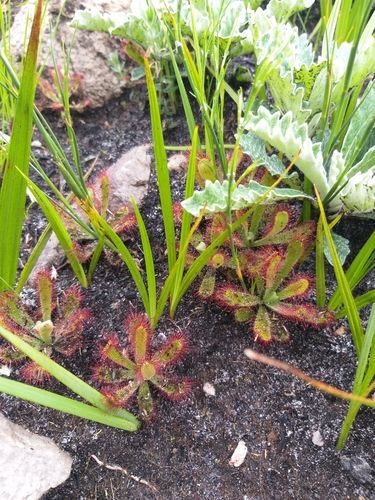
Etymology
- Drosera: see the genus sheet.
- ericgreenii: in honour of a person named Eric Green.
Description (how to recognise it)
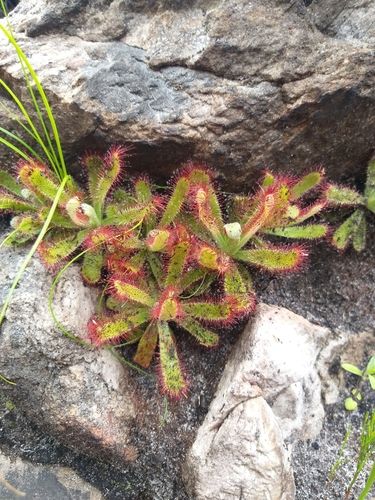
- According to Fleischmann (2013): a small perennial sundew whose stem hardly exceeds 10 cm with age; obovate to narrowly oblong leaves, dull green to yellowish green; petiole and leaf undersides covered in long white hairs, which give the whole plant a shaggy look; papery white or reddish stipules.
- Scapes arched at the base, dark red and white-hairy lower down; pink flowers about 2 cm across, lasting only one day. It resembles D. hilaris, from which it differs by its clearly visible membranous stipules, its much shorter stem and its arched scapes.
Distribution
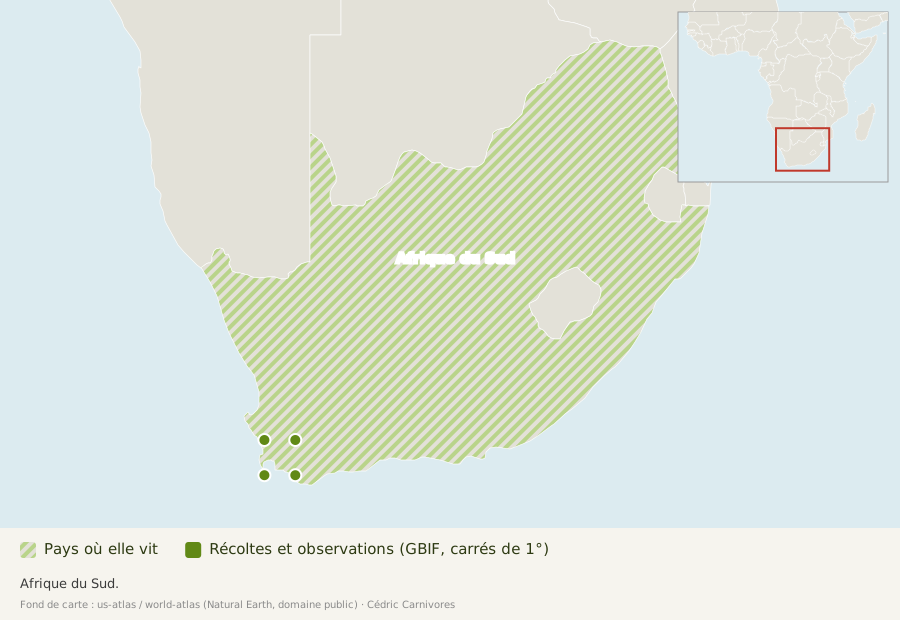
Endemic to South Africa. The herbarium specimens and observations published in GBIF come mostly from this region: Western Cape (61 records). According to Kew's world plant list (WCVP), it is native to this single region: Cape Provinces.
Habitat
Fleischmann (2013) reports it as very localised on mountain slopes near Franschhoek (Western Cape), on damp, acidic sandy soils in the fynbos (low scrub adapted to drought and fire), most often in the half-shade of small rocks or under shrubs, often near D. cistiflora; in summer it slows its growth and may shrink back to a bud. It is named after Eric Green, who discovered it.
Sources
- Wikipedia (English), List of Drosera species: range.
- List of Drosera: authors, year.
- Kew, World Checklist of Vascular Plants (via GBIF): natural distribution.
- Fleischmann, “Drosera ericgreenii – Eric Green's sundew”, Carnivorous Plant Newsletter, 2013 (archive.org): description, habitat, etymology.
- GBIF, Drosera ericgreenii: author, original publication, countries and localities of the herbarium specimens and observations.