Drosera erythrogyne N. G. Marchant & Lowrie
Species sheet, updated on 30/10/2026.
At a glance
| Scientific name | Drosera erythrogyne Neville Marchant & Allen Lowrie, 1992 |
| Family | Droseraceae (subgenus Ergaleium, section Ergaleium: climbing tuberous sundews) |
| Distribution | South coast, west of Albany (Western Australia) |
| Habitat | Peaty sands to loams, swamps or around granite outcrops |
| Status | Least concern (LC) on the IUCN Red List |
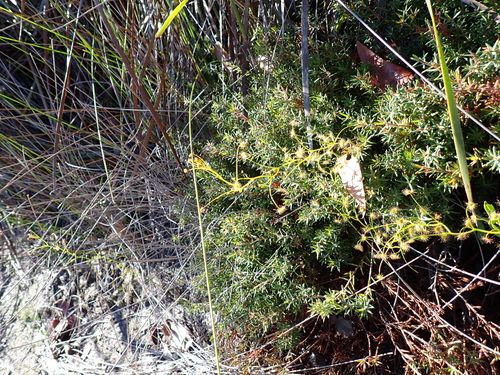
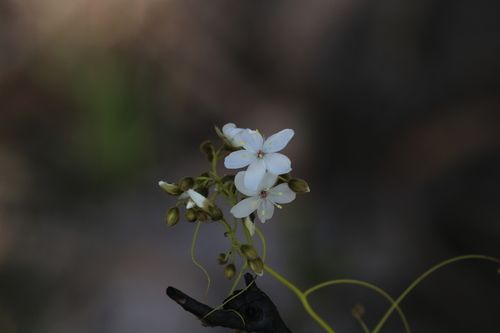
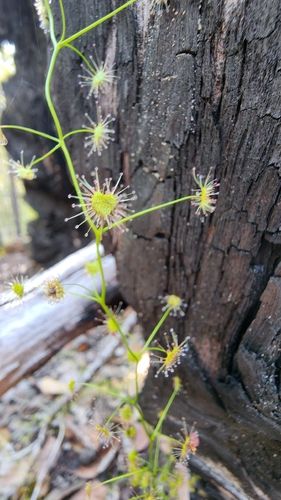
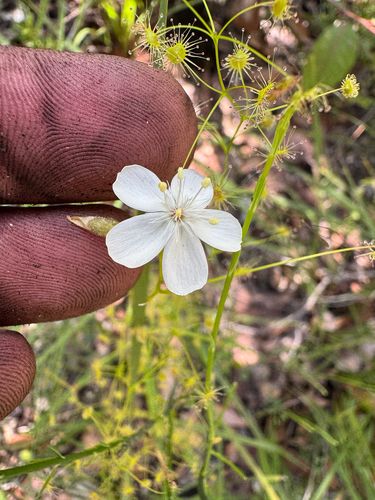
Photos in the wild
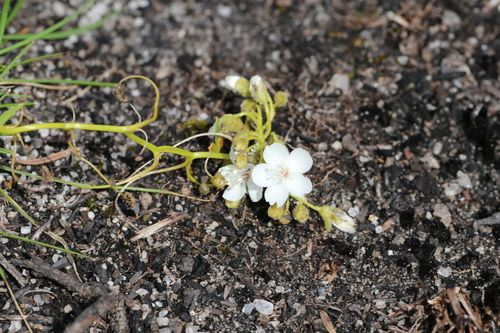
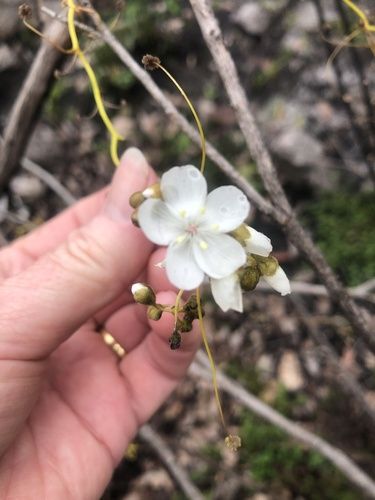
Etymology
- Drosera: see the genus sheet.
- erythrogyne: from the Greek erythros, “red”, and gyne, “female”: “with a red pistil”.
Description (how to recognise it)
- Tuberous perennial, climbing or scrambling: its long stem can reach 2 to 3 m, with small leaves all along it.
- White flowers, from August to October.
- According to FloraBase: tuberous perennial, erect or climbing, up to 2 m tall. White flowers, from August to October.
Distribution
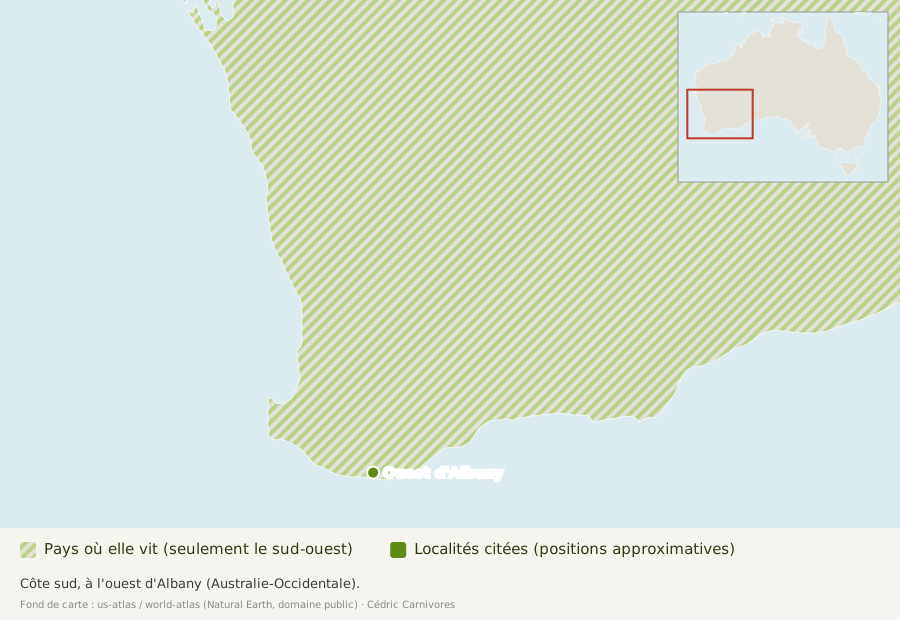
Endemic to Western Australia: south coast, west of Albany.
Habitat
Peaty sands to loams, in swamps or near granite outcrops. According to FloraBase: peaty sand, gravelly loam. Swamps, granite outcrops.
Sources
- Wikipedia (English), Drosera erythrogyne: authors, description, flowering, range, habitat, section.
- FloraBase, Western Australian Herbarium, Drosera erythrogyne N.G.Marchant & Lowrie: description (Amanda Spooner, 8 September 1999), flowering, soil and habitat, regions, status in Western Australia.
- GBIF, Drosera erythrogyne: author, original publication, IUCN Red List category, countries and localities of the herbarium specimens and observations.