Drosera glabripes (Harv. ex Planch.) Stein
Species sheet, updated on 30/10/2026.
At a glance
| Scientific name | Drosera glabripes William Henry Harvey ex Planchon; Stein, 1886 |
| Family | Droseraceae |
| Distribution | South Africa |
| Status | Not yet assessed by the IUCN |
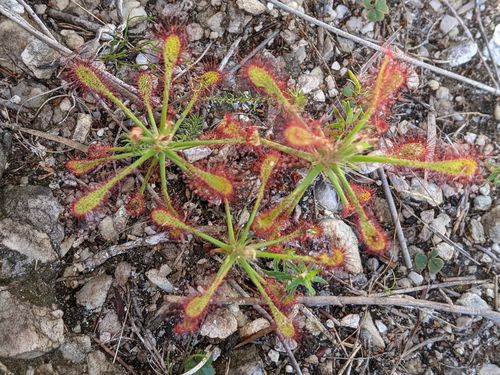
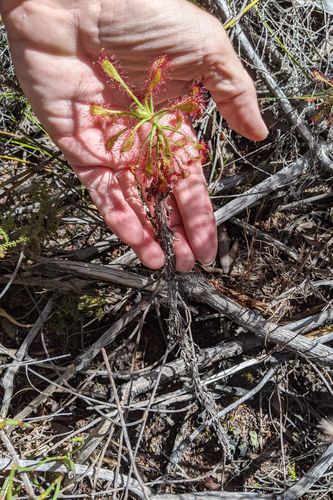
Photos in the wild
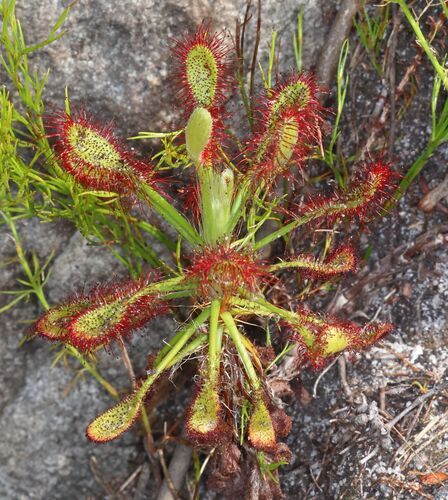
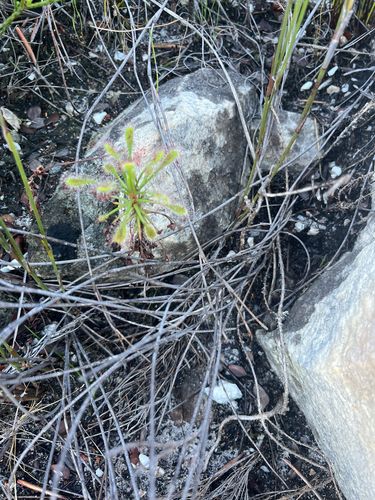
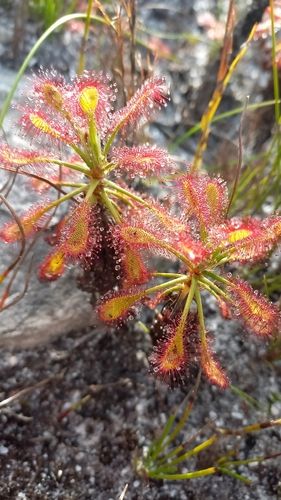
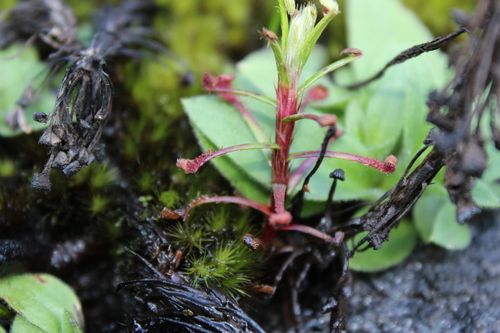
Etymology
- Drosera: see the genus sheet.
- glabripes: from the Latin, “with a hairless foot”.
Description (how to recognise it)
- According to Salter (1939), who raised it to species rank: elongated stems 10 to 20 cm long, densely covered with the old, dry, reflexed leaves; spoon-shaped leaves, with a petiole whose margins are strongly rolled in, hairy only underneath in the groove (so the name glabripes, “with a hairless foot”, is poorly chosen, he notes).
- Stipules almost colourless, divided almost to the base into 5 to 7 fine bristles; this sets it apart from D. ramentacea, which has oar-shaped leaves and chestnut-brown stipules. In flower in December–January.
Distribution
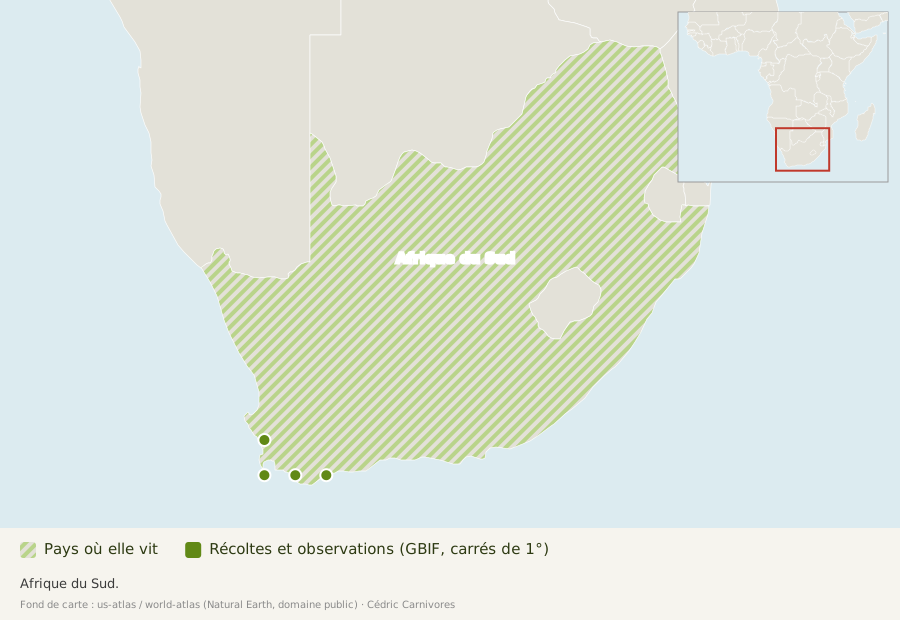
Endemic to South Africa. The herbarium specimens and observations published in GBIF come mainly from this region: Western Cape (790 records). According to Kew's world plant list (WCVP), it is native to this single region only: Cape Provinces.
Habitat
Salter (1939) states that it is not a marsh plant, but needs a lot of moisture: on the Cape Peninsula, it grows in sheltered spots, at the foot of rock outcrops and small south-facing cliffs, from about 450 m upwards, in places often in the clouds; the long stems stay hidden in the vegetation, and only the leaves at the top are visible. He calls it fairly common on the Swartkop and the south face of Noordhoek, and noted that he had never seen dead insects stuck to its leaves.
Sources
- Wikipedia (English), List of Drosera species: range.
- List of Drosera: authors, year.
- Kew, World Checklist of Vascular Plants (via GBIF): natural distribution.
- Salter, Journal of South African Botany 5, 1939 (archive.org): species status, description, habitat.
- GBIF, Drosera glabripes: author, original publication, countries and localities of herbarium specimens and observations.