Drosera glanduligera Lehm.
Species sheet, updated on 30/10/2026.
At a glance
| Scientific name | Drosera glanduligera Johann Georg Christian Lehmann, 1844 |
| Synonyms | D. anagallidiflora, D. patellifera |
| Family | Droseraceae (section Coelophylla, the only species in its section) |
| Distribution | Southern Australia: Queensland, New South Wales, South Australia, Tasmania, Victoria, Western Australia |
| Habitat | A wide range of habitats and soils |
| Status | Least concern (IUCN) |
Photos in the wild
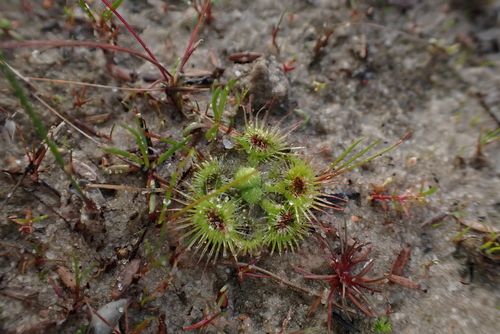
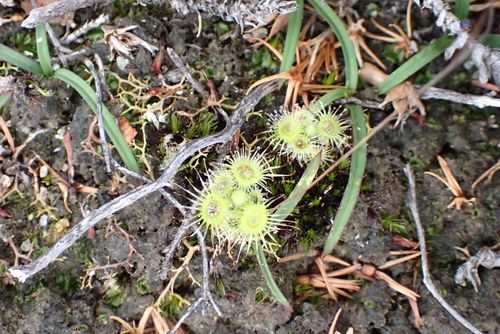
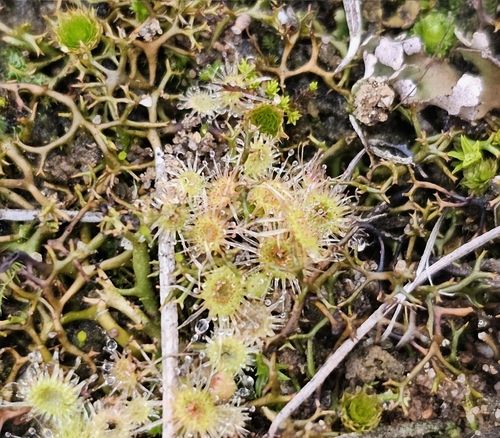
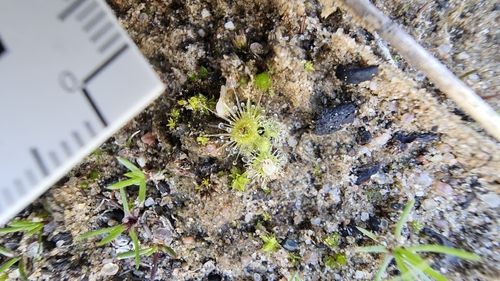
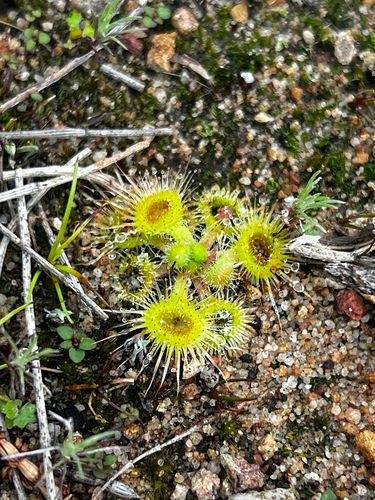
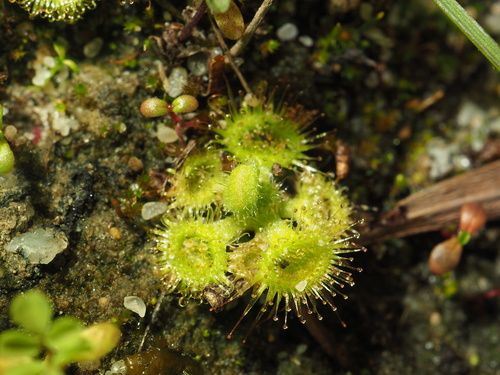
Etymology
- Drosera: see the genus sheet.
- glanduligera: from the Latin, “gland-bearing”. In English: “pimpernel sundew” or “scarlet sundew”.
History of the description
- 1844: described by Lehmann.
- 1848: Planchon places it alone in section Coelophylla.
- 2017: a chemical analysis links it to subgenus Ergaleium.
Description (how to recognise it)
- Small rosette of 15 to 20 spoon-shaped leaves, with fibrous roots, without a tuber.
- Orange flowers on a short stem.
- Annual plant that grows in winter and flowers from August to November.
Distribution
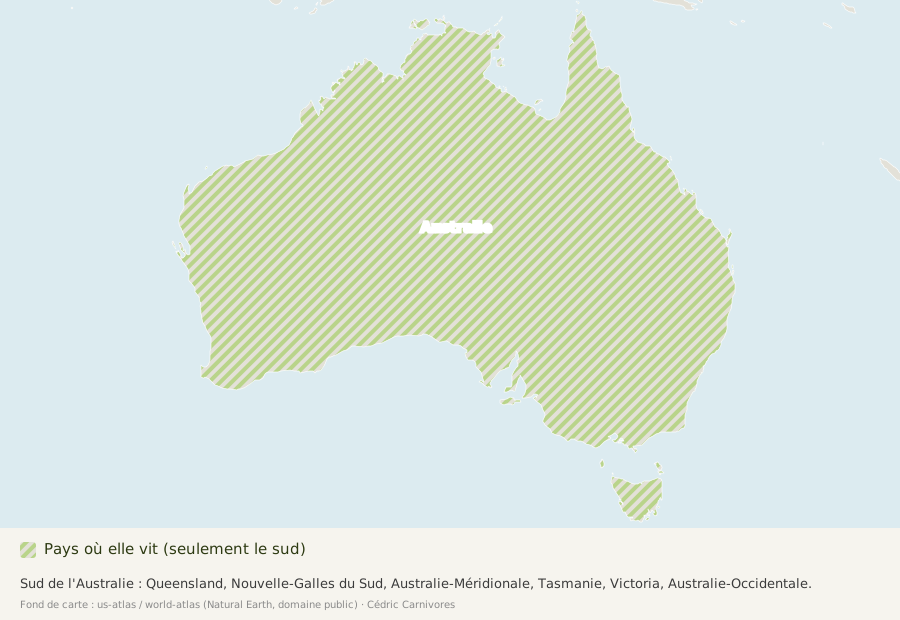
Endemic to southern Australia: Queensland, New South Wales, South Australia, Tasmania, Victoria and Western Australia.
Habitat
A wide range of habitats and soils; sometimes locally abundant.
Ecology
- Its leaves combine two traps: sticky tentacles in the centre and, around the edge, catapult tentacles that fling prey onto the glue.
- The leaf then slowly curls around the prey, in about two minutes. Each catapult tentacle works only once.
Did you know?
- It is one of the few sundews with a fast trap: its marginal tentacles snap in a fraction of a second.
Sources
- Wikipedia (English), Drosera glanduligera: author, synonyms, common names, history, description, catapult, flowering, range, habitat, status, section.