Drosera hamiltonii C. R. P. Andrews
Species sheet, updated on 30/10/2026.
At a glance
| Scientific name | Drosera hamiltonii Cecil Rollo Payton Andrews, 1903 |
| Family | Droseraceae (only species of subgenus Stelogyne) |
| Distribution | Coastal swamps of southwestern Western Australia |
| Habitat | Coastal swamps |
| Status | Least concern (LC) on the IUCN Red List |
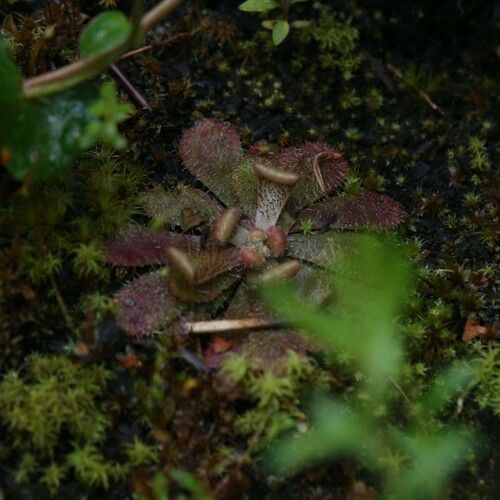
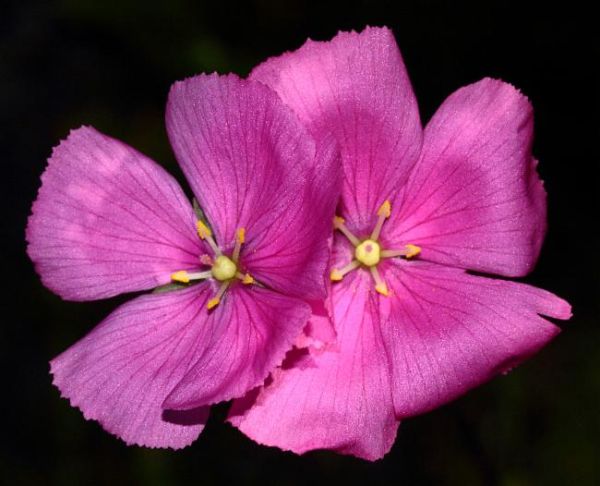
Photos in the wild
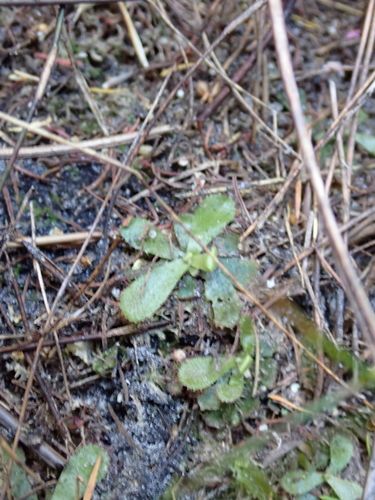
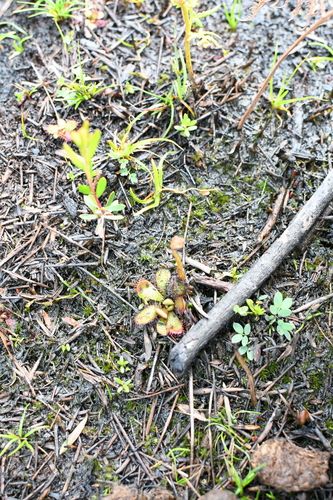
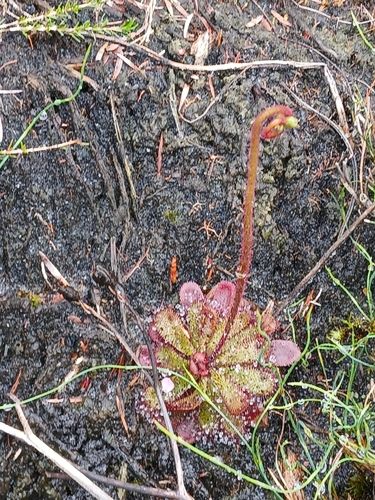
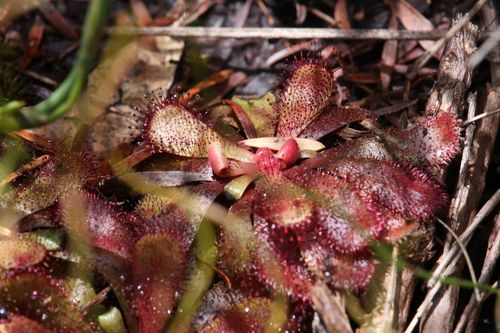
Etymology
- Drosera: see the genus sheet.
- hamiltonii: named after a person called Hamilton. In English: “rosy sundew”.
History of the description
- 1903: described by Andrews.
- 1906: Ludwig Diels places it alone in section Stelogyne.
- 1994: Seine and Barthlott place it in section Drosera.
- 1996: Jan Schlauer makes Stelogyne a subgenus, because of its fused styles, unique in the genus.
Description (how to recognise it)
- Small, compact rosette of glandular leaves about 2 cm long.
- Pink flowers on scapes up to 30 cm, in November and December.
- Fused styles, a unique feature.
- According to FloraBase: Rosetted, fibrous-rooted perennial, up to 40 cm high. Pink, purple or red flowers, from November to December.
Distribution
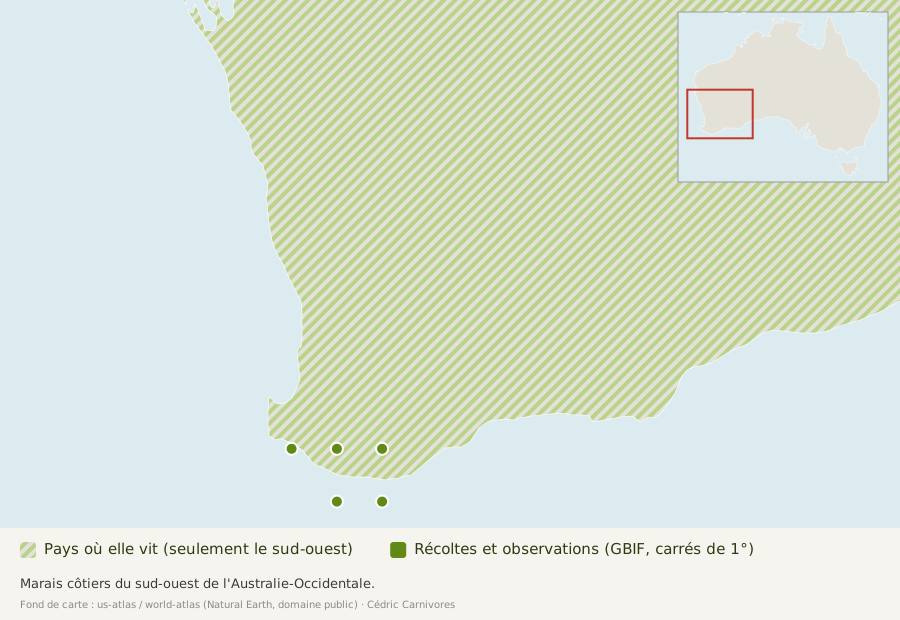
Endemic to southwestern Western Australia: coastal swamps.
Habitat
According to FloraBase: Peaty soils. Swamps.
Sources
- Wikipedia (English), Drosera hamiltonii: author, common name, history, description, flowering, range, subgenus.
- FloraBase, Western Australian Herbarium, Drosera hamiltonii C.R.P.Andrews: description (Grazyna Paczkowska, 3 April 1996), flowering, soil and habitat, regions, status in Western Australia.
- GBIF, Drosera hamiltonii: author, original publication, IUCN Red List category, countries and localities of herbarium specimens and observations.