Drosera hirtella A. St.-Hil.
Species sheet, updated on 30/10/2026.
At a glance
| Scientific name | Drosera hirtella Auguste de Saint-Hilaire, 1824 |
| Family | Droseraceae |
| Distribution | Brazil |
| Status | Not yet assessed by the IUCN |
Photos in the wild
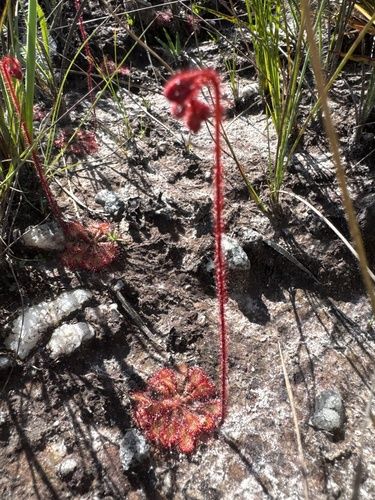
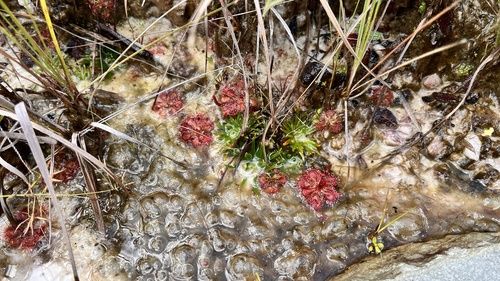
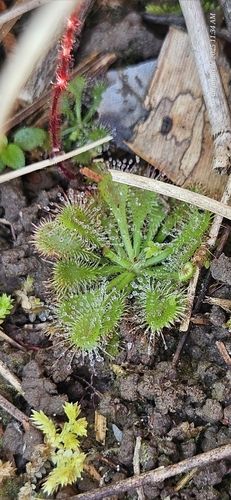
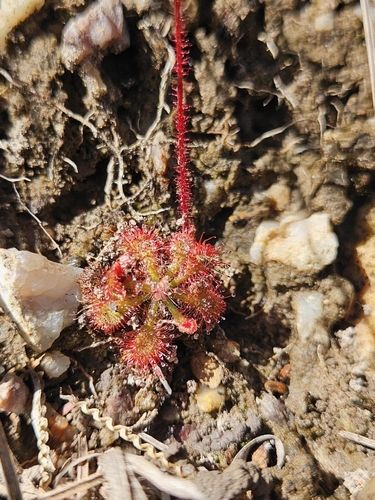
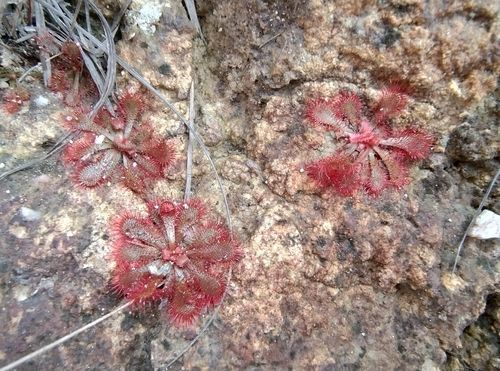
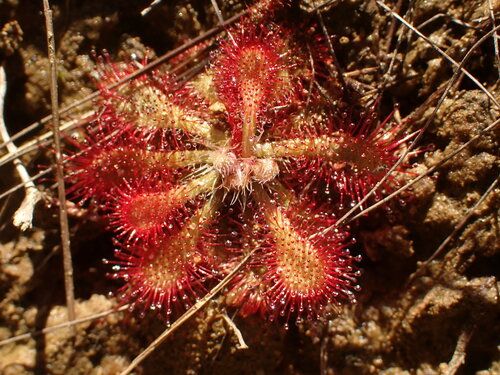
Etymology
- Drosera: see the genus sheet.
- hirtella: from the Latin, “slightly hairy”.
Description (how to recognise it)
- Diels (1906) classed it as a variety of D. montana; he distinguishes it by stipules sometimes cut almost to the base into strips 2 to 3.5 mm long, and by scapes bristling with cilia at the bottom and glandular at the top.
Distribution
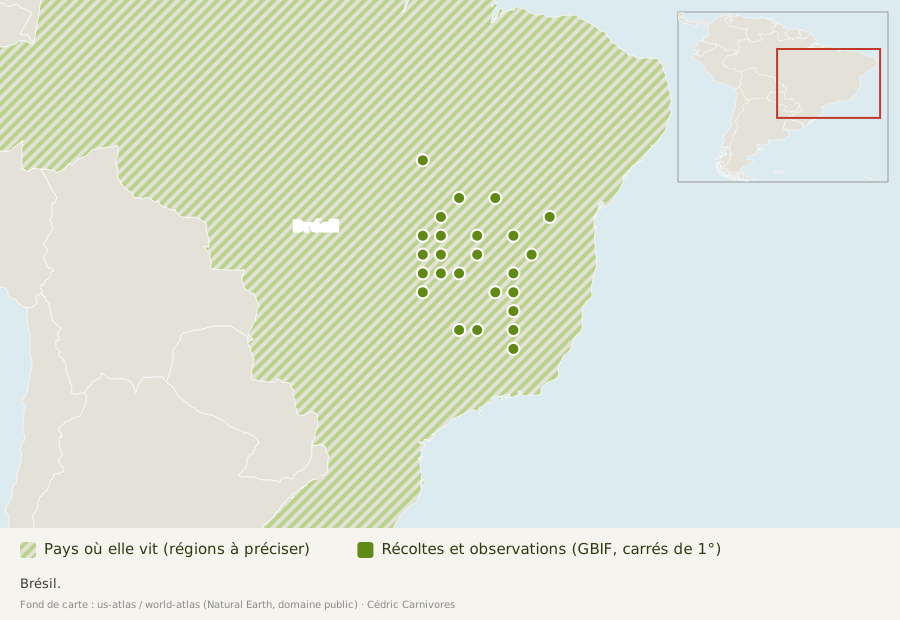
Endemic to Brazil. Regions where most of the herbarium specimens and observations published in GBIF come from (number of records): Minas Gerais (211), Goiás (129), Federal District (Brasília) (46). According to Kew's world plant list (WCVP), it is native to the following regions: northeastern Brazil, northern Brazil, southeastern Brazil and west-central Brazil. According to Flora do Brasil (the official list of Brazilian plants), it is endemic to Brazil and grows in these states: Bahia, Federal District, Goiás, Minas Gerais and Tocantins. Major biomes: Cerrado.
Habitat
According to Flora do Brasil: terrestrial plant, in campos rupestres (rocky mountain grasslands) and cerrado (savanna). Diels (1906) cites collections from dried-out marshes near Formigas (Minas Gerais, Saint-Hilaire's type specimen, in flower in June–July), on sandy grasslands of the Serra do Grão Mogol, and in damp, sandy places near Ipanema (São Paulo); also in the Serra dos Pireneus (Goiás) and the Serra de Caldas. Based on the collections and observations published in GBIF, it grows mostly at 517 to 1,470 m altitude.
Sources
- Wikipedia (English), List of Drosera species: range.
- List of Drosera: authors, year.
- Kew, World Checklist of Vascular Plants (via GBIF): natural distribution.
- Flora e Funga do Brasil, official list (via GBIF): states, biomes, endemism, life form and vegetation types in Brazil.
- Diels, Das Pflanzenreich IV.112: Droseraceae, 1906 (archive.org): description, localities and habitats of the specimens (translated from Latin and German).
- GBIF, Drosera hirtella: author, original publication, countries, altitude and localities of herbarium specimens and observations.