Drosera intricata Planch.
Species sheet, updated on 30/10/2026.
At a glance
| Scientific name | Drosera intricata Jules Émile Planchon, 1848 |
| Family | Droseraceae (subgenus Ergaleium, section Ergaleium: climbing tuberous sundews) |
| Distribution | Western Australia |
| Habitat | Sandy clays at the edge of swamps and places wet for part of the year |
| Status | Least concern (LC) on the IUCN Red List |
Photos in the wild
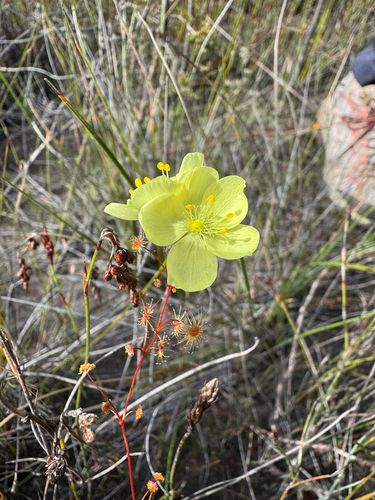
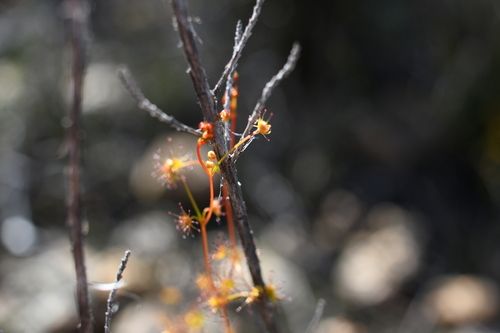
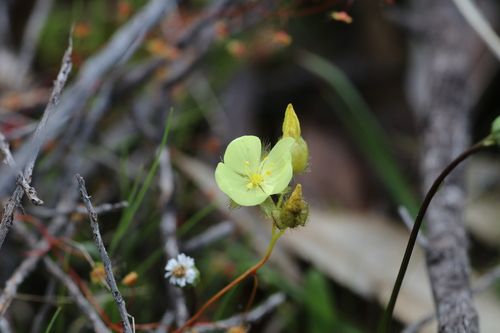
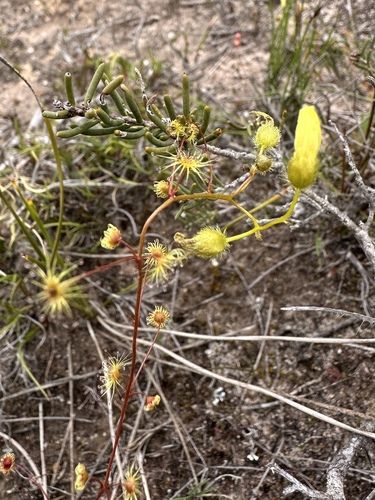
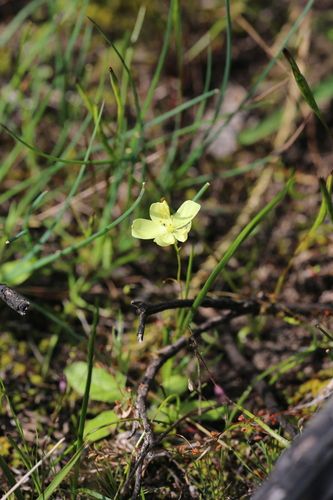
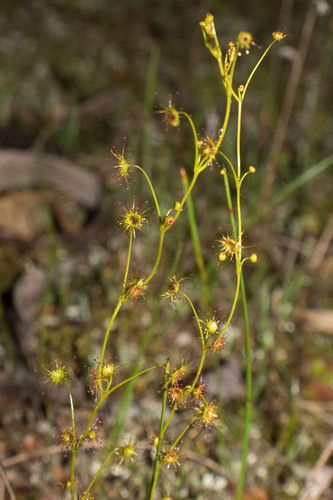
Etymology
- Drosera: see the genus sheet.
- intricata: from the Latin, “entangled”, for its twining, winding stem.
Description (how to recognise it)
- Tuberous perennial, scrambling or climbing, with a hairless stem 25 to 40 cm long.
- Small trap leaves along the stem.
- 3 to 12 yellow flowers, from September to October.
- According to FloraBase: Glabrous, scrambling or climbing tuberous perennial, of loose habit, 25 to 40 cm high, scape with 3 to 12 flowers. Yellow flowers, from September to October.
Distribution
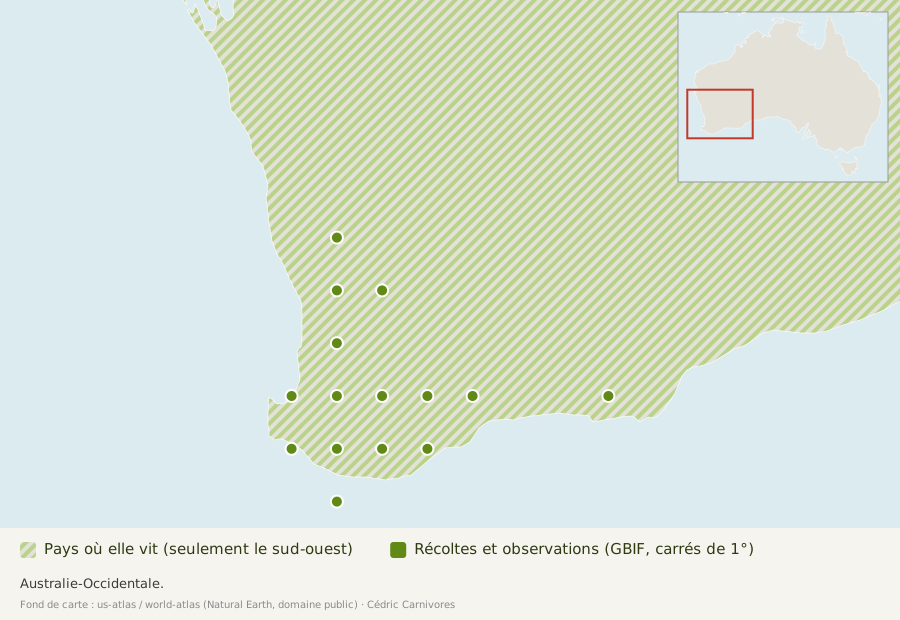
Endemic to Western Australia.
Habitat
Sandy clays at the edge of swamps and other places that are wet for part of the year. According to FloraBase: Grey or brown clayey sand. Beds of seasonal creeks, floodways, drainage lines and swamp margins. Based on the collections and observations published in GBIF, it grows mostly at around 246 m altitude.
Sources
- Wikipedia (English), Drosera intricata: author, etymology, description, flowering, range, habitat, section.
- FloraBase, Western Australian Herbarium, Drosera intricata Planch.: description (Amanda Spooner, 1 February 2000), flowering, soil and habitat, regions, status in Western Australia.
- GBIF, Drosera intricata: author, original publication, IUCN Red List category, countries, altitude and localities of herbarium specimens and observations.