Drosera macrophylla Lindl.
Species sheet, updated on 30/10/2026.
At a glance
| Scientific name | Drosera macrophylla John Lindley, A Sketch of the Vegetation of the Swan River Colony, 1839 |
| Family | Droseraceae (subgenus Ergaleium, section Erythrorhiza: tuberous rosette sundews) |
| Distribution | East of Perth (Western Australia) |
| Habitat | Loamy soils |
| Status | Least concern (LC) on the IUCN Red List |
Photos in the wild
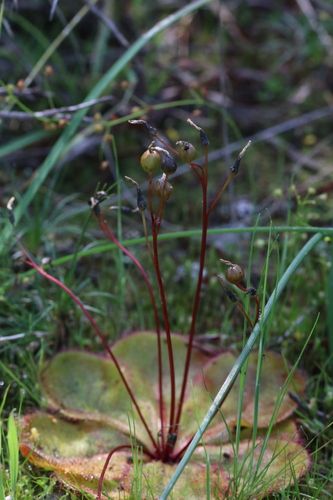
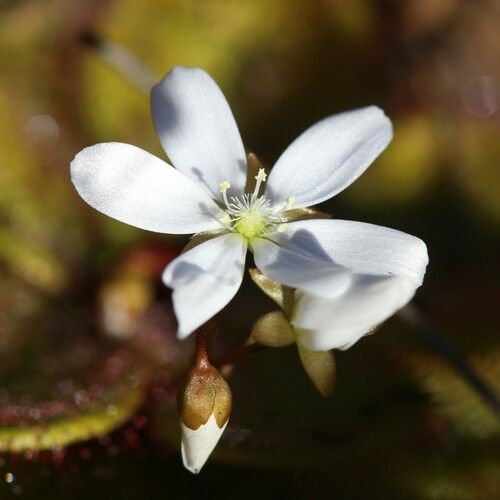

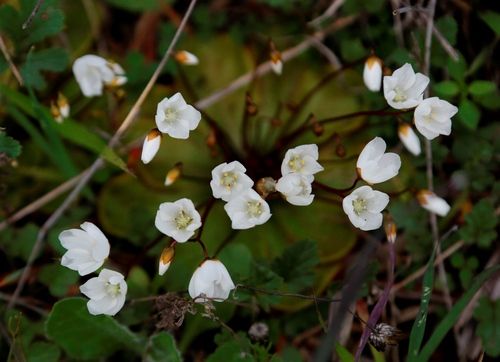
Etymology
- Drosera: see the genus sheet.
- macrophylla: from the Greek makros, “large”, and phyllon, “leaf”. Common name in English: “showy sundew”; in French droséra spectaculaire.
Description (how to recognise it)
- Tuberous perennial plant, forming a rosette, with leaves about 4 cm long and 2 cm wide.
- Flowers from June to October.
- Subspecies monantha (1992): scapes usually with a single flower.
- According to FloraBase: tuberous perennial rosette plant, 3 to 15 cm tall. White flowers, from June to October.
Distribution
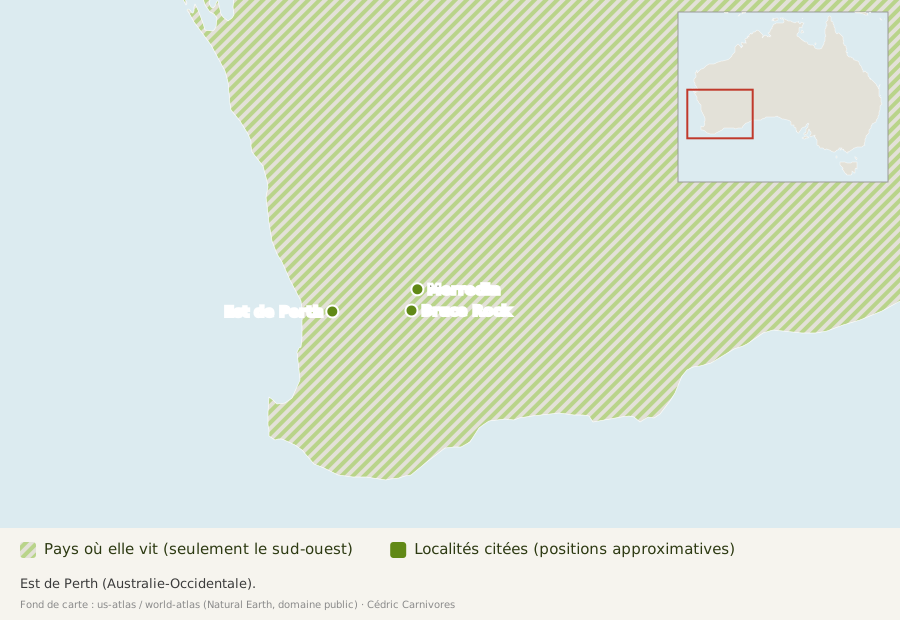
Endemic to Western Australia: common east of Perth; subspecies monantha is abundant around Bruce Rock and Merredin.
Habitat
Loamy soils. According to FloraBase: clay, sandy or loamy soils. Granite outcrops. According to the collections and observations published in GBIF, it grows mainly at 202 to 295 m above sea level.
Sources
- Wikipedia (English), Drosera macrophylla: author, etymology, common name, description, flowering, subspecies, range, habitat, section.
- FloraBase, Western Australian Herbarium, Drosera macrophylla Lindl.: description (Amanda Spooner, 8 September 1999), flowering, soil and habitat, regions, status in Western Australia.
- GBIF, Drosera macrophylla: author, original publication, IUCN Red List category, countries, altitude and localities of herbarium specimens and observations.