Drosera monticola (Lowrie & N. G. Marchant) Lowrie
Species sheet, updated on 30/10/2026.
At a glance
| Scientific name | Drosera monticola Allen Lowrie & Neville Marchant (1992, as a subspecies); Allen Lowrie (2005, validated in 2011) |
| Synonyms | D. stolonifera subsp. monticola Lowrie & N. G. Marchant |
| Family | Droseraceae (subgenus Ergaleium, section Stolonifera) |
| Distribution | Summits of Toolbrunup and Bluff Knoll, Stirling Range (Western Australia) |
| Habitat | Ledges and loamy hollows, wet in winter, close to the clouds |
| Status | Vulnerable (VU) on the IUCN Red List |
Photos in the wild
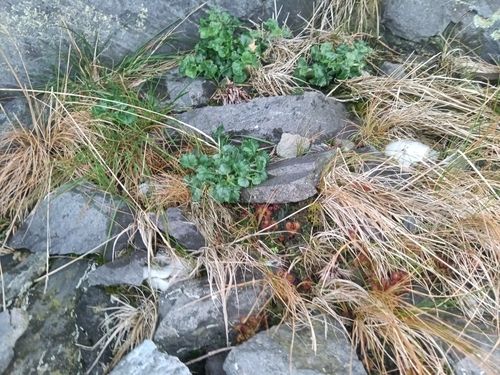
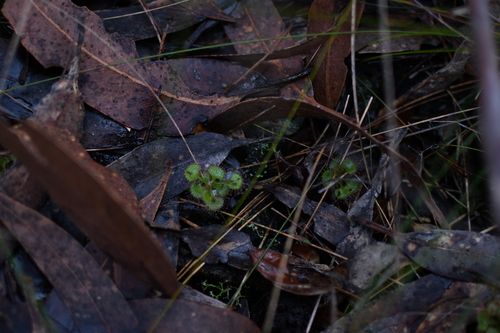
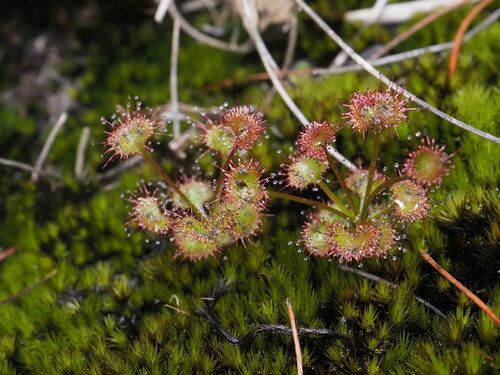
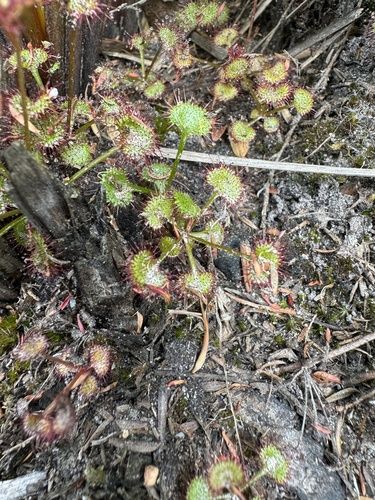
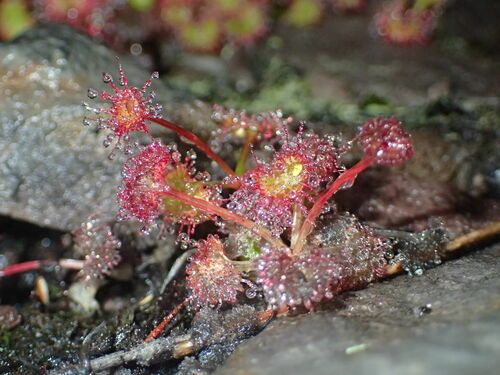
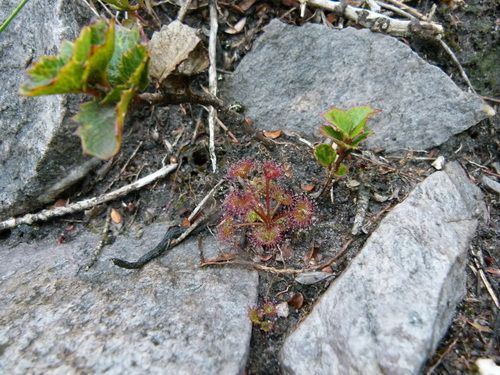
Etymology
- Drosera: see the genus sheet.
- monticola: from the Latin, “mountain-dweller”.
History of the description
- 1992: described as a subspecies of D. stolonifera; type specimen from the summit of Toolbrunup.
- 2005: raised to species rank, but the name only became valid in 2011, after a correction in Nuytsia.
Description (how to recognise it)
- Small perennial plant 2 to 7 cm tall, with bright red tubers about 6 mm across.
- Round, reddish leaves in whorls on upright stems; they do not fold over their prey.
- It forms colonies by vegetative reproduction.
- Pink flowers in a raceme, from October to November.
Distribution
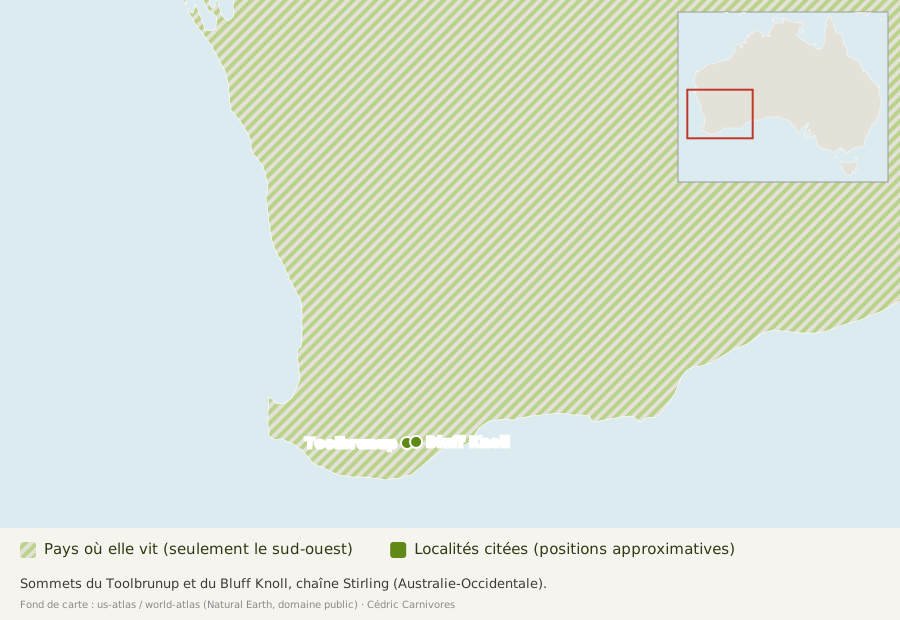
Endemic to Western Australia: only the summits of Toolbrunup and Bluff Knoll, in Stirling Range National Park.
Habitat
Very high altitude for the region, close to the cloud line, on ledges and in loamy hollows that are wet in winter.
Sources
- Wikipedia (English), Drosera monticola: authors, synonym, history, description, flowering, range, habitat, section.
- GBIF, Drosera monticola: author, original publication, IUCN Red List category, countries and localities of herbarium specimens and observations.