Drosera moorei (Diels) Lowrie
Species sheet, updated on 30/10/2026.
At a glance
| Scientific name | Drosera moorei Ludwig Diels (1906, as a variety); Allen Lowrie, 1999 |
| Synonyms | D. subhirtella var. moorei Diels, D. subhirtella subsp. moorei (Diels) N. G. Marchant |
| Family | Droseraceae (subgenus Ergaleium, section Ergaleium: erect or climbing tuberous sundews) |
| Distribution | Western Australia |
| Habitat | Sandy loams near granite outcrops |
| Status | Least concern (LC) on the IUCN Red List |
Photos in the wild
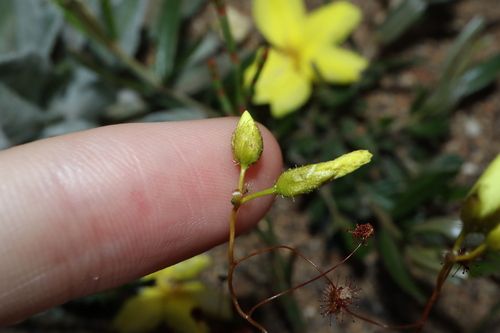
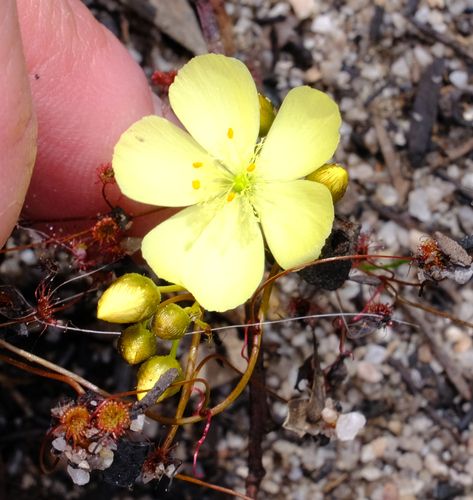
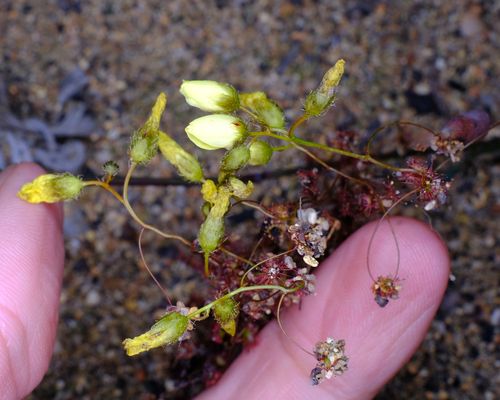
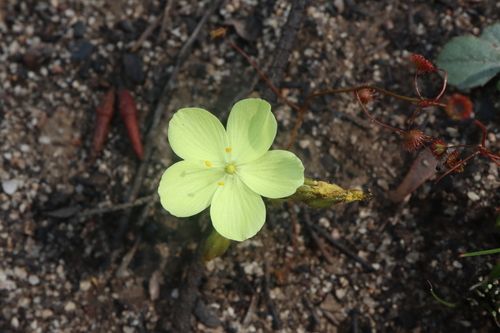
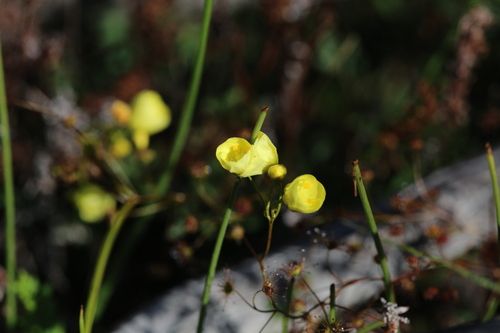
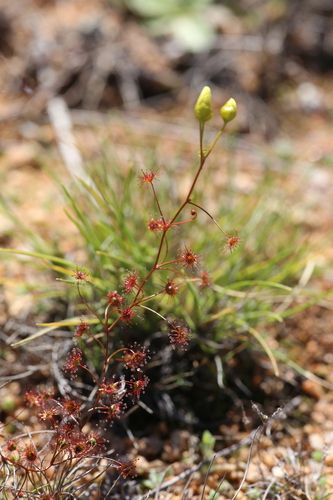
Etymology
- Drosera: see the genus sheet.
- moorei: in honour of Spencer Le Marchant Moore, a British Museum botanist who collected plants in Western Australia.
History of the description
- 1906: Diels describes it as a variety of D. subhirtella.
- 1982: Marchant makes it a subspecies.
- 1999: Lowrie raises it to species rank.
Description (how to recognise it)
- Tuberous perennial plant, scrambling or climbing, with hairless stems 12 to 35 cm long.
- Small round, shield-shaped trap leaves.
- 2 to 10 yellow flowers per scape, from September to October.
Distribution
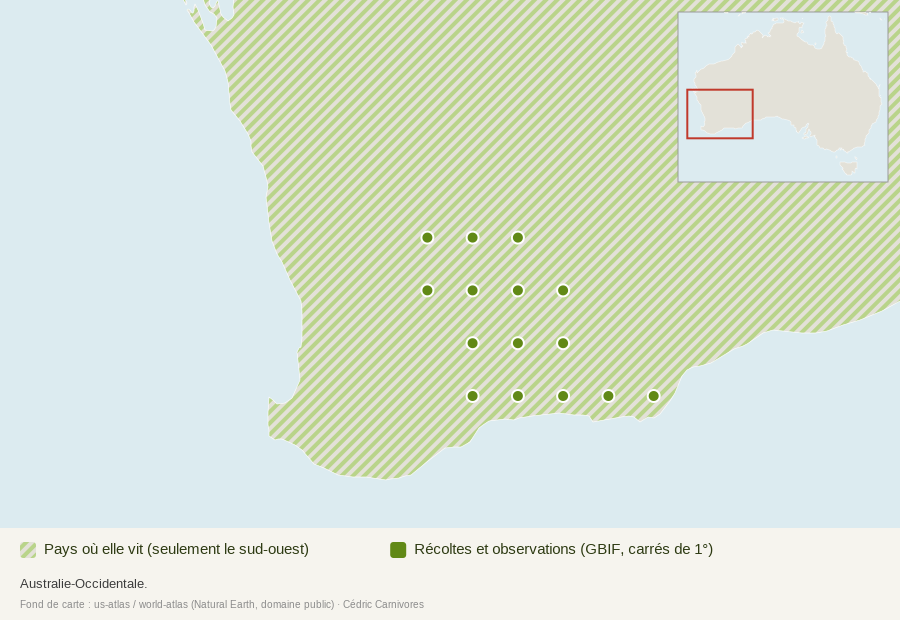
Endemic to Western Australia.
Habitat
Sandy loams near granite outcrops. According to the collections and observations published in GBIF, it grows mainly at 57 to 502 m above sea level.
Sources
- Wikipedia (English), Drosera moorei: authors, synonyms, etymology, history, description, flowering, range, habitat, section.
- GBIF, Drosera moorei: author, original publication, IUCN Red List category, countries, altitude and localities of herbarium specimens and observations.