Drosera neocaledonica Raym.-Hamet
Species sheet, updated on 30/10/2026.
At a glance
| Scientific name | Drosera neocaledonica Raymond-Hamet, Bulletin de la Société botanique de France, 1906 |
| Synonyms | D. caledonica Vieill. ex Diels, D. rubiginosa Heckel (name without a description) |
| Family | Droseraceae |
| Distribution | Southern massif of Grande Terre, from Port-Boisé to Dogny (New Caledonia) |
| Habitat | Open maquis and marshes, mostly on ultramafic soils, from 50 to 1 280 m |
| Status | Least concern (IUCN) |
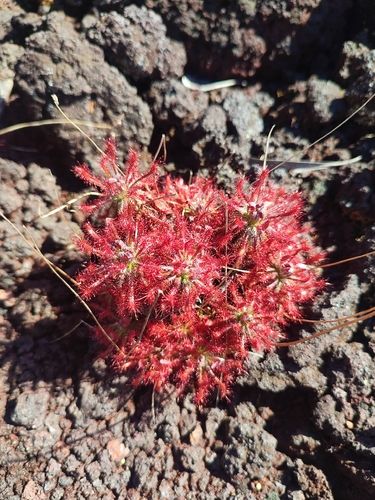
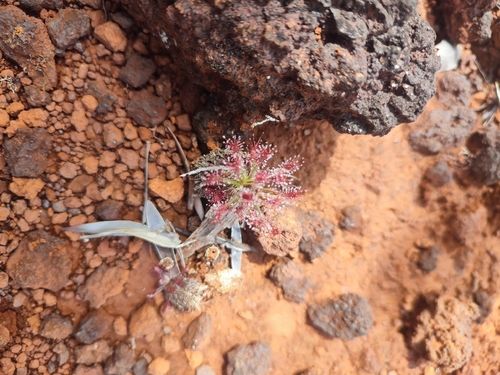
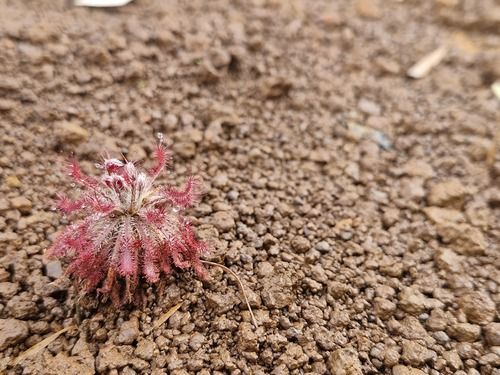
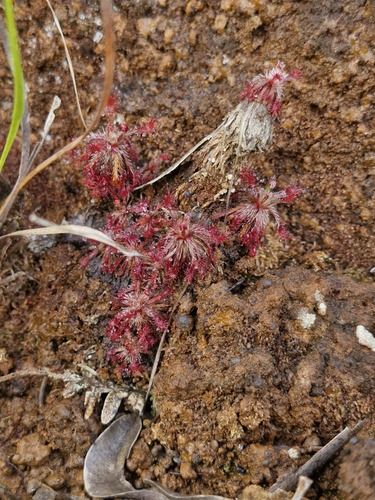
Photos in the wild
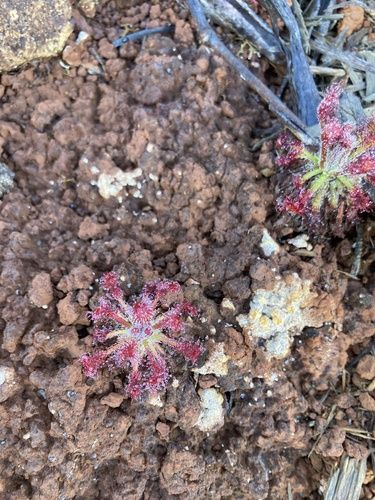
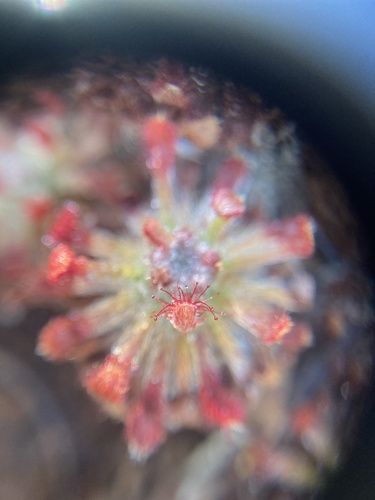
Etymology
- Drosera: see the genus sheet.
- neocaledonica: “from New Caledonia”.
History of the description
- 1906: described by the French botanist Raymond-Hamet.
Description (how to recognise it)
- Rosette on a stem, with half-erect, narrowly spoon-shaped leaves.
- Petioles with stiff white hairs; scape and sepals with red glandular hairs.
- Flowers about 2 cm across, petals about 10 mm.
Distribution
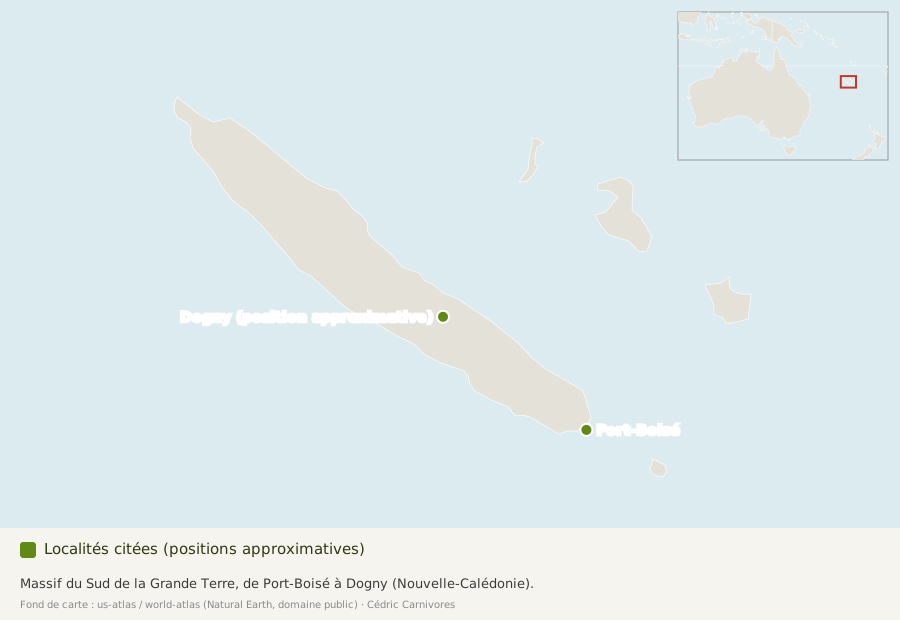
Endemic to New Caledonia: southern massif of Grande Terre, from Port-Boisé in the north to Dogny, from 50 to 1 280 m.
Habitat
Mostly ultramafic soils: open maquis and marshes, more rarely in forest.
Did you know?
- Together with Nepenthes vieillardii, it is one of the carnivorous plants found on French territory (not confirmed); it can be seen in New Caledonia.
Sources
- Wikipedia (English), Drosera neocaledonica: author, synonyms, description, range, altitude, habitat, status.
- GBIF, Drosera neocaledonica: author, original publication, countries and localities of herbarium specimens and observations.