Drosera praefolia Tepper
Species sheet, updated on 30/10/2026.
At a glance
| Scientific name | Drosera praefolia Johann Gottlieb Otto Tepper, 1892 |
| Synonyms | D. whittakeri subsp. praefolia, D. bulbosa var. praefolia, D. aphylla Bates (illegitimate) |
| Family | Droseraceae (subgenus Ergaleium, section Erythrorhiza: rosetted tuberous sundews) |
| Distribution | From the southern Fleurieu Peninsula to Kangaroo Island (South Australia) |
| Habitat | Open woodland, on lateritic sandy clay, loam or decomposed schist |
| Status | Least concern (LC) on the IUCN Red List |
Photos in the wild
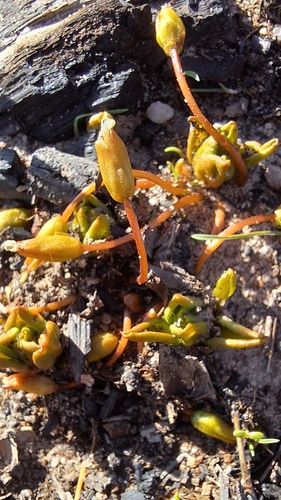
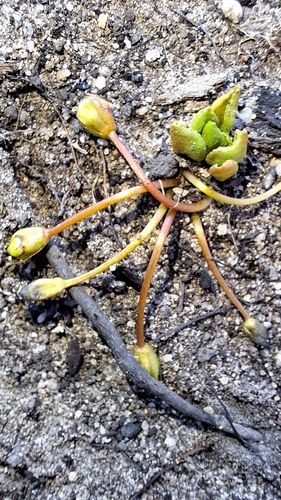
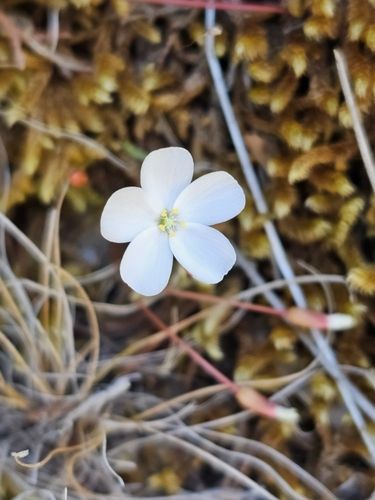
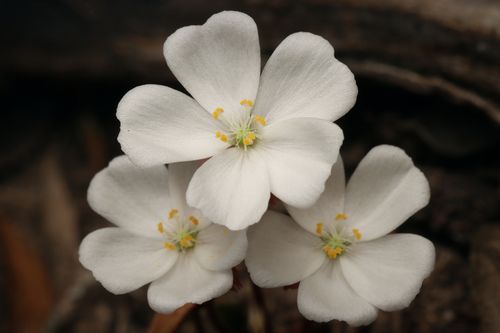
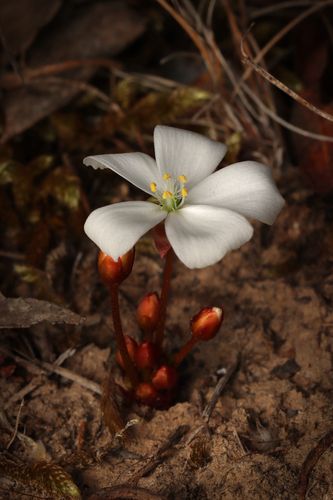
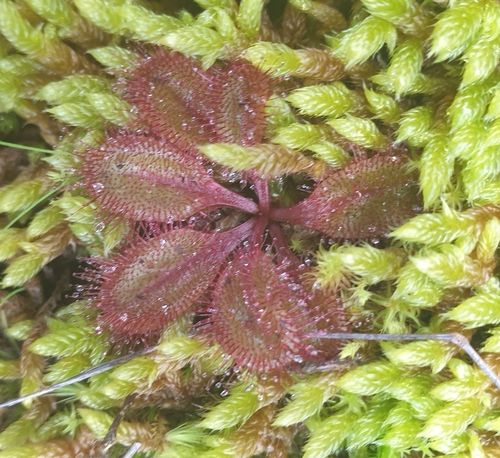
Etymology
- Drosera: see the genus sheet.
- praefolia: from the Latin, “before the leaves” (meaning, not confirmed): its flowers appear before the leaves.
History of the description
- 1892: Tepper describes it from plants from the Fleurieu Peninsula.
- Its rank as a species has been debated; Lowrie and Conran reinstated it in 2008.
Description (how to recognise it)
- Perennial plant with a white tuber, forming a rosette 4 to 6 cm across, with green leaves, sometimes red.
- Flowers from April to May; the leaves come out after the flowers.
Distribution
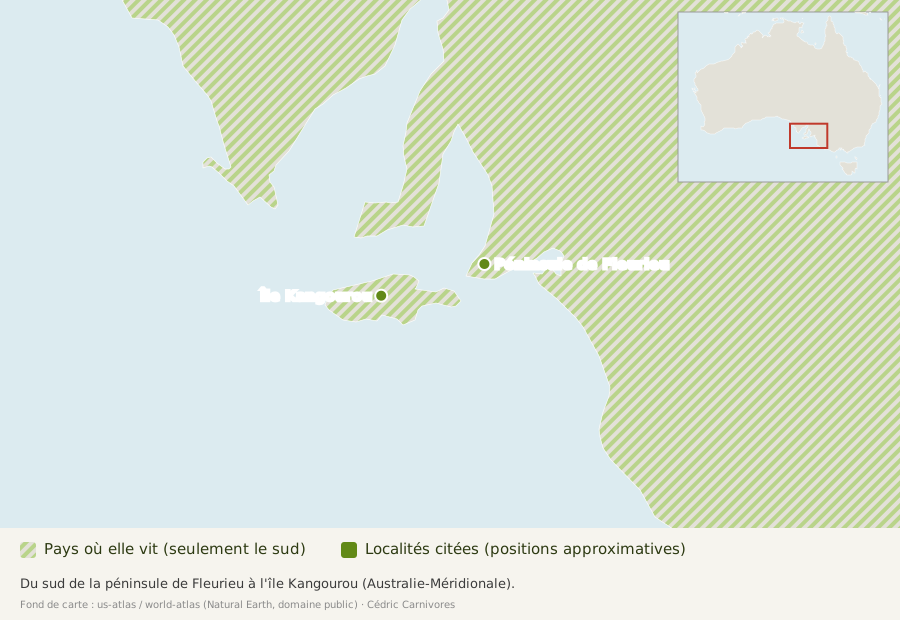
Endemic to South Australia: from the southern Fleurieu Peninsula to Kangaroo Island.
Habitat
Open woodland, on lateritic sandy clay, loam or decomposed schist. According to the collections and observations published in GBIF, it grows mostly from 25 to 39 m above sea level.
Did you know?
- It differs from D. whittakeri, its close relative, by its white tuber (orange in D. whittakeri) and by its leaves, which come after the flowers.
Sources
- Wikipedia (English), Drosera praefolia: author, synonyms, history, description, flowering, range, habitat, relationships, section.
- GBIF, Drosera praefolia: author, original publication, IUCN Red List category, countries, altitude and localities of herbarium specimens and observations.