Drosera pygmaea DC.
Species sheet, updated on 30/10/2026.
At a glance
| Scientific name | Drosera pygmaea Augustin Pyramus de Candolle, 1824 |
| Synonyms | D. pusilla in the sense of R. Br. ex Hook. f. (1840) |
| Family | Droseraceae (subgenus Ergaleium, section Bryastrum: pygmy sundews) |
| Distribution | Australia (including Tasmania and Victoria) and New Zealand |
| Habitat | In New Zealand: from the coast to subalpine areas, on bare soil |
| Status | Least concern (LC) on the IUCN Red List |
Photos in the wild
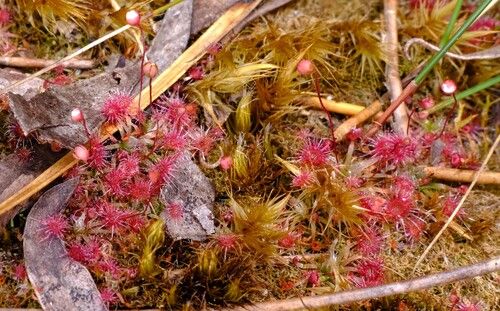
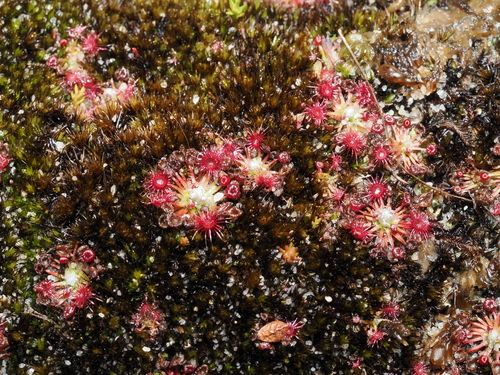
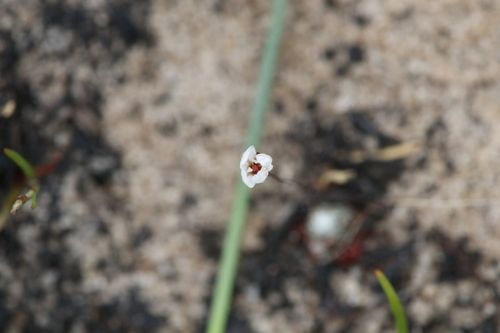
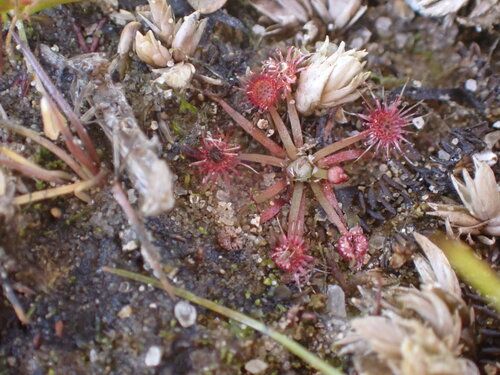
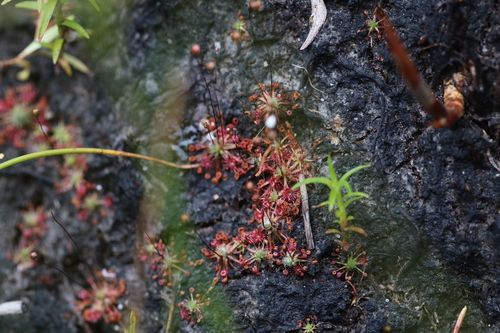
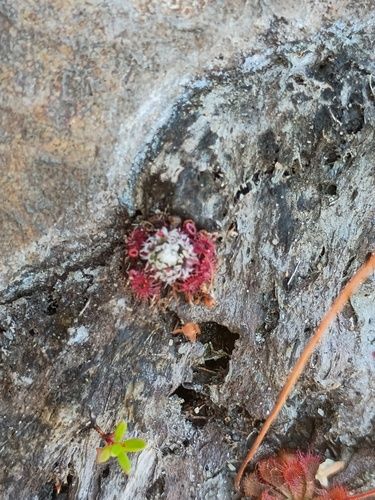
Etymology
- Drosera: see the genus sheet.
- pygmaea: from the Latin, “dwarf”, for its very small size.
Description (how to recognise it)
- Rosette only 8 to 18 mm across, annual or biennial.
- Small pale flowers at the tip of stems 2.5 to 7.5 cm long.
- It is perhaps the best-known of the pygmy sundews.
Distribution
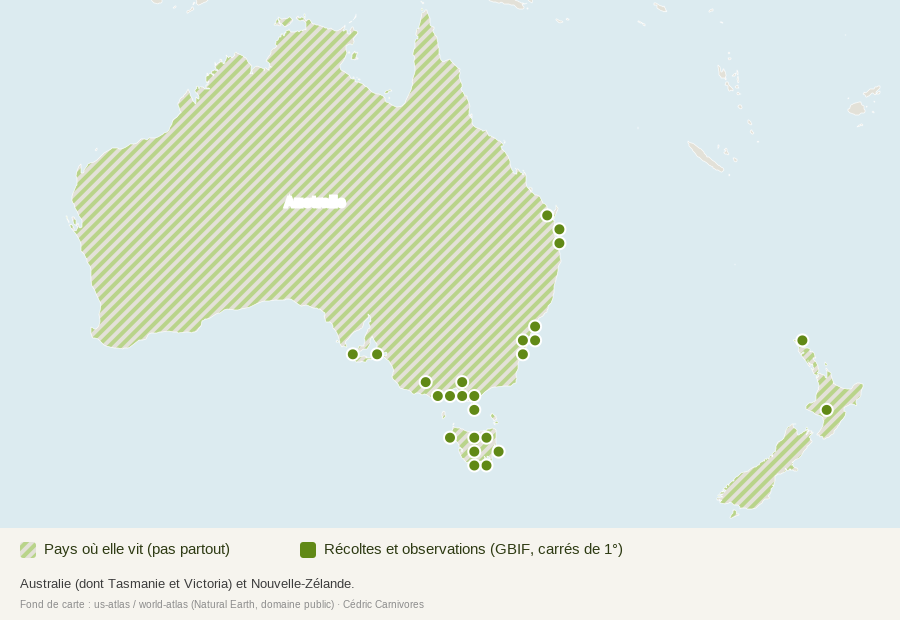
Australia (photos from Tasmania and Victoria) and New Zealand.
Habitat
In New Zealand, from the coast to subalpine areas; it needs open ground, because taller plants quickly smother it. According to the collections and observations published in GBIF, it grows mostly at around 141 m altitude.
Did you know?
- In 1845 Lehmann applied this name to another plant, now D. paleacea.
Sources
- Wikipedia (English), Drosera pygmaea: author, synonyms, etymology, description, range, habitat, section.
- GBIF, Drosera pygmaea: author, original publication, IUCN Red List category, countries, altitude and localities of herbarium specimens and observations.